Researched Guide
Compiled from public and official sources; not based on a visit.
Charlotte's booming residential market offers two distinct paths to homeownership: custom homes built to your exact specifications and production homes designed by national builders for broad appeal. Understanding the real differences—beyond the obvious price gap—helps you make a choice that aligns with your priorities, timeline, and budget.
Defining the Terms
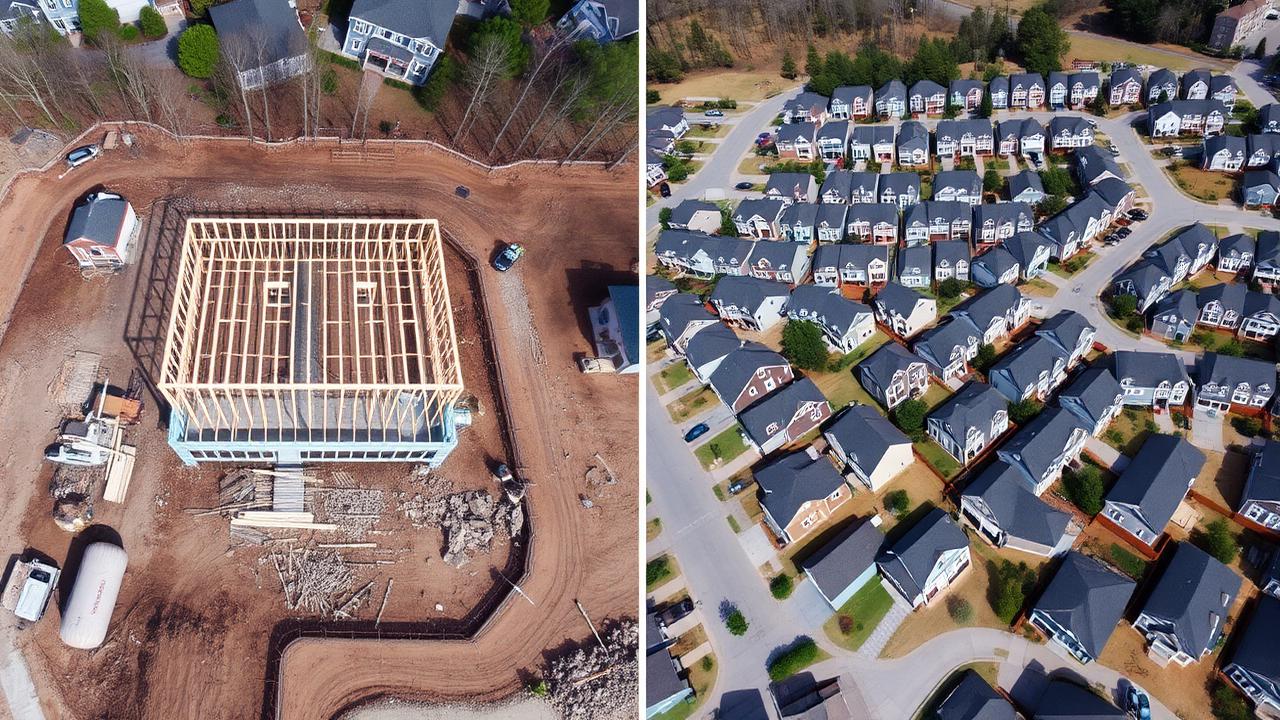
A custom home is designed and built specifically for you on a lot you select. Every element—floor plan, materials, finishes, and systems—reflects your choices and lifestyle. A production home is one of several standardized designs built by a large builder in a planned community, with options for upgrades within defined parameters.
Between these extremes sits the semi-custom home, where a builder modifies an existing plan to incorporate your preferences. Charlotte offers strong options across all three categories.
Cost Comparison
The price difference is real but often misunderstood. Production homes in Charlotte's luxury communities—Ballantyne, the best new construction communities, or Lake Norman developments—typically cost $200–$350 per square foot including the lot. Custom homes range from $300–$600+ per square foot depending on location and specifications.
However, the gap narrows when you factor in production home upgrades. Buyers who upgrade flooring, countertops, cabinetry, lighting, and landscaping in a production home often spend $80,000–$200,000 above the base price, pushing the effective cost per square foot significantly higher.
Quality and Materials
Production builders optimize for efficiency, which means standardized materials and construction methods. This isn't necessarily inferior—national builders have refined their processes to deliver consistent quality. But the materials are selected for cost-effectiveness across thousands of homes, not for your specific preferences or performance requirements.
Custom builders like Peters Custom Homes select materials based on individual project requirements. This might mean engineered hardwood in one home and reclaimed oak in another, commercial-grade insulation in a mountain-view home and spray foam in a lake house. The ability to specify exactly what goes into your walls, floors, and systems is a fundamental advantage of custom construction.
Design Freedom
This is where custom homes shine unambiguously. A custom home can accommodate any architectural style, room configuration, or spatial relationship you envision. Want a chef's kitchen that opens to a covered outdoor cooking area? A primary suite with a private courtyard? A home office wing separated from living spaces? These are standard conversations in custom home design.
Production homes offer floor plan selections—typically 5–15 base plans with modification options. While some builders allow significant structural changes, you're working within the framework of their design vocabulary. For buyers whose needs align with available plans, this constraint isn't limiting. For those with specific visions, it can be frustrating.
Timeline
Production homes win decisively on timeline. A production home in Charlotte can be move-in ready in 6–10 months from contract. Some inventory homes are available immediately. Custom homes typically require 12–24 months from design through completion, with the design phase alone taking 3–6 months.
For relocating professionals or families needing housing by a school year deadline, the production timeline is often decisive.
Community and Amenities
Production home communities often include amenities that would be impossible for individual homeowners to create: pools, fitness centers, walking trails, clubhouses, and planned green spaces. These communities also tend to have established HOAs that maintain common areas and enforce architectural standards.
Custom homes in established neighborhoods benefit from the character and maturity of their surroundings but rarely include shared amenities beyond what the neighborhood naturally provides.
Resale Value
Both custom and production homes perform well in Charlotte's market, but for different reasons. Production homes in desirable communities benefit from brand recognition and consistent pricing. Custom homes in premium locations benefit from unique design, quality materials, and irreplaceable positioning.
The key risk with custom homes is over-customization—features that reflect highly personal taste may not appeal to future buyers. Working with a design firm like Emerald & Oak Design helps balance personal expression with broad market appeal.
The Decision Framework
Choose a production home if: your timeline is tight, your needs align with available floor plans, you value community amenities, and you prefer a predictable process. Choose a custom home if: your vision is specific, you prioritize material quality, you want to select your lot and location, and you have the patience for a longer timeline.
Neither choice is inherently better—it depends entirely on your priorities, budget, and how you define "home."
Frequently Asked Questions
How much more does a custom home cost than a production home in Charlotte?
Custom homes typically cost $300-$600+ per square foot versus $200-$350 for production homes, but the gap narrows when factoring in production home upgrades.
How long does it take to build a custom home vs a production home?
Production homes take 6-10 months; custom homes typically require 12-24 months including the design phase.
Do custom homes have better resale value?
Both perform well in Charlotte. Custom homes benefit from unique design and quality materials, while production homes benefit from brand recognition and community amenities.
What is a semi-custom home?
A semi-custom home modifies an existing builder plan to incorporate your preferences, offering a middle ground between full custom and production homes.
Are production home materials lower quality?
Not necessarily—national builders deliver consistent quality, but materials are selected for cost-effectiveness across thousands of homes rather than individual performance requirements.
What is the biggest advantage of a custom home?
Complete design freedom—every element from floor plan to materials reflects your specific lifestyle, preferences, and site conditions.