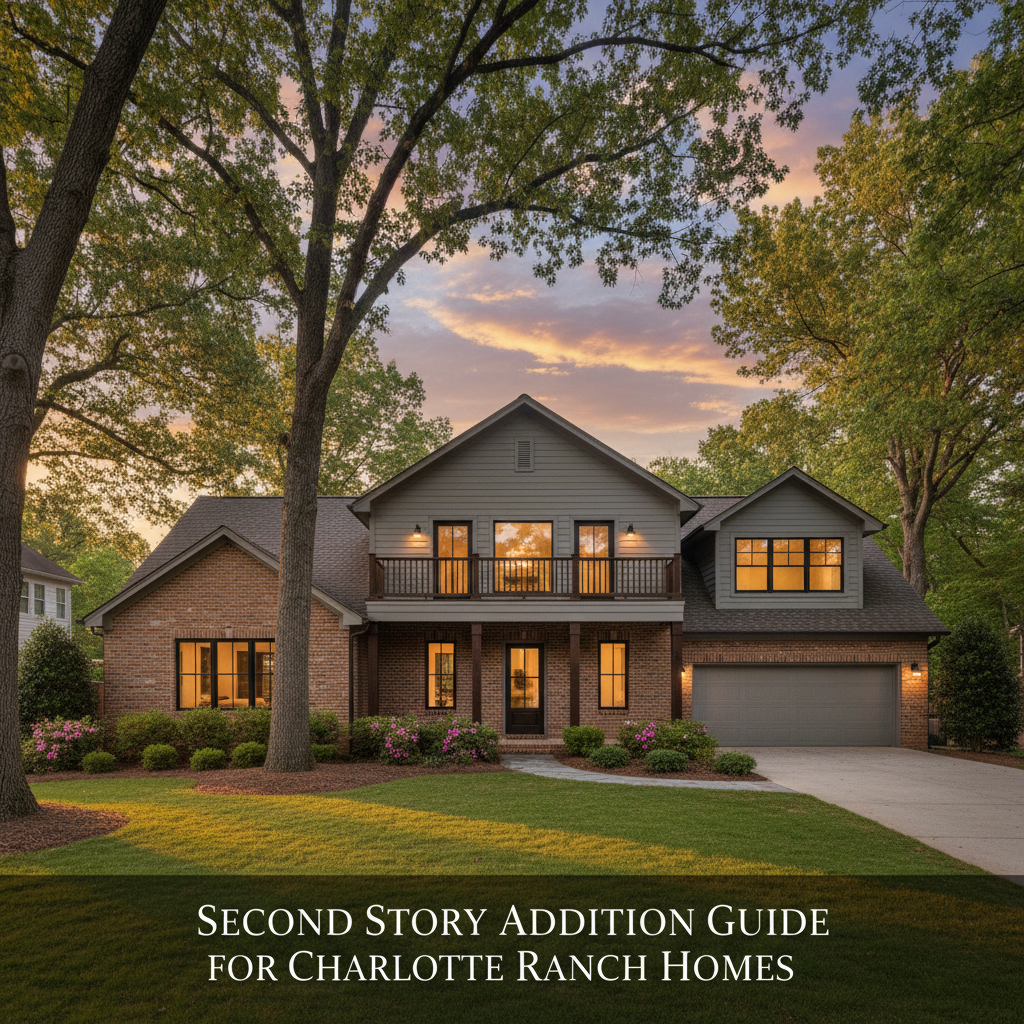
Researched Guide
Compiled from public and official sources; not based on a visit.
Second Story Addition Guide for Charlotte Ranch Homes: Expert Insights
Renovation in Charlotte's luxury market requires a unique blend of vision, expertise, and meticulous planning. Whether you're undertaking a additions renovation in Myers Park, SouthPark, or the Lake Norman communities, understanding the local market dynamics, building codes, and contractor landscape is essential. Charlotte's renovation sector has matured significantly, with firms like Peters Custom Homes and other established builders offering comprehensive renovation services that rival new construction in quality and attention to detail.
This guide delves into the specifics of adding a second story to a Charlotte ranch home, a popular and often highly effective renovation strategy. Ranch-style homes, prevalent in established neighborhoods like Beverly Woods, Cotswold, and parts of Madison Park, offer a unique foundation for vertical expansion. Unlike sprawling bungalows or historic homes with complex rooflines, ranches often have simpler structural elements that can be more straightforward to build upon. This approach can significantly increase living space without sacrificing valuable yard real estate, a crucial consideration in Charlotte's increasingly dense urban and suburban environments. For homeowners in areas like Eastover or Sedgefield, where lot sizes can be generous but increasing square footage is desirable for growing families or multi-generational living, a second-story addition presents a compelling solution.
Cost Analysis & Budgeting
Understanding renovation costs in Charlotte requires looking beyond national averages. The Charlotte luxury market commands premium pricing for materials and labor, reflecting the quality expectations of discerning homeowners. Additions renovation projects in Charlotte typically range from moderate updates starting around $50,000 to comprehensive transformations exceeding $500,000, depending on scope, materials, and structural complexity.
A second-story addition, due to its significant structural undertaking, will generally fall on the higher end of this spectrum. For a typical ranch home in Charlotte, budgeting for a second-story addition, including the shell, interior finishes, and necessary upgrades to existing systems (like HVAC and electrical), can realistically range from $200,000 to $600,000 or more. This wide range is influenced by factors such as the square footage being added, the complexity of the roofline integration, the quality of chosen finishes (e.g., granite countertops vs. marble, hardwood flooring vs. carpet), and the specific structural engineering required to support the new load. Neighborhoods like Eastover or Myers Park, with their higher land values and demand for premium finishes, will naturally see higher renovation costs. Conversely, while still substantial, additions in slightly less premium areas like Oakhaven or smaller towns surrounding Charlotte might see slightly lower, though still significant, figures.
Smart budgeting for Charlotte additions renovations includes allocating 15-20% for contingencies — unexpected discoveries are common, especially in older homes throughout Dilworth, Myers Park, and Elizabeth. For second-story additions, these contingencies are even more critical. Potential issues could include discovering undersized existing floor joists that need reinforcement, unexpected plumbing or electrical rerouting, or the need to upgrade the foundation's load-bearing capacity. Thorough pre-construction assessments and structural engineering reports, often at a cost of several thousand dollars, can help mitigate these risks, but a robust contingency fund remains indispensable. Engaging with local lenders in Charlotte for construction loans or home equity lines of credit (HELOCs) early in the process is also a wise financial step for homeowners planning such a significant investment.
Design Trends & Inspiration
Charlotte's additions renovation trends reflect the city's position as a sophisticated Southern metropolis. Current design preferences lean toward clean lines, warm natural materials, and spaces that seamlessly connect indoor and outdoor living — a reflection of Charlotte's favorable climate and lifestyle-oriented culture. The influence of Charlotte's thriving culinary scene, art community, and active outdoor lifestyle shapes how homeowners approach renovation design.
For second-story additions to ranch homes, this translates into creating functional and aesthetically pleasing spaces that complement rather than clash with the original architecture. Homeowners are increasingly requesting master suites with spa-like bathrooms, additional bedrooms for growing families or guest accommodations, and flexible spaces that can serve as home offices, playrooms, or hobby rooms. The integration of natural light is paramount, with larger windows, skylights, and potentially even dormers becoming design features rather than mere necessities. In the SouthPark area, known for its upscale residences, the demand is for sophisticated finishes that match the neighborhood's established luxury. For ranch homes in Dilworth or Chantilly, which often have a more historic charm, designers are focusing on creating additions that echo the existing architectural style while incorporating modern amenities. This might involve using similar brick or siding materials, replicating window styles, or carefully designing rooflines that blend seamlessly.
Local designers and architects report growing demand for sustainable materials, smart home integration, and universal design elements that enhance both livability and long-term home value. Charlotte homeowners increasingly view renovations as opportunities to create personalized spaces that support their specific lifestyles while incorporating the latest in building technology and design innovation. For second-story additions, this might include installing smart thermostats and lighting systems that can easily be controlled from a smartphone, specifying energy-efficient windows and insulation to manage energy costs, and even incorporating multi-generational living features like wider doorways or the potential for a future elevator shaft. The desire for seamless indoor-outdoor connections might also influence the design, with elevated decks or balconies accessible from the new second-story rooms becoming popular features, offering views of Charlotte’s often mature and beautifully landscaped yards.
Contractor Selection & Project Management
Selecting the right contractor is perhaps the most critical decision in any Charlotte additions renovation. The Charlotte market includes both established luxury renovation firms and emerging specialists, each bringing different strengths to the table. Look for contractors with demonstrated experience in luxury additions projects, proper licensing through Mecklenburg County, comprehensive insurance coverage, and a portfolio that reflects the quality level you expect.
For second-story additions, this expertise becomes even more paramount. You need a contractor who understands the complexities of structural engineering, managing the disruption to your existing home, and coordinating with architectural and engineering professionals. When vetting contractors in Charlotte, ask specifically about their experience with second-story additions, particularly on ranch-style homes. Request to see examples of similar projects they've completed, noting how well the additions were integrated with the original home's aesthetics and whether the projects stayed within budget and on schedule. Checking references is crucial – speak to past clients about their experience with communication, problem-solving, and overall satisfaction. Reputable firms in the Charlotte area like Redbud Custom Homes or Arthur Rutenberg Homes (though more known for custom builds, many have strong renovation divisions) often have a deep understanding of these complex projects.
Effective project management separates successful renovations from stressful experiences. The best Charlotte renovation contractors provide dedicated project managers who serve as single points of contact, maintain detailed schedules, coordinate subcontractors, and ensure quality control at every phase. This professional approach, while often reflected in pricing, delivers significantly better outcomes and protects your investment. For a second-story addition, this role is vital. Your project manager will be coordinating with the structural engineer, architect, specialized framing crews, roofers, electricians, plumbers, HVAC technicians, and interior finishing teams. They will be responsible for managing the significant disruption to your household – including noise, dust, and potentially temporary relocation of utilities – and ensuring that work progresses safely and efficiently. Regular site meetings and clear communication channels are essential components of this project management process, allowing homeowners to stay informed and address any concerns promptly.
Permits, Regulations & Compliance
Charlotte renovation projects must comply with Mecklenburg County building codes, which are regularly updated to reflect current safety and energy standards. Additions renovations typically require building permits for structural changes, electrical work, plumbing modifications, and HVAC alterations. In Charlotte's historic districts — including Dilworth, Fourth Ward, and portions of Myers Park — additional approval from the Historic District Commission may be required.
For second-story additions, the permitting process is more involved than for a simple interior renovation. Mecklenburg County will require detailed architectural and structural plans stamped by a licensed architect and engineer. These plans must demonstrate adherence to zoning laws (including setback requirements and maximum lot coverage), building codes (fire safety, structural integrity, egress requirements for the new rooms), and any specific neighborhood covenants or restrictions in areas like East Forest, Foxcroft, or Providence Plantation. The plans will also need to address how the new structure will integrate with the existing home's systems, including how plumbing, electrical, and HVAC will be extended or upgraded. Inspections will be required at multiple stages of construction—foundation, framing, rough-in electrical, plumbing, HVAC, and final completion. A knowledgeable Charlotte contractor will guide you through this process, ensuring all submissions are accurate and that the work meets code requirements.
HOA requirements add another layer of compliance for renovations in Charlotte's many planned communities. Before beginning any renovation project, homeowners should review their community's architectural guidelines, submit required documentation, and obtain written approval. A knowledgeable Charlotte contractor will be familiar with these processes and can help navigate the approval timeline efficiently. In some Charlotte communities, like those governed by specific architectural review boards, additional design review may be necessary before even applying for county permits. This review often focuses on aesthetic consistency, ensuring the addition complements the existing neighborhood character. Understanding these requirements upfront, and understanding how they might influence design choices, is critical to avoid delays and costly revisions.
ROI & Long-Term Value
Renovation investments in Charlotte's luxury market consistently deliver strong returns, both in daily enjoyment and resale value. The Charlotte Association of REALTORS data shows that well-executed additions renovations in premium neighborhoods typically recoup 70-100% of investment at resale, with some categories exceeding 100% return in competitive market conditions.
A second-story addition to a ranch home is often one of the most impactful renovations in terms of increasing square footage and, consequently, home value. In neighborhoods where ranch homes are prevalent, such as Cotswold, Madison Park, or areas surrounding Park Road Shopping Center, adding a second story can elevate the home’s value significantly, often bringing it in line with or exceeding the value of other, larger homes in the area that may have already been built with multiple stories. This is particularly true if the addition creates highly sought-after features like a spacious owner's suite, additional bedrooms, or a dedicated home office. Homeowners considering selling in the future should consult with Charlotte-area real estate agents specializing in luxury properties to understand current market demand and how a second-story addition would be perceived by potential buyers. A well-designed and expertly executed addition can make a home stand out from other ranches in the market, commanding a higher price and attracting more buyers.
The key to maximizing renovation ROI in Charlotte lies in aligning improvements with market expectations. Over-improving beyond neighborhood standards rarely delivers proportional returns, while under-improving leaves value on the table. Working with a real estate professional familiar with Charlotte's luxury market can provide valuable guidance on which additions improvements will deliver the strongest returns in your specific neighborhood and price point. For a second-story addition, this means carefully considering the scale of the addition relative to the lot and the surrounding homes. Adding 1,500 square feet to a 1,200-square-foot ranch might be feasible and desirable in a neighborhood like Oakhaven, but could be considered excessive in a more constrained development. The quality of finishes should also align. While luxury finishes are generally appreciated, ensuring they are in line with typical finishes in comparable homes in Myers Park or SouthPark is crucial. For areas like the Lake Norman communities, integration with a waterfront lifestyle or offering views might be a key factor that enhances the ROI of a well-designed second-story addition.
Future-Proofing Your Renovation
As Charlotte continues to grow and evolve, so too do the expectations for homes. When undertaking a significant project like a second-story addition, it's wise to consider long-term trends and how to future-proof your investment. This means thinking beyond immediate needs and anticipating how your home might be used in the coming years or decades.
One major trend is the increasing aging population and the desire for "aging in place." While a second-story addition might seem counterintuitive for this, incorporating design elements that facilitate future accessibility can be a smart move. This could include specifying wider doorways on the new floor, ensuring there’s ample space for a future stairlift installation, or even roughing in plumbing for an additional bathroom that could later be converted into a more accessible, age-in-place-friendly suite. Another aspect is the continued integration of smart home technology. Ensuring your home's electrical infrastructure can support numerous devices, including robust Wi-Fi and Ethernet backbones, will be critical. Consider where smart hubs, security cameras, and automated systems might be located during the design phase.
Furthermore, sustainability is no longer a niche concern but a mainstream expectation. Choosing energy-efficient windows, high-performance insulation, and HVAC systems that can handle the increased load of a second story are essential. Think about the potential for solar panel integration in the future – designing the roofline with this in mind, even if panels aren't installed immediately, can save significant costs later. Consulting with architects and contractors who are knowledgeable about green building practices and materials can ensure your second-story addition is not only beautiful and functional but also environmentally responsible and cost-effective to operate over the long term.
Frequently Asked Questions
How much does a additions renovation cost in Charlotte?
Additions renovation costs in Charlotte vary widely based on scope and materials. Moderate updates start around $50,000-$75,000, while comprehensive luxury renovations can range from $150,000 to $500,000 or more depending on complexity.
How long does a additions renovation take in Charlotte?
Timeline depends on scope — minor additions updates may take 4-8 weeks, while major renovations typically require 3-6 months. Full-scale luxury renovations can extend to 8-12 months including design and permitting phases.
Do I need permits for renovation in Charlotte?
Most renovations in Charlotte require building permits from Mecklenburg County for structural, electrical, plumbing, or HVAC work. Historic district renovations may need additional approval from the Historic District Commission.
How do I find a good renovation contractor in Charlotte?
Seek contractors with luxury renovation experience, proper Mecklenburg County licensing, comprehensive insurance, and strong references. Industry organizations like NARI and local builder associations can help identify qualified professionals.
What is the ROI of additions renovation in Charlotte?
Well-executed additions renovations in Charlotte's luxury market typically recoup 70-100% of investment at resale. Premium neighborhoods like Myers Park and SouthPark often see even higher returns for quality improvements.