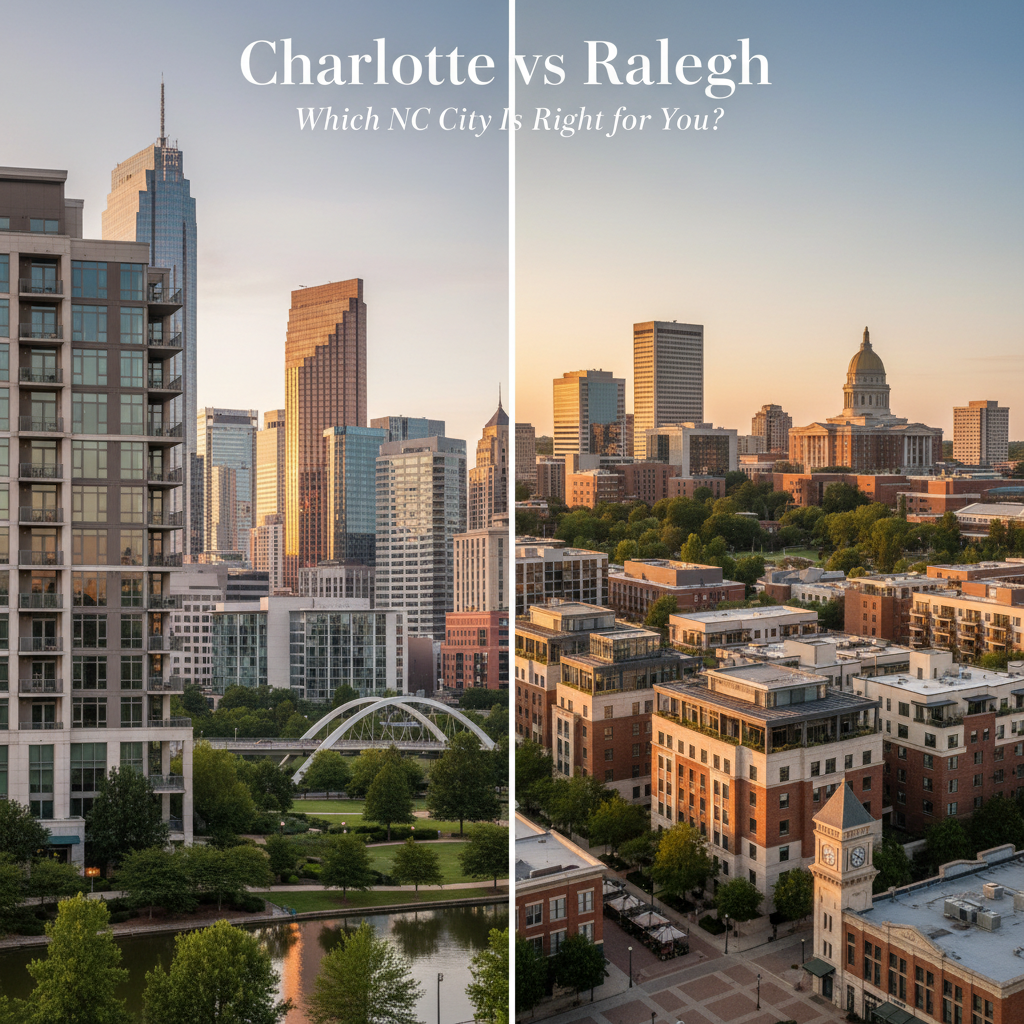
Researched Guide
Compiled from public and official sources; not based on a visit.
Charlotte vs. Raleigh: Which North Carolina City Is Right for You?
A Deep Dive for Discerning Homebuyers
North Carolina, a state renowned for its breathtaking natural beauty, rich history, and vibrant economy, consistently attracts those seeking a sophisticated yet accessible lifestyle. At the heart of its allure lie two dynamic urban centers: Charlotte and Raleigh. For the discerning homebuyer contemplating a move to the Tar Heel State, the choice between these two metropolitan gems is often a nuanced one, akin to selecting between two exquisite custom-tailored suits. Both offer unparalleled quality of life, robust job markets, and a burgeoning luxury real estate scene, yet each boasts its own distinct character, rhythm, and amenities. This comprehensive guide will traverse the landscape of both Charlotte and Raleigh, illuminating their unique attributes to help you determine which city aligns best with your aspirations and lifestyle.
Charlotte: The Queen City's Grandeur and Metropolitan Pulse
Often referred to as the "Queen City," Charlotte reigns supreme as North Carolina's largest city and a formidable financial hub. Its skyline, punctuated by glittering skyscrapers, immediately conveys a sense of ambition and progress. For those accustomed to the pace and opportunities of larger metropolises, Charlotte’s vibrant downtown and expansive suburban offerings present an attractive proposition.
Economic Landscape and Career Opportunities
Charlotte's economy is diversified, though it remains a powerhouse in the banking and finance sectors, hosting the headquarters of giants like Bank of America. A burgeoning technology scene, healthcare industry (anchored by Atrium Health and Novant Health), and logistics sector contribute to a robust job market, drawing professionals from across the nation. This economic vitality translates into a strong demand for luxury housing, with developers continually introducing innovative and opulent residences.
Luxury Real Estate and Desirable Neighborhoods
The luxury real estate market in Charlotte is characterized by its elegance, variety, and often, spaciousness. Prospective homeowners will discover a spectrum of options, from historic, tree-lined estates to sleek, modern penthouses offering panoramic city views. Neighborhoods like Myers Park epitomize old-world charm and grandeur, with stately homes often exceeding $2 million, showcasing meticulously maintained gardens and architectural marvels. Eastover offers a similar prestigious ambiance, characterized by its mature trees, manicured lawns, and a quiet, residential feel. Dilworth, with its charming bungalows and craftsman-style homes, has seen significant revitalization, blending historic character with upscale amenities and a vibrant culinary scene. Further out, areas like Marvin and Weddington in Union County offer sprawling estates and custom-built homes on larger lots, appealing to those seeking more privacy and space. For those envisioning bespoke residences, local builders such as Peters Custom Homes are renowned for their meticulous craftsmanship and ability to translate grand visions into tangible realities, ensuring every detail reflects the homeowner's unique taste. Average luxury home prices in these premier neighborhoods often range from $1 million to upwards of $5 million, though exceptional properties can command significantly higher figures.
Lifestyle and Culture in Charlotte
Charlotte's lifestyle is dynamic and diverse. Uptown (the city's downtown) serves as a cultural and entertainment epicenter, housing establishments like the Belk Theater, Mint Museum Uptown, and the NASCAR Hall of Fame. The city boasts a thriving culinary scene, from upscale fine dining to trendy, chef-driven establishments. Sports enthusiasts will find themselves at home with professional teams like the Carolina Panthers (NFL) and the Charlotte Hornets (NBA). The city's greenway system offers extensive opportunities for outdoor recreation, and Lake Norman, a short drive north, provides a picturesque escape for boating, fishing, and watersports.
Raleigh: The Research Triangle's Intellectual Charm
As the state capital and a cornerstone of the illustrious Research Triangle Park (RTP), Raleigh possesses a distinct intellectual and innovative character. It's a city that effortlessly blends historic architecture with cutting-edge technology, creating an environment that is both progressive and deeply rooted in tradition.
Economic Landscape and Career Opportunities
Raleigh's economy is inextricably linked to the Research Triangle Park, a global leader in technology, pharmaceuticals, and biotechnology. This robust ecosystem fosters innovation and attracts highly skilled professionals, contributing to a stable and upwardly mobile job market. Government, education (driven by NC State University), and healthcare also play significant roles, providing diverse career paths. This intellectual capital translates into a demand for sophisticated housing that caters to an educated and often affluent populace.
Luxury Real Estate and Desirable Neighborhoods
Raleigh's luxury real estate market is equally discerning, offering a blend of historic elegance and modern convenience. Inside the Beltline (I-440) is often considered the most prestigious area, encompassing neighborhoods like Hayes Barton and Country Club Hills. Here, grand European-style homes, meticulously preserved historic estates, and new construction designed with classic sensibilities can be found, often on generous lots. Prices in these coveted areas frequently start around $1 million, with many properties ranging from $2 million to $4 million, and unique estates commanding even higher. North Raleigh, particularly areas like North Hills and Wake Forest, offers a suburban luxury experience with gated communities, larger homes, and access to top-tier schools. These areas balance spacious living with convenient access to shopping, dining, and cultural amenities. Homebuyers in Raleigh often appreciate a blend of traditional aesthetics with modern functionality, a design philosophy elegantly executed by firms like Emerald & Oak Design, who specialize in creating interiors that are both opulent and supremely livable.
Lifestyle and Culture in Raleigh
Raleigh’s culture is often described as a more relaxed, but equally vibrant, alternative to Charlotte. The city celebrates its history with numerous museums, including the North Carolina Museum of Natural Sciences and the North Carolina Museum of Art. Its culinary scene is highly acclaimed, with a strong focus on farm-to-table establishments and innovative Southern cuisine. Performing arts flourish, with venues like the Duke Energy Center for the Performing Arts hosting touring Broadway shows and local productions. Green spaces abound, with Umstead State Park offering extensive trails for hiking and biking, and numerous city parks providing recreational opportunities. Proximity to Chapel Hill and Durham, with their respective universities (UNC-Chapel Hill and Duke University), further enriches the cultural and academic landscape, providing an endless array of events and intellectual pursuits.
Charlotte vs. Raleigh: Key Differentiators
While both cities offer an exceptional quality of life, several key differences emerge:
- Pace of Life: Charlotte often feels more like a bustling metropolitan center, with a faster pace and a more prominent urban energy. Raleigh, while growing rapidly, maintains a slightly more relaxed, "big town" feel.
- Industry Focus: Charlotte leans heavily on finance and banking, while Raleigh is a hub for technology, biotech, and research. Your career path might be a significant factor in this decision.
- Transportation: Charlotte has a more developed public transit system, including a light rail. While Raleigh is investing in transit, it remains more car-dependent. Both cities have easy access to international airports.
- Architecture & Vibe: Charlotte boasts a very modern skyline and a diverse architectural landscape. Raleigh blends its historic charm with contemporary developments, often maintaining a more collegiate or government-centric aesthetic in its older areas.
- Access to Nature: While both have excellent parks, Charlotte's proximity to Lake Norman offers a prominent lakeside luxury lifestyle. Raleigh benefits from its closeness to the extensive Umstead State Park and the collective green spaces of the RTP area.
Deepening the Dive: Charlotte's Luxury Lifestyle in Detail
Charlotte's appeal to luxury homebuyers extends far beyond its impressive financial sector. The city is a tapestry of affluent enclaves, each offering a unique flavor of upscale living. Beyond the established prestige of Myers Park and Eastover, neighborhoods like **Providence Country Club** in South Charlotte offer a master-planned community experience, complete with a championship golf course, expansive homes, and a strong sense of exclusivity. Here, custom-built estates on manicured lots are the norm, with price points regularly exceeding $1.5 million and reaching well into the multi-millions. The architectural styles are diverse, ranging from traditional Southern colonials to sprawling contemporary residences designed for seamless indoor-outdoor entertaining.
For those who appreciate a more equestrian or rural feel without sacrificing proximity to urban amenities, areas west of Charlotte, such as **Lake Wylie** (straddling the NC/SC border) and parts of Gaston County, present opportunities for larger estates and waterfront living. These locales offer a more tranquil pace, with homes often featuring private docks and generous acreage, appealing to buyers seeking a high degree of privacy. The "lake life" is a significant draw, with communities like The Sanctuary offering a sophisticated blend of natural beauty and refined living. Luxury properties in these areas can start from $1.2 million and ascend rapidly based on lake frontage, acreage, and home customisation.
Charlotte’s commitment to arts and culture is evident in its burgeoning gallery scene, particularly in areas like the South End. This revitalized industrial district now hosts a vibrant mix of art studios, craft breweries, and high-end boutiques, alongside modern luxury apartment buildings and lofts. While not exclusively a luxury single-family home area, the demand for high-end condominium living in prime urban locations is growing, with penthouses in Uptown offering unparalleled city views and resort-style amenities, often commanding prices from $800,000 to $2 million. The **Quail Hollow Club** area, home to the famed PGA Championship golf course, also attracts significant luxury real estate interest, featuring elegant homes within and around this prestigious golf enclave.
Education is a paramount concern for luxury homebuyers, and Charlotte boasts a strong array of private and charter schools. Institutions like Charlotte Latin School, Providence Day School, and the Cannon School are highly regarded, attracting families who value rigorous academics and comprehensive extracurricular programs. Access to these top-tier educational institutions often influences the desirability and value of surrounding neighborhoods.
When considering luxury purchases in Charlotte, understanding the different school districts is crucial. The public school system is significant, with some highly sought-after zones feeding into excellent schools. For instance, parts of South Charlotte are known for their strong public school performance, driving demand and property values. Reliable sources like GreatSchools.org can provide detailed insights into district performance and specific school ratings, aiding in the decision-making process for families with children.
Raleigh's Refined Appeal: A Closer Look at Luxury Living
Raleigh's luxury market is deeply intertwined with its identity as a center for innovation and education. While the "Inside the Beltline" (ITB) area remains the undisputed epicenter of high-end living, the definition of luxury is expanding. Beyond the historic elegance of Hayes Barton, neighborhoods like **HOPE Valley**, **Rowan Oak**, and **Blairwood** offer a refined suburban experience with substantial homes on large, wooded lots. These areas are characterized by mature landscaping, architectural diversity, and a strong sense of community, often found near desirable private schools such as Saint Mary's School and Ravenscroft School. Luxury homes in these established North Raleigh neighborhoods typically range from $1 million to $3 million.
The **North Hills** area, once a more modest suburban center, has undergone a dramatic transformation into a upscale, mixed-use district known as "Raleigh's City Center." Here, luxury condos and townhomes offer a sophisticated urban-in-suburbia lifestyle, complete with high-end retail, fine dining, and entertainment. The Cameron Village area, near NC State, also presents a mix of established homes and newer developments catering to professionals and academics seeking proximity to the university and downtown. For those seeking even more space and a country-club atmosphere, communities along the outskirts, such as **The Lonnie Poole Golf Course at Raleigh Creek** and areas expanding towards Wake Forest, offer grand homes with larger acreage and exclusive amenities.
Raleigh's culinary scene is a significant draw, with numerous James Beard-nominated chefs and a thriving farm-to-table movement. This sophisticated palate influences the demand for homes that can accommodate elaborate entertaining, often featuring gourmet kitchens, spacious dining areas, and beautifully landscaped outdoor living spaces. Local builders and designers are adept at creating these seamless transitions between indoor opulence and outdoor enjoyment. For example, **Oak City Custom Homes** is a well-respected builder known for its quality craftsmanship and attention to detail in bringing high-end residential visions to life.
The proximity to world-class academic institutions like Duke University and the University of North Carolina at Chapel Hill enriches Raleigh's luxury market. This academic synergy fuels a demand for homes in areas with strong public and private school systems, as well as those that provide easy access to cultural events, lectures, and research facilities. Areas zoned for top-performing Wake County Public Schools, such as those feeding into Broughton High School or Leesville Road High School, often see elevated property values.
For those seeking a more tranquil, yet still refined, lifestyle, the areas surrounding smaller towns within the Triangle, such as **Cary** and **Apex**, are experiencing growth in luxury housing. These towns offer a slightly slower pace, excellent schools, and well-planned communities that can provide more land and value for the luxury dollar, while still maintaining convenient access to Raleigh's amenities.
Market Trends and Investment Potential
Both Charlotte and Raleigh have experienced robust real estate market growth over the past decade, driven by their strong economies, desirable lifestyle attributes, and influx of new residents. In Charlotte, the demand for contiguous living and modern amenities in areas like South Charlotte and the rapidly developing University City area continues to push prices upward. The townhome and condominium market in particular has seen significant interest as urban professionals seek convenient, low-maintenance luxury living.
Raleigh’s luxury market, while perhaps exhibiting slightly more stable growth compared to Charlotte's rapid expansion, consistently demonstrates strong appreciation, especially within the ITB zip codes and rapidly evolving North Hills. The ongoing investment in infrastructure and corporate relocations to the RTP area continue to fuel demand for high-quality housing. For luxury investors, both markets offer compelling opportunities, though the specific drivers and risks may vary. Charlotte’s stability in finance provides a certain bedrock, while Raleigh’s innovation-driven economy offers significant growth potential.
It is advisable for potential buyers to engage with local real estate professionals who specialize in luxury properties in both cities. These agents possess invaluable insights into micro-market trends, off-market opportunities, and the nuances of neighborhoods that data alone cannot reveal. Understanding current interest rates, inventory levels, and recent sales comparables is crucial for making an informed and strategic purchase in either of these competitive markets.
Making Your Decision
Ultimately, the choice between Charlotte and Raleigh hinges on your individual priorities and preferences. If you envision a fast-paced, dynamic urban environment with a strong financial sector, world-class sports, and a prominent skyline, Charlotte might be your ideal destination. If a city with an intellectual pulse, a world-leading tech and research industry, a slightly more relaxed pace, and a proud emphasis on history and academia aligns with your vision, then Raleigh could be your perfect home.
We encourage prospective buyers to spend ample time in both cities, exploring the distinctive neighborhoods, experiencing the local culture, and envisioning their daily lives. The luxury real estate markets in both Charlotte and Raleigh are thriving, offering exquisite properties designed to meet the highest standards of comfort, elegance, and lifestyle. Whichever you choose, you are undoubtedly selecting a premier destination in the heart of the magnificent Tar Heel State.
Travel Patterns Between the Two Markets
Charlotte's direct international and West Coast routes give it a clear advantage for households that travel often. Many luxury buyers we speak with engage a bespoke travel advisor to take full advantage of CLT's reach — building itineraries that would be far harder to assemble out of RDU.
Frequently Asked Questions
What are the primary industries in Charlotte vs. Raleigh?
Charlotte's economy is largely driven by banking, finance, and logistics. Raleigh is a hub for technology, biotechnology, pharmaceuticals (due to its proximity to Research Triangle Park), and government.
Which city has a faster pace of life?
Charlotte generally offers a faster-paced, more bustling metropolitan experience, while Raleigh, though growing, tends to have a slightly more relaxed 'big town' feel while still being highly vibrant.
What are some luxury neighborhoods in Charlotte?
Premier luxury neighborhoods in Charlotte include Myers Park, Eastover, Dilworth, and areas in Union County like Marvin and Weddington, known for their historic grandeur and expansive estates.
What are some luxury neighborhoods in Raleigh?
In Raleigh, highly sought-after luxury neighborhoods include Hayes Barton and Country Club Hills (both 'Inside the Beltline'), and upscale areas in North Raleigh like North Hills and Wake Forest, offering a mix of historic and modern estates.
Is public transportation better in Charlotte or Raleigh?
Charlotte has a more developed public transit system, including a light rail, while Raleigh is more car-dependent, though it is investing in expanded public transportation options.
Are there recreational lakes near Charlotte or Raleigh?
Yes, Charlotte has easy access to Lake Norman, a popular destination for boating and watersports. While Raleigh doesn't have a large lake immediately adjacent, it has numerous parks and is close to Umstead State Park, offering extensive outdoor recreation.