Researched Guide
Compiled from public and official sources; not based on a visit.
In Charlotte's competitive luxury real estate market, staging has evolved from a nice-to-have marketing tactic into an essential strategic investment. Properties priced above $1 million face a discerning buyer pool that expects magazine-quality presentation—and the data supports the investment. According to the National Association of Realtors, staged homes sell 73% faster and for 5-10% more than their unstaged counterparts. In Charlotte's luxury segment, where the difference between a quick sale and months of market time can represent tens of thousands of dollars in carrying costs, professional staging delivers measurable returns.
Understanding Charlotte's Luxury Buyer
Before a single piece of furniture is placed, effective staging requires understanding who is buying luxury homes in Charlotte. The city's luxury buyer profile has shifted dramatically in recent years. Alongside the traditional Charlotte executive—typically a banking, finance, or healthcare professional—the market now attracts a significant influx of relocating buyers from New York, Los Angeles, Chicago, and San Francisco. These buyers bring metropolitan design sensibilities and expect a level of finish and presentation that matches what they've experienced in higher-cost markets.
Charlotte's luxury buyers consistently gravitate toward three aesthetic directions: transitional (classic architecture with contemporary interiors), modern farmhouse with elevated finishes, and full contemporary minimalism. Successful staging identifies which aesthetic resonates with the most likely buyer for a specific property and neighborhood. A 1920s Tudor in Myers Park calls for a different staging approach than a new-construction contemporary in SouthPark or a lakefront estate on Lake Norman.
The Strategic Staging Process
Step 1: Consultation and Strategy ($0 — Most Stagers Offer Free Initial Consultations): A professional luxury stager will walk the property with the listing agent to assess the home's architectural strengths, identify areas that need attention, and develop a staging concept aligned with the target buyer profile. This consultation should include a room-by-room recommendation plan and a detailed budget estimate.
Step 2: Declutter and Depersonalize: This is the most impactful and least expensive step in the staging process. Remove 40-60% of existing furnishings, all personal photographs, collections, and items that reflect specific taste rather than broad appeal. For occupied luxury homes, this often means renting a climate-controlled storage unit ($200-$500 monthly for the volume typical of a luxury home) and temporarily relocating items that make the home feel cluttered or too personal.
Step 3: Repairs and Refreshes ($2,000-$15,000): Address every deferred maintenance item visible to buyers. In Charlotte's luxury market, this typically includes: repainting main living areas in current neutral tones (Benjamin Moore's 'White Dove,' 'Pale Oak,' or Sherwin-Williams' 'Accessible Beige' are current market favorites), refinishing hardwood floors if they show significant wear, replacing outdated light fixtures in kitchens and bathrooms, and upgrading cabinet hardware to current styles. Emerald & Oak Design specializes in these pre-sale refresh projects, identifying the highest-impact improvements within budget constraints.
Step 4: Professional Staging ($5,000-$25,000 for a 3-Month Contract): Full luxury staging involves furnishing the home with high-end rental pieces that showcase each room's purpose and proportions. Quality staging companies maintain inventories of designer furniture, art, and accessories—not the mass-market pieces used in standard staging. Expect to see names like Restoration Hardware, CB2, West Elm, and curated vintage pieces rather than generic furniture warehouse items.
Room-by-Room Staging Priorities
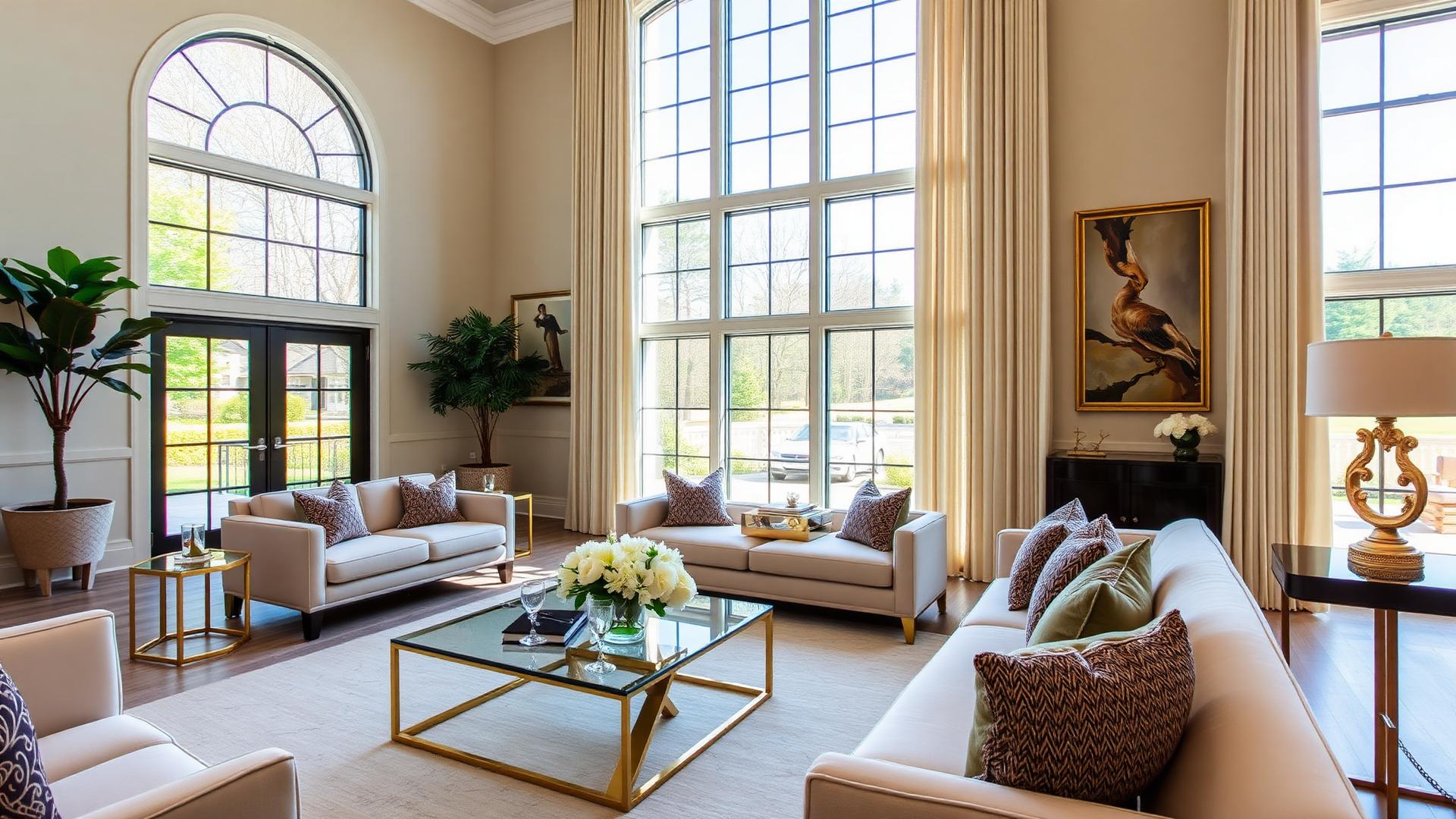
Primary Living Spaces (Highest Impact): The foyer, great room, and kitchen are the three spaces that make or break a buyer's first impression. The foyer should communicate the home's lifestyle promise in a single glance—a striking console table, a curated art piece, and impeccable lighting set the tone. The great room should feel expansive but inviting, with furniture arranged to create conversation areas that demonstrate the room's livability at scale. The kitchen—Charlotte's luxury buyers consistently rank it as their top priority—should be styled to suggest both serious cooking and elegant entertaining.
Primary Suite (Second Highest Impact): The primary bedroom should evoke a boutique hotel experience: a platform bed with hotel-quality linens, symmetrical nightstands with matching lamps, and a decluttered atmosphere that emphasizes the room's dimensions. The primary bathroom should be spa-like, with rolled white towels, premium bath products, and absolutely nothing on the countertops except a few curated accessories.
Outdoor Spaces (Critical in Charlotte): Charlotte's climate makes outdoor living spaces a major selling point. Stage patios, porches, and pool areas as fully realized rooms—outdoor dining tables set for entertaining, lounge areas with weather-resistant cushions, and fire pits styled for evening gatherings. For homes with outdoor kitchens, stage them with high-end accessories and fresh herbs in planters to suggest an active outdoor lifestyle.
Home Office (Post-2020 Essential): Remote and hybrid work arrangements have made the home office a non-negotiable feature for Charlotte's luxury buyers. Stage at least one room as a dedicated office with a quality desk, ergonomic chair, and professional-looking bookshelves. For homes with multiple flex spaces, staging a second room as a creative studio or library adds perceived value.
Photography and Digital Presentation
Staging is only as effective as the photography that captures it. In Charlotte's luxury market, professional real estate photography is a $500-$2,000 investment that should include: twilight exterior shots (the most compelling images in luxury real estate marketing), wide-angle interior photography with professional lighting, drone aerial footage showing the property's setting and lot, and a 3D virtual tour using Matterport or equivalent technology. Peters Team Realty and Your Leader in Luxury invest in premium photography and videography for every luxury listing, understanding that 95% of buyers begin their search online and that first impressions are formed from digital images.
The ROI of Luxury Staging in Charlotte
Consider a concrete example: a $2.5 million home in SouthPark that has been on the market for 90 days unstaged. Monthly carrying costs (mortgage, insurance, taxes, maintenance) total approximately $12,000. A $15,000 staging investment that reduces market time by 60 days saves $24,000 in carrying costs alone—a 60% return before accounting for the potential 5-10% price premium that staged homes command. On a $2.5 million property, even a 3% price improvement represents $75,000 in additional equity.
Common Staging Mistakes in Luxury Homes
Even experienced homeowners make staging errors that undermine their property's presentation:
- Over-staging: Filling every room with furniture and accessories creates visual noise. Luxury buyers want to see space, proportion, and architectural details—not a furniture showroom.
- Ignoring scent: Charlotte's humidity can trap odors, particularly pet smells and cooking aromas. Professional ozone treatment ($200-$400) and subtle diffused fragrance create a welcoming sensory experience.
- Neglecting curb appeal: The exterior sets expectations before a buyer enters. Fresh mulch, seasonal plantings, a power-washed driveway, and a newly painted front door cost under $2,000 combined but dramatically impact first impressions.
- Leaving smart home systems unconfigured: If the home has integrated automation, program lighting scenes, music, and climate settings for showings. Peters Audio Video can optimize smart home systems to create an immersive showing experience that demonstrates the technology's lifestyle benefits.
- Skipping the garage: Luxury buyers notice the garage. Clean, organize, and if possible, epoxy-coat the floor ($3,000-$6,000 for a three-car garage). A clean garage suggests meticulous overall maintenance.
Staging a luxury home for sale in Charlotte is equal parts art and strategy. When executed thoughtfully—with attention to the local buyer profile, current design trends, and the property's unique architectural character—staging transforms a listing from a house on the market into a lifestyle aspiration that commands premium pricing and accelerated sales timelines.
Frequently Asked Questions
How much does luxury home staging cost in Charlotte?
Professional luxury home staging in Charlotte typically costs $5,000 to $25,000 for a 3-month contract, depending on the home's size and the extent of furnishing required. Additional costs include pre-staging repairs ($2,000-$15,000) and professional photography ($500-$2,000).
How long does it take to stage a luxury home?
The full staging process—from initial consultation through final installation—typically takes 2-4 weeks. This includes the consultation phase, decluttering and repairs (1-2 weeks), and furniture delivery and styling (2-3 days for a full staging).
Do staged homes really sell faster in Charlotte?
Yes. According to the National Association of Realtors, staged homes sell 73% faster and for 5-10% more than unstaged homes. In Charlotte's luxury market, reducing time on market by even 60 days can save $20,000+ in carrying costs alone.
Should I stage my luxury home if I'm still living in it?
Yes, occupied staging is common and effective. The process involves removing 40-60% of existing furnishings, depersonalizing the space, and supplementing with rental pieces to create a lifestyle-aspirational presentation while you continue to live in the home.
What paint colors are best for staging a luxury home in Charlotte?
Current market favorites for luxury home staging in Charlotte include Benjamin Moore 'White Dove' and 'Pale Oak,' and Sherwin-Williams 'Accessible Beige.' These warm neutrals appeal to the broadest buyer pool while complementing both traditional and contemporary architectural styles.
What is the most important room to stage in a luxury home?
The kitchen consistently ranks as the highest-impact room for staging in Charlotte's luxury market, followed closely by the primary suite and the main living or great room. These three spaces form the core of buyer first impressions and should receive the most staging investment.