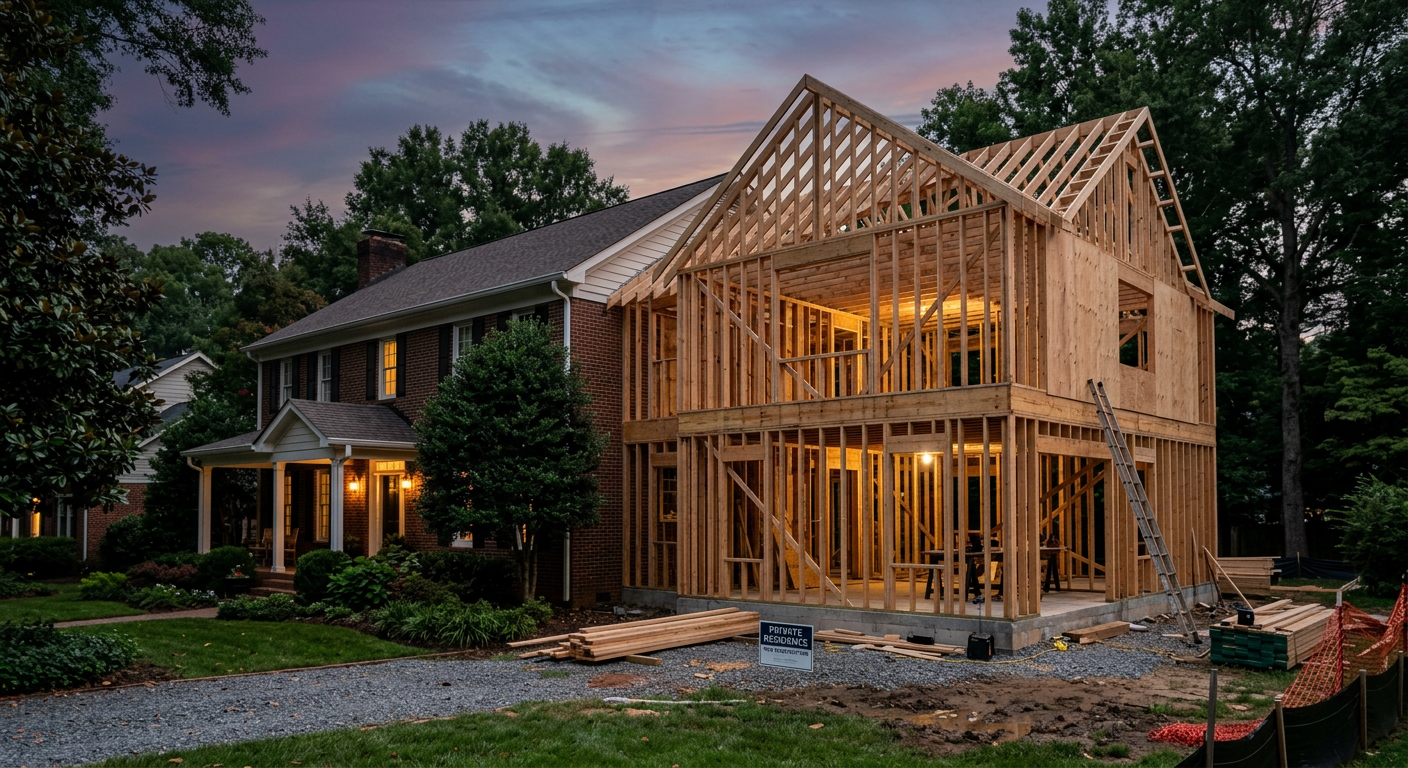
Researched Guide
Compiled from public and official sources; not based on a visit.
Introduction: The Charlotte Housing Dilemma
For many homeowners in the Queen City, the question eventually arises: do you love your location enough to expand your current home, or is it time to seek greener pastures (and more square footage) elsewhere? The Charlotte, NC housing market, with its dynamic growth, diverse neighborhoods, and fluctuating values, makes this decision particularly nuanced. Whether your family is growing, your lifestyle needs have changed, or you simply crave more space, weighing the pros and cons of building an addition versus moving can be a complex process.
Charlotte's vibrant economy and continuous influx of new residents keep housing demand high. This can mean higher home prices for those looking to move, but also potentially strong returns on investment for smart renovations. Understanding the local market dynamics, from construction costs in neighborhoods like Dilworth or Myers Park to property taxes in areas expanding outward like Huntersville or Fort Mill (SC, but a common consideration), is crucial for making an informed decision.
Understanding Your Current Home's Potential
Evaluating Your Property and Neighborhood
Before entertaining the idea of moving, take a critical look at your current home and its location. How much room is there on your lot for expansion? Zoning regulations in Charlotte can significantly impact what you're able to build. For instance, bungalows in Plaza Midwood or historic homes in Dilworth might face stricter setback requirements or architectural review processes than a newer build in Ballantyne. Check with the City of Charlotte Planning Department or a local architect specializing in additions for initial feasibility.
Consider your neighborhood's value. Are property values steadily increasing? Does your home, even with an addition, align with the values of other homes in the area? Over-improving for your neighborhood can make it difficult to recoup your investment come resale. On the other hand, an addition in a highly desirable area like SouthPark or Elizabeth could significantly boost your property's value, making it a sound financial move. Think about school districts (CMS has a complex system, and often a driver for moves or additions), proximity to amenities like the new Silver Line Light Rail, parks such as Freedom Park, and commute times to employment hubs.
The Costs of Building an Addition in Charlotte
Calculating the true cost of an addition goes beyond just materials and labor. In Charlotte, you'll encounter a range of expenses:
- Design and Architectural Fees: Expect to pay 10-15% of the total construction cost for skilled architects and structural engineers, especially for larger or more complex additions.
- Permits and Inspections: The City of Charlotte and Mecklenburg County require various permits (building, electrical, plumbing, mechanical, etc.). These costs can add up, and navigating the inspection process requires adherence to local codes.
- Construction Costs: This is the largest variable. In Charlotte, a basic room addition can range from $150 to $350+ per square foot. More elaborate additions, like a second-story expansion or a gourmet kitchen/master suite, could push costs upwards of $400-$600+ per square foot. Keep in mind that material costs, especially for lumber and finishes, have seen significant fluctuations.
- Unexpected Expenses: Budget an additional 10-20% for unforeseen issues like plumbing rerouting, electrical panel upgrades, or foundation work that may be discovered during construction.
- Temporary Living Arrangements: If the addition is extensive, you might need to rent temporary housing, adding to your overall budget. Many Charlotte temporary stay options are available, from extended-stay hotels in University City to short-term rental apartments downtown.
For example, a 500 sq ft master suite addition in a desirable neighborhood like Cotswold could easily cost between $100,000 to $200,000 or more, depending on finishes and site-specific challenges.
The Allure of Moving: New Opportunities
Market Conditions and Home Prices in Charlotte
Charlotte's real estate market is competitive. As of late 2023 and early 2024, median home prices continue to trend upwards, although the pace has slowed from the pandemic-era boom. Areas like Myers Park, Dilworth, and Eastover command premium prices, often exceeding $1 million. More affordable options can still be found in areas like Steele Creek, Weddington (Union County), or outside the 485 loop, such as Concord or Gastonia.
Before you commit to moving, get a realistic understanding of what your current home might sell for. Consult with local real estate agents who specialize in your neighborhood. They can provide a comparative market analysis (CMA) that considers recent sales, current listings, and market trends.
The Costs of Moving in Charlotte
Moving comes with its own financial burden that is often underestimated:
- Real Estate Agent Commissions: Typically 5-6% of the sale price of your current home. For a $500,000 home, this is $25,000-$30,000.
- Closing Costs: Buyers and sellers both incur closing costs. Sellers might pay 1-3% of the sale price, including transfer taxes, attorney fees, and other charges. Buyers typically pay 2-5% of the loan amount in Charlotte, covering lender fees, appraisals, title insurance, and more.
- Moving Expenses: Professional movers in Charlotte can cost anywhere from $1,000 to $5,000+, depending on the size of your home and distance. DIY moving with truck rental is cheaper but requires more effort.
- Home Repairs and Staging: To maximize your home's sale price, you might need to invest in pre-sale repairs or professional staging.
- New Home Costs: Down payment, potentially higher property taxes in a more expensive area, new utility hookup fees, and possibly new furniture or decor tailored to a different space.
- Lost Time and Stress: The emotional and time cost of selling, buying, and moving should not be overlooked.
Consider the property tax implications. Moving from an older home with a lower assessed value to a brand new build in a comparable neighborhood will likely mean a significant jump in your annual property tax bill to Mecklenburg County.
Weighing the Pros and Cons: A Charlotte-Centric Analysis
Pros of Building an Addition in Charlotte
- Stay in Your Beloved Neighborhood: If you love your Charlotte neighborhood, its schools, proximity to amenities like the Little Sugar Creek Greenway, or your established community ties, an addition allows you to preserve these benefits.
- Customization: Design the space exactly to your specifications, from a dream kitchen to a home office overlooking your backyard in Matthews.
- Potentially Higher ROI: In strong markets, a well-planned addition can significantly increase your home's value, often offering a good return on investment if done thoughtfully and within neighborhood norms.
- Avoid Moving Hassles: Skip packing, house hunting, and dealing with closing costs and agent fees on a new purchase.
- Financial Flexibility: You can often finance an addition through a home equity loan or HELOC, which might offer better interest rates than a new mortgage (depending on market conditions).
Cons of Building an Addition in Charlotte
- Disruption and Inconvenience: Construction is messy, noisy, and intrusive. You might live without a kitchen or with dust throughout your home for months, especially during summer renovations in the humid Charlotte climate.
- Permitting and Regulations: Navigating Charlotte's zoning and building codes can be time-consuming and frustrating, occasionally leading to unexpected delays.
- Cost Overruns: As mentioned, unexpected issues are common and can significantly inflate your budget.
- Potential for Over-Improvement: Adding too much square footage or luxury features that don't align with your neighborhood's average home values can limit your resale potential. For example, adding a full basement in a neighborhood where they are uncommon might not fetch the expected return.
- Limited Space: Your lot size might restrict the scope of your addition, forcing compromises on your vision.
Pros of Moving Home in Charlotte
- Fresh Start: A new home offers the chance for a completely new layout, updated systems, and a different aesthetic without the construction headache.
- Discover New Neighborhoods: Explore Charlotte's diverse communities, from the urban charm of NoDa to the suburban convenience of Blakeney, finding one that perfectly fits your evolving lifestyle.
- More Space Immediately: Get the space you need sooner, without waiting for construction to finish.
- Access to Different School Districts: If schools are a primary driver, moving allows you to target specific, highly-rated CMS or Union County Public Schools.
- Potentially Less Stress (Post-Move): While the moving process itself is stressful, once you're in, you typically don't have ongoing construction issues.
Cons of Moving Home in Charlotte
- High Transaction Costs: Agent commissions, closing costs, and moving expenses can easily amount to tens of thousands of dollars.
- Competitive Market: Finding the perfect home in Charlotte's hot market can be challenging, involving bidding wars and quick decisions, especially in desirable areas like Chantilly or Sedgefield.
- New Mortgage: You'll likely face a new mortgage at current interest rates, which could be higher than your existing one.
- Loss of Equity: If you've been in your current home for a long time, the equity you've built up could be partially eroded by selling and buying costs.
- Unforeseen Issues with a New Home: Even new homes can have problems, and resales can hide costly issues that aren't apparent during a showing. A thorough home inspection in Charlotte is paramount!
- Adjusting to a New Community: Building new social connections and learning the ins and outs of a new neighborhood takes time.
Making the Decision: A Step-by-Step Approach
- Define Your Needs and Wants: What specific space are you lacking? How long do you plan to stay in your home? What's your ideal commute time to uptown?
- Financial Assessment: Get pre-qualified for a home equity loan or a new mortgage. Understand your budget intimately, considering all associated costs for both options.
- Consult the Experts (Charlotte Specific):
- Architect/Contractor: Get detailed quotes for your desired addition. Discuss permitting processes and timelines specific to Mecklenburg County.
- Real Estate Agent: Have your current home appraised and evaluated. Discuss market trends in your desired new neighborhoods.
- Financial Advisor: Review the long-term financial implications of each choice.
- Neighborhood Deep Dive: If moving, spend time in potential new neighborhoods. Test commutes during rush hour (e.g., from Huntersville to South End). Visit local parks, schools, and grocery stores.
- Emotional Check-in: How much does your current home and neighborhood mean to you? How much disruption can your family tolerate?
Ultimately, the decision between building an addition or moving in Charlotte comes down to a careful balance of financial realities, lifestyle preferences, and your long-term goals. There's no one-size-fits-all answer in this dynamic Southern city. By diligently researching both options with Charlotte-specific insights, you can confidently make the best choice for your family's future.
Frequently Asked Questions
What are the typical costs for a major room addition in Charlotte, like a master suite?
In Charlotte, a substantial addition like a master suite can range from $100,000 to $200,000+, depending heavily on square footage, finishes, and specific site challenges in neighborhoods like Dilworth or Ballantyne. These estimates include design, permits, and construction, but can vary widely.
How do Charlotte's zoning regulations impact adding onto my home?
Charlotte's zoning regulations dictate setbacks, impervious surface limits, and height restrictions, which directly impact the size and placement of an addition. Historic districts like Fourth Ward or Plaza Midwood have additional architectural review processes that can affect design and materials, requiring consultation with the Charlotte-Mecklenburg Historic Landmarks Commission.
Are current property taxes in Mecklenburg County a big factor when considering a move to a new construction home versus an addition?
Yes, absolutely. Moving to a newly built home, especially in desirable areas around Charlotte, will likely result in a new property tax assessment based on the current market value, which can be significantly higher than taxes on an older home with a lower, pre-revaluation assessed value. This is a crucial financial consideration in Mecklenburg County.
What are some popular, more affordable neighborhoods to consider if I decide to move outside of Charlotte's immediate urban core?
If you're looking for more affordable options outside the immediate urban core, consider areas like Steele Creek, Mint Hill, or parts of southwest Charlotte. Moving just across the state line into Fort Mill or Tega Cay in South Carolina is also a popular choice for many Charlotte commuters seeking lower property taxes and often more land.
How much value can an addition add to my Charlotte home?
The value added by an addition in Charlotte depends on its type, quality, and how it aligns with your neighborhood's market. A well-executed master suite, family room, or kitchen expansion in a desirable area like SouthPark or Myers Park can often recoup 60-80% or more of its cost in resale value, but over-improving for the area can limit returns.
Where can I find reputable contractors and architects for additions in the Charlotte area?
For reputable contractors and architects in Charlotte, look for professionals with local licensing and strong reviews. Websites like NARI (National Association of the Remodeling Industry) Charlotte chapter, local NCARB directory for architects, and word-of-mouth recommendations from neighbors in areas like Cotswold or Dilworth are excellent starting points.