Researched Guide
Compiled from public and official sources; not based on a visit.
Moody Interior Design: Dark & Dramatic Charlotte Spaces: A Comprehensive Guide
In the world of Charlotte luxury interior design, color palettes represents one of the most impactful elements of any high-end home. Whether you're building a custom estate in Myers Park or renovating a classic home in Eastover, the choices you make in color palettes define the character and quality of your living spaces. Charlotte's design community, including firms like Laura Park Designs and celebrated local artisans, continues to push boundaries in creating extraordinary residential interiors.
Current Trends in Charlotte
Charlotte's luxury market is experiencing a remarkable evolution in color palettes preferences. Homeowners are moving toward designs that balance timeless elegance with contemporary innovation. The influence of Charlotte's sophisticated cultural scene — from the Mint Museum to the Bechtler — can be seen in the artistic sensibility that permeates local interior design. Natural materials, warm metallic accents, and custom artisan elements are defining the current aesthetic, creating spaces that feel both curated and deeply personal.
Local designers report that Charlotte homeowners increasingly seek interiors that tell a story. Gone are the days of cookie-cutter luxury; today's discerning homeowners want spaces that reflect their individual tastes while maintaining the gracious southern hospitality Charlotte is known for. This shift has created exciting opportunities for innovation in color palettes, with designers experimenting with unexpected materials, bold proportions, and bespoke details that set Charlotte homes apart.
Embracing the Dark & Dramatic Aesthetic in Charlotte
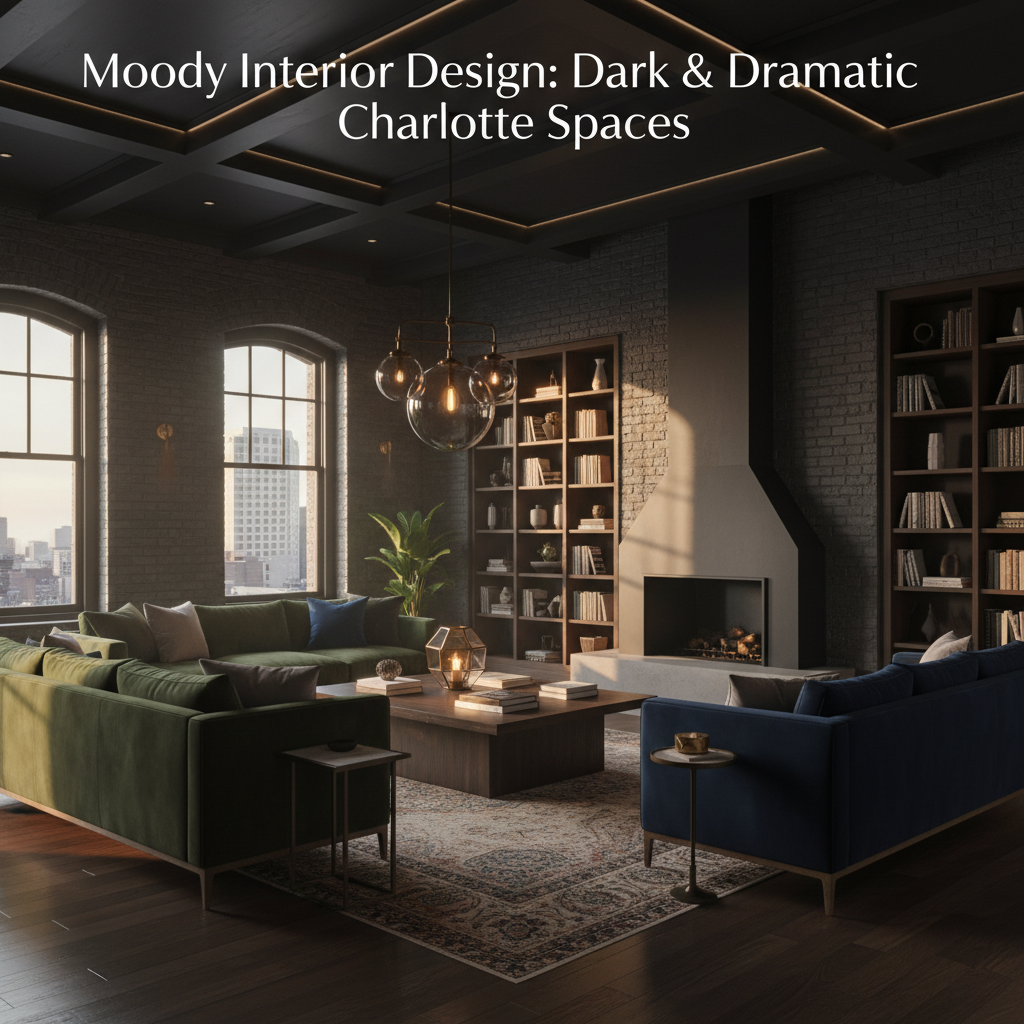
While light and airy interiors have long been a staple of Southern design, a powerful counter-trend is emerging in Charlotte's luxury residential market: moody, dark, and dramatic spaces. This aesthetic embraces rich, saturated hues, deep jewel tones, and striking contrasts to create interiors that are both sophisticated and intensely personal. Far from being somber, these dark palettes exude confidence, warmth, and an inviting sense of intimacy, making them ideal for creating impactful living areas, libraries, and even serene bedrooms.
In neighborhoods like Dilworth and Sedgefield, where historic homes are often renovated to embrace modern living, designers are finding that deep charcoal grays, inky blues, and even rich forest greens can beautifully enhance architectural details. These colors offer a dramatic backdrop that allows for the showcasing of art, curated collections, and bespoke furnishings. Think of a living room in a Belmont estate draped in a deep navy velvet, accented with brass hardware and a striking modern chandelier – a perfect blend of classic charm and contemporary drama that resonates with Charlotte's evolving luxury market.
The Psychology of Dark Color Palettes
The allure of dark and dramatic interiors extends beyond mere aesthetics; it taps into a psychological response. Deep colors can create a sense of enclosure and security, fostering a feeling of calm and introspection. In a bustling city like Charlotte, a home designed with moodier palettes can offer a sanctuary from the everyday. This is particularly relevant for modern professionals whose lives are often fast-paced and demanding.
Darker hues can visually recede, making spaces feel more intimate and cozy, even in large open-plan designs. They also have the remarkable ability to make lighter colors and metallic finishes pop, creating dynamic contrast. This is a strategy frequently employed by designers working with prominent Charlotte families who desire interiors that feel both grounding and luxurious. Consider a home office with walls painted a deep plum or espresso, paired with rich leather seating and subtle gold accents – a space designed for focus and refined comfort.
Key Colors for a Moody Charlotte Interior
- Deep Blues: From navy to midnight, these hues evoke sophistication and tranquility. They pair exceptionally well with brass, gold, and natural wood tones common in Charlotte's more traditional estates.
- Rich Greens: Emerald, forest, and olive greens bring the grounding essence of nature indoors. They are perfect for creating a connection to the lush landscapes surrounding Charlotte, especially in homes near the U.S. National Whitewater Center or the many sprawling golf communities.
- Charcoal Greys & Blacks: These timeless neutrals provide a dramatic and versatile foundation. They can make any accent color or material stand out, from marble countertops in SouthPark kitchens to custom cabinetry in lakeside homes.
- Burgundies & Deep Purples: For a touch of opulence and warmth, these richer tones add depth and drama. They are ideal for creating a luxurious lounge or dining area, reminiscent of the chic atmosphere found in Uptown Charlotte's fine dining establishments.
- Earthy Terracottas & Rusts: While less traditionally "dark," these warm, earthy tones can create a cozy, almost velvety effect when used in deeper saturation. They offer a unique alternative that still provides a sense of enveloping comfort.
Integrating Dark Palettes into Charlotte Homes
Successfully implementing a dark and dramatic color palette in a Charlotte home requires careful consideration of light, scale, and material. It's not simply about painting every wall a dark color. Instead, it's about strategic application and balance.
Strategic Wall Colors: Consider using dark hues on accent walls, in smaller intimate spaces like powder rooms or studies, or on ceilings to add unexpected depth. For larger rooms, a deep, matte finish can create a sophisticated wash of color without overwhelming the space. Designers often recommend Benjamin Moore's "Hale Navy" or Sherwin-Williams' "Tricorn Black" as starting points for these dramatic transformations.
Lighting is Key: With darker palettes, the importance of layered lighting cannot be overstated. Ambient lighting should be warm and diffused, while accent lighting can highlight architectural features, artwork, or specific furniture pieces. Wall sconces, statement chandeliers, and strategically placed table lamps are crucial for illuminating the richness of the colors and preventing the space from feeling too enclosed. Many new constructions in the Ballantyne area are designed with ample natural light, making them excellent canvases for these dramatic interior choices.
Balancing with Texture & Lighter Elements: To prevent a dark space from feeling heavy, designers introduce contrast through a variety of textures and lighter accents. This can include plush velvet upholstery, richly grained wood furniture, the sheen of polished metals (brass, brushed nickel, or even matte black), and crisp white or cream-colored textiles. Introducing natural elements like live plants can also add vibrancy and life to a moody scheme.
Materiality Matters: The quality of materials is amplified in darker schemes. Consider deep-toned marble for countertops or fireplace surrounds, rich walnut or mahogany for cabinetry and flooring, and textured wallpapers that add subtle dimension. In Charlotte's luxury market, the tactile quality of materials becomes a significant part of the design narrative.
Neighborhood Spotlights & Design Inspiration
Different Charlotte neighborhoods lend themselves to nuanced interpretations of the moody aesthetic. In the historic charm of **Myers Park**, designers might incorporate deep jewel tones into a renovated bungalow, playing off the area's established elegance with dark-stained wood and antique-inspired fixtures.
For the modern residences found in **SouthPark**, a darker palette can be used to create a sleek, sophisticated urban oasis. Imagine a penthouse with charcoal walls, high-gloss finishes, and cutting-edge art, mirroring the area's upscale shopping and dining scene. This approach often incorporates minimalist furniture and dramatic lighting to enhance the contemporary feel.
In the sprawling estates around **Lake Norman**, designers might lean into deeper, nature-inspired greens and blues, creating a serene retreat that reflects the surrounding water and wooded landscapes. The use of natural materials like reclaimed wood and stone can further enhance this connection to the environment.
Market Data & Investment Value
While light and bright interiors often come to mind for maximizing resale value, a well-executed dark and dramatic design can significantly enhance a Charlotte luxury home's appeal and value. Buyers in the higher echelons of the Charlotte market, particularly those looking for custom-built homes in areas like **Providence Road** or the **Piper Glen** golf community, are increasingly seeking unique, personality-driven interiors. These buyers are often willing to pay a premium for homes that showcase distinctive design choices and a strong aesthetic point of view.
According to recent market analyses, homes featuring high-quality, custom interior finishes, regardless of palette trend, tend to hold their value better and command higher prices. A dramatic color palette, when executed with premium materials and expert craftsmanship, is a clear indicator of quality and an appreciation for design. For instance, a dramatic, jewel-toned media room or a sophisticated, dark-paneled library can be a significant selling point, especially in a competitive market like Charlotte's, where discerning buyers are looking for more than just square footage.
The average price point for luxury homes in Charlotte can range significantly, with properties in prime locations like **Myers Park** or **Morningside** often exceeding $2 million, and custom estates in affluent suburbs reaching upwards of $5 million to $10 million. Investing in a sophisticated moody palette, using high-quality paints from brands like Farrow & Ball (popular with local designers for their depth of color) or Sherwin-Williams, and complementing it with premium materials, is a strategic move that can enhance both the immediate enjoyment and the long-term appreciation of the property.
Working with Charlotte Design Professionals for Moody Palettes
Engaging with Charlotte's design talent is crucial for achieving a successful moody interior. Local designers possess an intimate understanding of the city's architectural styles, client preferences, and the specific challenges and opportunities presented by the regional climate and light conditions. Firms like **The Design Firm (TDF)** or independent consultants often specialize in creating bespoke environments that reflect their clients' lifestyles and personal tastes.
When discussing a dark and dramatic aesthetic, it's essential to find a designer who can translate your vision while ensuring the space remains functional and inviting. Look for professionals who have a strong portfolio showcasing their ability to work with color depth, texture, and lighting to create balanced and impactful interiors. They can advise on:
- The right finish for the dark paint: Matte finishes absorb light, enhancing depth, while satin or semi-gloss can offer a subtle sheen and reflect light strategically.
- Balancing dark walls with other elements: Integrating lighter furniture, abundant throws and pillows, and carefully selected artwork to prevent the space from feeling cave-like.
- Specifying appropriate lighting: Layering ambient, task, and accent lighting to create mood and functionality.
- Choosing complementary materials: Selecting natural woods, veined marbles, rich leathers, and brushed or polished metals that harmonize with the darker hues.
Building a collaborative relationship with a designer, architect, and builder is key. In Charlotte, renowned custom home builders like **Arthur Rutenberg Homes** or **Hoppen Homes** often work in conjunction with top designers to bring complex visions to fruition seamlessly. This integrated approach ensures that the moody aesthetic is not just skin-deep but is thoughtfully incorporated into the home's structure and overall design integrity.
Conclusion: Creating Your Own Dramatic Sanctuary
The rise of moody, dark, and dramatic interior design in Charlotte luxury homes signals a sophisticated evolution in homeowner preferences. It's an embrace of spaces that offer depth, character, and a profound sense of personal style. Far from being a fleeting trend, this aesthetic offers a timeless approach to creating interiors that are both striking and incredibly inviting.
By strategically incorporating rich colors, thoughtful lighting, and luxurious textures, homeowners can transform their Charlotte residences into sanctuaries that are as unique and captivating as the city itself. Whether you're drawn to the deep blues of a Lake Norman retreat, the sophisticated charcoals of a SouthPark penthouse, or the opulent burgundies of a Myers Park estate, the power of a well-executed dark palette lies in its ability to create spaces that truly resonate and endure.
Design Principles & Best Practices
The foundation of exceptional color palettes lies in understanding proportion, balance, and the interplay between form and function. In Charlotte's luxury market, this means considering how each element relates to the architectural context of the home, the regional climate, and the lifestyle of the homeowner. The best Charlotte designers begin every project with a thorough analysis of natural light patterns, traffic flow, and the intended use of each space.
Material selection is paramount in luxury color palettes. Charlotte homes benefit from access to exceptional showrooms and trade resources, including the Charlotte Design District and numerous specialty suppliers. Working with reputable builders like Peters Custom Homes ensures that design vision translates seamlessly into reality, with the craftsmanship and attention to detail that luxury interiors demand. The integration of locally sourced materials alongside imported specialty items creates a distinctive Charlotte aesthetic that honors both regional character and global design excellence.
Material Selection & Quality
For Charlotte luxury homes, material selection in color palettes requires a discerning eye and deep knowledge of available options. Natural materials — stone, wood, metal, and textiles — form the backbone of timeless luxury design. The Charlotte climate, with its humid summers and mild winters, influences material choices significantly. Designers must select finishes and materials that perform beautifully in local conditions while maintaining their luxury appearance for decades.
Premium materials for Charlotte interiors include domestic and imported hardwoods, natural stone from quarries worldwide, hand-crafted metalwork, and artisan textiles. The investment in quality materials pays dividends in longevity, aesthetic impact, and ultimately in home value. Charlotte's luxury real estate market consistently rewards homes with exceptional interior finishes, making material selection not just an aesthetic choice but a sound investment strategy.
Working with Charlotte Design Professionals
Charlotte's interior design community includes some of the Southeast's most talented professionals, many of whom specialize in luxury residential projects. When selecting a designer for your color palettes project, look for professionals with deep experience in Charlotte's unique market — those who understand local building codes, have established relationships with premium suppliers, and possess the creative vision to elevate your home beyond the ordinary.
The best design outcomes result from collaborative relationships between homeowners, designers, and builders. In Charlotte, firms that offer full-service design — from concept development through installation — deliver the most cohesive results. This integrated approach ensures that every element of your color palettes works harmoniously within the broader context of your home's architecture and your family's lifestyle.
Investment & Value Considerations
Luxury color palettes in Charlotte represents a significant investment, but one that consistently delivers returns both in daily enjoyment and property value. The Charlotte luxury real estate market, with homes ranging from $1.5 million to $10 million and beyond, places extraordinary value on interior quality. Buyers in neighborhoods like Myers Park, SouthPark, and the Lake Norman communities expect impeccable interiors, making design quality a critical factor in resale value.
Budget allocation for luxury color palettes varies widely depending on scope and material selection, but Charlotte designers generally recommend investing in the elements you interact with daily — surfaces you touch, fixtures you use, and spaces where you spend the most time. This prioritization approach ensures maximum impact while maintaining budgetary discipline, even in the most ambitious projects.
Frequently Asked Questions
What are the top color palettes trends in Charlotte luxury homes?
Charlotte's luxury market favors natural materials, warm metallics, custom artisan elements, and designs that balance timeless elegance with contemporary innovation. Local designers are creating spaces that reflect individual personality while maintaining southern sophistication.
How much does luxury color palettes cost in Charlotte?
Costs vary significantly based on materials, scope, and customization. Charlotte luxury color palettes projects typically range from $50,000 to $300,000 or more, depending on the size and complexity of the project.
Which Charlotte neighborhoods have the best interior design?
Myers Park, Eastover, SouthPark, and the Lake Norman communities consistently showcase the most sophisticated interior design in the Charlotte market, with homes featuring custom millwork, imported materials, and designer furnishings.
How do I find a luxury interior designer in Charlotte?
Look for designers with portfolios that match your aesthetic, membership in organizations like ASID, and experience with Charlotte's luxury market. Personal referrals, design showroom recommendations, and builder partnerships are excellent starting points.
What materials work best for Charlotte's climate?
Charlotte's humid subtropical climate favors materials that resist moisture and temperature fluctuations — engineered hardwoods, natural stone, moisture-resistant finishes, and UV-stable fabrics perform exceptionally well in local homes.