Researched Guide
Compiled from public and official sources; not based on a visit.
Wine Cellar Design for Charlotte Luxury Homes — From Concept to Completion
In Charlotte’s dynamic luxury real estate market, discerning homeowners increasingly seek bespoke amenities that transcend the conventional. Among these, the custom wine cellar has emerged as a quintessential statement of refinement, a testament to connoisseurship, and a strategic enhancement to property value. More than mere storage, a meticulously designed wine cellar in a Charlotte luxury home represents a confluence of artistry, engineering, and personal passion. This comprehensive guide navigates the intricate journey of wine cellar creation, from initial conceptualization to the final, breathtaking reveal, specifically tailored for the sophisticated Charlotte homeowner.
The Queen City, with its burgeoning culinary scene, robust financial sector, and vibrant cultural landscape, has cultivated a sophisticated clientele that appreciates the nuances of fine wine. Properties in prestigious enclaves such as Myers Park, Eastover, Dilworth, and the increasingly affluent sections of SouthPark are experiencing an elevated demand for integrated luxury. A bespoke wine cellar, far from being a simple addition, becomes an architectural focal point, complementing the grandeur of homes that routinely command prices exceeding the $2 million mark, and frequently extending well beyond $5 million in prime locations like Foxcroft and The Point at Lake Norman.
The Visionary Phase: Conceiving the Ideal Charlotte Wine Cellar
The genesis of any exceptional wine cellar lies in a clear, well-articulated vision. This initial phase is critical for defining the scope, aesthetic, and functional parameters of the project. It involves a deep dive into the homeowner's lifestyle, collection size, collecting habits, and desired atmosphere.
Defining Purpose and Collection Profile
- Collector’s Intent: Is the cellar for long-term aging of investment-grade Bordeaux, a rotating selection of accessible daily drinkers, or a curated display of rare vintages for entertaining? The answer profoundly influences temperature, humidity controls, and display methods.
- Collection Size and Growth: An accurate assessment of current bottle count and projected future growth is paramount. Initial capacity planning should factor in at least 25-50% growth over a five-year period to avoid premature obsolescence. Luxury custom homes in Charlotte often feature collections ranging from 500 to 5,000 bottles, with some prominent estates accommodating upward of 10,000 bottles.
- Bottle Formats: Consideration of standard 750ml bottles, magnums, jeroboams, and other large-format bottles requires varied racking solutions.
Aesthetic Direction and Integration with Home Architecture
A Charlotte luxury home demands a wine cellar that harmonizes seamlessly with its overarching architectural and interior design schema. This is where the synergy between client vision and design expertise becomes critical.
- Traditional Grandeur: For stately estates in Myers Park or Eastover, a classic cellar employing rich hardwoods like mahogany or walnut, wrought iron accents, stone flooring, and intricate millwork can evoke timeless elegance.
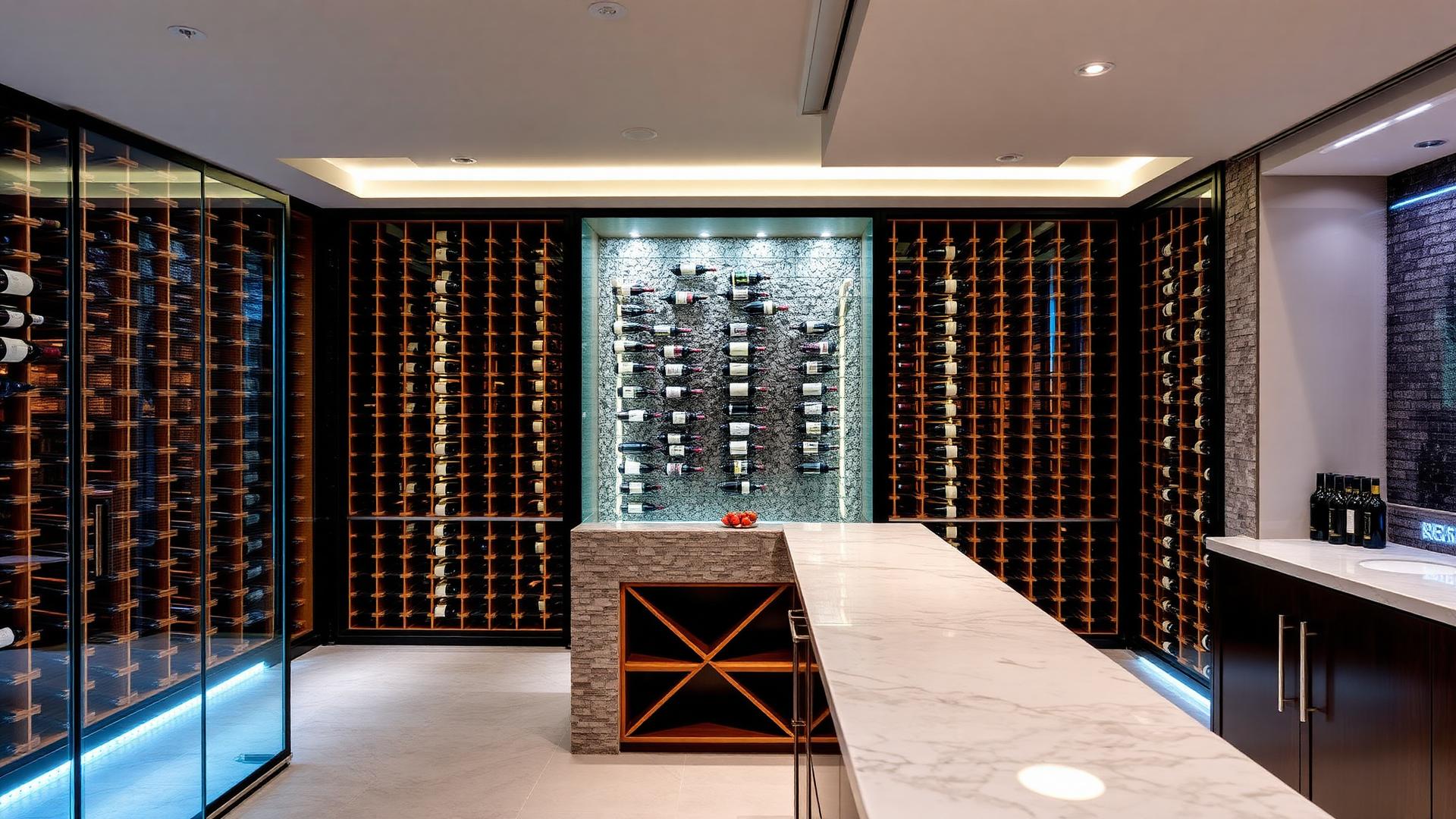
- Modern Minimalism: Homes in newer, architecturally innovative developments or renovated properties in South End might benefit from a sleek, contemporary design featuring frameless glass, polished concrete, stainless steel, and LED lighting to create a gallery-like effect.
- Transitional Elegance: A popular choice in Charlotte, blending traditional warmth with modern clean lines, often utilizing reclaimed wood, dark metals, and subtle backlighting.
- Integration Points: Will the cellar be a standalone room, an alcove within a larger entertaining space, or a glass-encased showpiece visible from multiple areas? The chosen location critically impacts climate control strategies and visual impact.
The Design and Engineering Imperative: Precision and Performance
Once the vision is established, the project transitions into a highly technical phase requiring specialized expertise. This involves meticulous planning to ensure optimal preservation conditions while achieving aesthetic excellence.
Climate Control: The Heart of the Cellar
Maintaining a stable environment is non-negotiable for wine preservation. The ideal conditions are generally held to be between 55-58°F (12-14°C) with humidity levels between 55-75%.
- HVAC System Selection: Commercial-grade, ducted split systems, self-contained units, or ducted wine cooling units are chosen based on cellar size, location, and aesthetic preferences. Systems from industry leaders such as Wine Guardian or WhisperKOOL are frequently specified for their reliability and performance. Considerations include noise levels, energy efficiency (critical in Charlotte’s warm summers), and discreet placement of condensers.
- Insulation and Vapor Barrier: Crucial for maintaining stable temperatures and preventing mold and mildew. Closed-cell spray foam insulation, typically R-30 to R-40 in walls and R-40 to R-50 in ceilings, forms a thermal envelope. A continuous vapor barrier (6-mil poly sheeting or foil-backed insulation) on the warm side of the walls and ceiling is essential to prevent moisture migration.
- Door and Window Specifications: Cellar doors must be exterior-grade, insulated, and sealed with weather stripping and an automatic door bottom. If glass is incorporated (increasingly popular for display), it must be tempered, insulated (dual or triple pane), and UV-treated to protect wine from light degradation while preventing condensation.
Racking Systems: Form Meets Function
Racking defines the cellar's capacity and visual flow. Customization is key to maximizing space and showcasing the collection.
- Material Selection:
- Wood: Mahogany, redwood, cedar, and oak are timeless choices, offering natural beauty and stability. Custom millwork by local artisans or specialized firms ensures a perfect fit.
- Metal: Steel, aluminum, or wrought iron racks provide a modern, industrial, or minimalist aesthetic. Labels-forward displays are popular for easy identification.
- Acrylic/Glass: Highly contemporary, creating a floating effect that emphasizes the bottles themselves.
- Racking Styles:
- Individual Bottle Storage: The most common, allowing easy access and organization.
- Bulk Storage (Diamond or Bin): Ideal for storing multiple bottles of the same vintage or larger collections efficiently.
- Display Racks: Angled or horizontal racks designed to highlight specific bottles, often with integrated lighting.
- Case Storage: Dedicated areas for original wood cases (OWCs), preserving provenance for serious collectors.
- Ergonomics and Accessibility: Design should consider ease of access, bottle retrieval, and clearance for movement within the cellar, especially for larger collections.
For large-scale, complex projects, collaboration with established Charlotte-based luxury home builders such as Peters Custom Homes ensures the structural integrity and seamless integration of the cellar within the overall residential architecture. Their expertise in managing high-end construction projects is invaluable in translating sophisticated designs into tangible, enduring spaces.
The Art of Illumination: Setting the Mood and Highlighting the Collection
Lighting in a wine cellar is not merely functional; it is an intrinsic part of the aesthetic, creating ambiance and showcasing the bottles without compromising their integrity.
- LED Lighting: The preferred choice due to its low heat emission, UV-free spectrum, energy efficiency, and longevity.
- Layered Lighting:
- Ambient Lighting: Soft, overall illumination, often recessed or cove lighting, for general visibility.
- Accent Lighting: Focused lighting to highlight specific bottles, artwork, or architectural details. Backlighting for display racks creates dramatic visual appeal.
- Task Lighting: For tasting areas or decanting stations.
- Controls: Dimmers and smart home integration (e.g., via systems managed by companies like Peters Audio Video) allow for precise control of brightness and color temperature, enabling homeowners to adapt the mood for any occasion – from intimate tasting sessions to grand entertaining.
Finishing Touches: Enhancing the Cellar Experience
The details transform a functional space into a luxurious sanctuary.
- Flooring: Stone (slate, travertine), tile, concrete, or even engineered wood designed for high-humidity environments. Carpeting and natural hardwoods are generally avoided due to moisture concerns.
- Tasting Area: An integrated tasting counter or small table with seating adds functionality, providing a space for sampling and appreciation.
- Décor and Art: Strategic placement of wine-related artwork, antique maps, or specialized decanters further personalizes the space.
- Security: For high-value collections, discreet security measures including reinforced doors, advanced lock systems, and integrated alarm or surveillance cameras are essential. This is particularly relevant in Charlotte homes where individual bottles can command prices well into five and even six figures.
Project Management: From Blueprints to Bottle Placement
The successful execution of a luxury wine cellar project relies on adept project management, bringing together diverse specialists.
- Architectural & Design Collaboration: Working with architectural firms well-versed in luxury residential projects ensures that the cellar's structure and aesthetics align with the home's overall design intent. Interior design firms, such as Emerald & Oak Design, bring an acute sense of style and material selection expertise to ensure the cellar is not just functional but also visually stunning.
- Specialized Contractors: Engaging contractors with proven experience in wine cellar construction—specifically in humidity and temperature control, insulation, and custom millwork—is non-negotiable.
- Timeline and Budget: A detailed project timeline, encompassing design, permitting, construction, and installation, is crucial. For Charlotte luxury homes, costs can range widely, from $50,000 for a well-appointed small cellar to upwards of $500,000 for expansive, highly customized, and technologically advanced installations. Approximately 60% of the cost is typically attributed to climate control and insulation, 25% to racking and millwork, and 15% to finishes and lighting.
Valuation and Market Impact in Charlotte
The addition of a custom wine cellar in Charlotte's competitive luxury market is more than a lifestyle amenity; it is a demonstrable asset that can significantly enhance property value and marketability. Industry data, while difficult to quantify precisely for bespoke features, indicates that premium amenities, when executed to the highest standards, can yield significant returns. In neighborhoods like Myers Park, where median home prices often exceed $1.5 million, or Lake Norman, with its waterfront estates fetching multi-million-dollar sums, a meticulously designed wine cellar differentiates a property, potentially accelerating sale times and increasing offer values.
Data from luxury real estate market analyses often highlight that homes with unique, high-end features attract a specific buyer demographic willing to pay a premium. A well-designed wine cellar signals a level of sophistication and attention to detail that resonates with affluent buyers, enhancing the perceived luxury quotient of the entire property. For homes listed by expert luxury real estate firms like Peters Team Realty, the presence of such a bespoke amenity is a key selling point, often highlighted in marketing collateral and property tours to emphasize the home's distinctive appeal.
Case Study Considerations: Charlotte’s Luxury Landscape
Consider a hypothetical luxury residence in SouthPark, an area known for its upscale residences and vibrant commercial core. A contemporary brick and stone home, recently renovated, might incorporate a glass-walled wine cellar adjacent to the dining room. This design choice transforms the cellar into an art installation, visible and admired by guests, showcasing a collection that aligns with the owner's modern tastes. The climate control system would be discreetly integrated, managed via a smart home system for optimal performance and efficiency.
Alternatively, in a historic Eastover estate, a subterranean wine cellar might be designed to evoke old-world European charm. Think exposed brick, a barrel-vaulted ceiling, and deep mahogany racking, perhaps housing a collection favoring Old World wines. The subtle hum of the cooling unit would be expertly dampened, maintaining the tranquil ambiance necessary for true appreciation.
Another emerging trend for wine enthusiasts in Charlotte is the integration of custom cellars within larger, multi-purpose luxury spaces. For example, a dedicated entertainment wing, perhaps incorporating a home theater (outfitted by specialists such as Peters Audio Video), a billiards room, and a sophisticated bar, could seamlessly transition into an illuminated wine lounge. This comprehensive approach to luxury living, embodied by master-planned communities featuring amenities like those offered at Sage at Marvin, demonstrates a shift towards estates that cater to every facet of refined leisure.
Conclusion: The Enduring Allure of the Custom Wine Cellar
The custom wine cellar in a Charlotte luxury home is more than a storage solution; it is a meticulously crafted environment that preserves, protects, and presents a cherished collection. It is an expression of personal taste, a testament to thoughtful design, and a valuable enhancement to a property's prestige and market standing. From the initial spark of an idea to the final placement of the first bottle, the journey requires a harmonious blend of architectural precision, engineering expertise, and artistic vision.
For the discerning homeowner in Charlotte, investing in a bespoke wine cellar is an investment in a lifestyle—one characterized by sophistication, appreciation for craftsmanship, and an enduring passion for the world of wine. As the luxury real estate market in Charlotte continues its ascent, personalized amenities such as these will remain pivotal in defining the pinnacle of residential excellence, underscoring the Queen City’s reputation as a hub for elevated living.
Frequently Asked Questions
What are the essential elements of a luxury wine cellar design in Charlotte?
Luxury wine cellar design in Charlotte typically includes precise temperature and humidity control, custom racking tailored to bottle size and collection volume, high-quality insulation, vapor barriers, and aesthetic considerations like lighting, flooring, and decorative elements (e.g., custom doors, tasting areas). The design should also account for the home's architectural style and the owner's personal preferences.
How long does it take to design and build a custom wine cellar for a Charlotte luxury home?
The timeline for designing and building a custom wine cellar can vary significantly depending on its complexity, size, and chosen materials. Generally, the design phase can take several weeks, followed by construction which might range from 2-4 months or more for elaborate projects. Factors like lead times for custom materials also play a role.
What are the cost considerations for a luxury wine cellar in Charlotte?
Costs for luxury wine cellars are highly variable. Factors influencing price include the size of the cellar, the type of cooling system, material choices for racking (e.g., wood, metal, acrylic), flooring, lighting, custom features like tasting tables or artwork, and labor. A high-end custom cellar can represent a significant investment, ranging from tens of thousands to hundreds of thousands of dollars.
Can I integrate smart home technology into my Charlotte luxury wine cellar?
Absolutely. Smart home technology can greatly enhance a luxury wine cellar. This can include intelligent climate control systems that can be monitored and adjusted remotely, integrated lighting systems with dimming and color options, security features, and even inventory management systems that track your collection digitally. This integration ensures optimal conditions and convenience.