Researched Guide
Compiled from public and official sources; not based on a visit.
Stay Powered Up: Backup Generators for Charlotte Households
Living in Charlotte, North Carolina, offers a fantastic blend of vibrant city life, beautiful green spaces, and a thriving economy. However, like any metropolitan area situated within a region prone to diverse weather patterns, Charlotte homes are not immune to power outages. From summer thunderstorms that can down trees and lines, to winter ice storms that cripple infrastructure, and even unexpected grid failures, losing power can be more than an inconvenience; it can disrupt work-from-home schedules, spoil food, affect critical medical equipment, and compromise home security. This is where investing in a reliable backup power solution, specifically a whole-home generator, becomes a smart and increasingly necessary decision for homeowners across the Queen City.
Understanding the local climate is key. Charlotte experiences hot, humid summers with frequent afternoon thunderstorms, often bringing high winds and heavy rain. Fall and spring can also see severe weather, including tornadic activity. Winters, while generally mild, can surprise us with ice storms that coat trees and power lines, leading to widespread and prolonged outages. Neighborhoods like Myers Park with its mature tree canopy, or older areas in Dilworth with overhead lines, can be particularly susceptible. Even newer developments in Ballantyne or SouthPark, while often boasting underground utilities, aren't completely immune to substation issues or widespread grid problems.
Types of Backup Generators: What's Right for Your Charlotte Home?
When considering a backup power solution for your Charlotte residence, you’ll primarily encounter two main types: portable generators and standby (whole-home) generators.
- Portable Generators: These are typically less expensive upfront and run on gasoline or propane. They offer flexibility as they can be moved and used for various purposes. However, they require manual setup, refueling, and connecting appliances via extension cords. For a Charlotte home, a portable generator might be suitable for powering a few essential items like a refrigerator, some lights, and a phone charger during a short outage. They are not designed to power an entire house, and their outdoor-only operation requires careful placement away from windows and doors due to carbon monoxide risks. You'll often find Charlotte residents using these for tailgating at Panthers games or for basic emergency power.
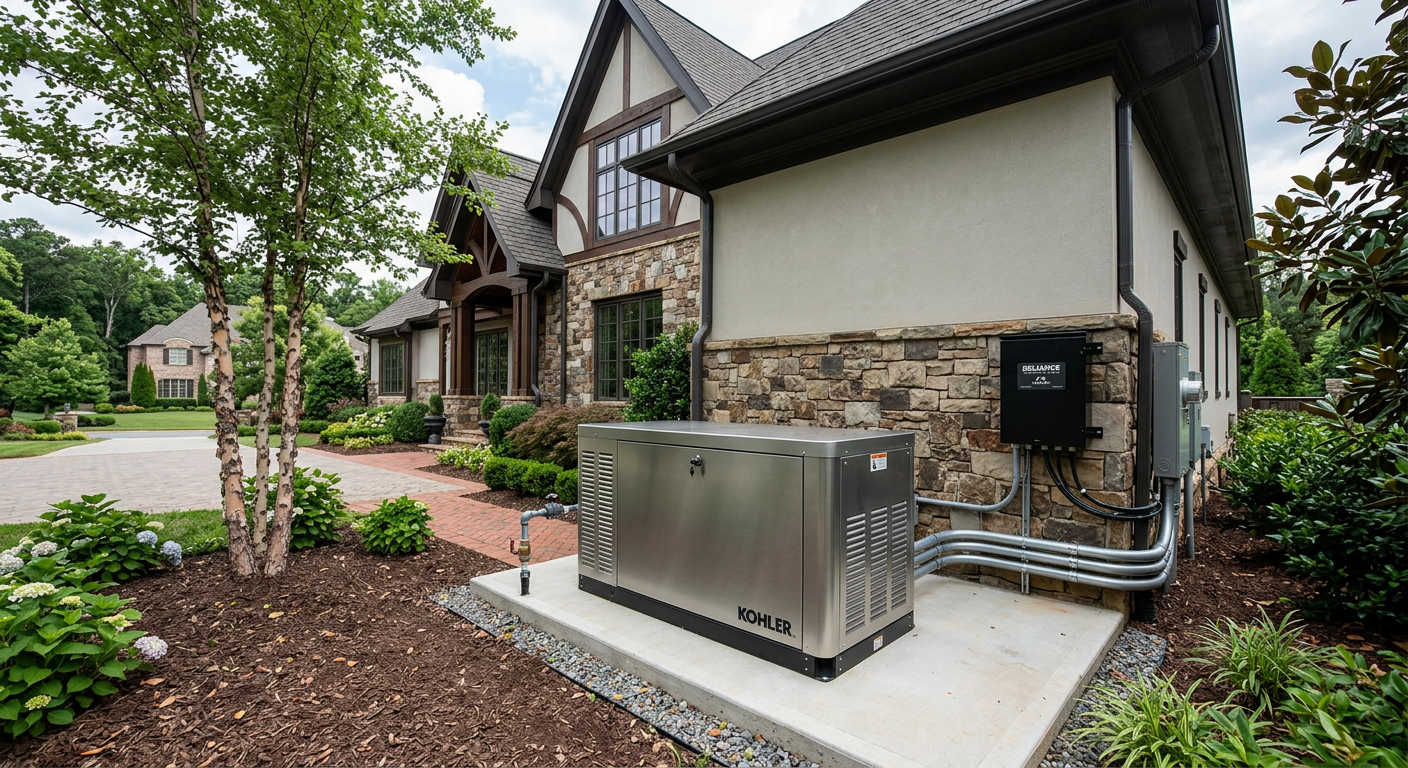
- Standby (Whole-Home) Generators: These are permanently installed outside your home, similar to an AC unit, and connect directly to your home's electrical system and a fixed fuel source (natural gas or propane). The major advantage of a standby generator is its automatic operation. When the power goes out, it detects the interruption, starts up, and transfers power to your home, all without you having to lift a finger. When utility power is restored, it automatically shuts down. For homeowners in Charlotte looking for seamless, comprehensive protection, a standby generator is the superior choice.
Fueling Your Generator: Natural Gas vs. Propane in Charlotte
The choice of fuel source for your standby generator is a crucial decision, particularly in the Charlotte area.
- Natural Gas: Many homes in Charlotte, especially in established neighborhoods like Plaza Midwood, Elizabeth, and parts of Matthews, have access to natural gas lines. If your home is already connected, a natural gas generator offers an unlimited fuel supply, as it's continuously fed from the utility. This means no worries about refueling or running out of fuel during extended outages, which can be a significant benefit during widespread regional events. Installation costs might be slightly lower if a gas line is already in proximity to the generator pad.
- Propane (LP Gas): For homes not connected to a natural gas line, particularly in more rural fringes of Mecklenburg County or newer developments where natural gas infrastructure might be limited, propane is an excellent alternative. Propane is stored in large tanks on your property, which require professional installation and periodic refilling. While you do have a finite supply, a properly sized tank can provide days, or even weeks, of power depending on usage. Many homes in areas like Weddington or Marvin choose propane for their generators.
Sizing Your Generator for Your Charlotte Lifestyle
Correctly sizing your generator is paramount to ensuring it can meet your household's power needs. An undersized generator will struggle and potentially get damaged, while an oversized one is an unnecessary expense. A professional Charlotte electrician or generator installer will typically conduct a load calculation, but here's a general guide:
- Essential Circuits: For powering critical items like a refrigerator, freezer, a few lights, a sump pump, and a furnace fan, a 7-10 kW generator might suffice.
- Basic Whole Home: To power most essential appliances plus some creature comforts like a TV, microwave, and a few more lights, look at 12-16 kW.
- Comfort Whole Home: For homes wanting to power air conditioning, multiple appliances, and maintain a near-normal lifestyle during an outage, 20-22 kW is a popular choice for average-sized Charlotte homes.
- Large Homes/Luxury: Larger homes in neighborhoods like The Peninsula or Providence Road requiring extensive HVAC, pool equipment, and multiple high-demand appliances may need 25 kW or more.
It's important to consider your specific needs. Do you have medical equipment that requires continuous power? Do you work from home and need reliable internet and computer power? Is central air conditioning a must-have in a Charlotte summer? All these factors influence the size you'll need.
Charlotte-Specific Generator Installation and Costs
The total cost of a whole-home standby generator in Charlotte involves several components:
- Generator Unit Cost: This varies significantly by brand (e.g., Generac, Kohler, Cummins) and size. A 7kW unit might start around $2,500-$4,000, while a 22kW unit could range from $5,000-$7,500 for the unit itself.
- Installation Costs: This is where local factors come into play. Installation typically includes:
- Site preparation: Grading, building a concrete pad.
- Electrical work: Connecting to your home's electrical panel, installing an automatic transfer switch (ATS). This requires a licensed Charlotte electrician.
- Fuel line installation: Connecting to natural gas or installing a propane tank and running lines. This also requires licensed professionals (plumber/gas fitter).
- Permits: Mecklenburg County requires permits for generator installation to ensure safety and compliance with local codes.
- Labor: The cost of the technicians.
- Ongoing Maintenance: Like your car, generators need regular servicing. Annual maintenance contracts in Charlotte typically run $200-$400, ensuring your system is ready when you need it most.
Local Charlotte electricians and HVAC companies often offer comprehensive generator services, from sales and sizing to installation and maintenance. Always seek quotes from several licensed and insured Charlotte contractors who are experienced in generator installations. Ask for references, especially from homeowners in Dilworth or SouthPark who might have specific aesthetic considerations or HOAs. Prices can fluctuate based on demand, especially after major storm events.
Why Charlotte Homeowners Are Choosing Backup Power
The value of a backup generator extends beyond simply keeping the lights on. For Charlotte residents, it offers:
- Peace of Mind: Knowing your family is safe, warm/cool, and connected during an outage is invaluable.
- Protecting Your Investment: Preventing burst pipes in winter, spoiled food in summer, and potential damage to electronics from power surges upon restoration.
- Maintaining Comfort and Productivity: Keep your AC running in July, your furnace in January, and your home office operational.
- Increased Home Value: A whole-home standby generator is a desirable amenity that can increase your property's resale value, especially in a competitive Charlotte real estate market.
- Safety and Security: Keep security systems, garage door openers, and exterior lighting operational.
From the historic bungalows of Dilworth to the sprawling estates of Myers Park and the modern homes of Ballantyne, Charlotte's diverse neighborhoods all share a common need for reliable power. Proactive planning for power outages ensures that your home remains a sanctuary, no matter what Mother Nature or the power grid throws our way.
Permits and Regulations in Mecklenburg County
It's crucial for Charlotte homeowners to understand that installing a standby generator is not a DIY project. Mecklenburg County, through the Department of Code Enforcement, requires permits for electrical and gas work associated with generator installation. This ensures that the installation adheres to the National Electrical Code, local building codes, and safety standards. A reputable Charlotte generator installer will handle all necessary permitting, inspections, and ensure compliance. Skipping these steps can lead to fines, safety hazards, and issues with insurance coverage. Always ask your prospective installer about their permitting process.
Smart Generator Features for the Modern Charlotte Home
Modern generators offer a host of smart features that can enhance convenience and reliability for Charlotte homeowners:
- Remote Monitoring: Many leading brands offer apps or online portals that allow you to monitor your generator's status from your smartphone, even when you're away from your Charlotte home. You can check battery levels, fuel status, maintenance alerts, and even initiate test runs. This is particularly useful for snowbirds or those who travel frequently.
- Quiet Operation: Manufacturers continually strive to reduce noise levels. Look for models with enclosed casings and advanced mufflers if noise is a concern, especially in densely populated areas like South End or NoDa, where neighbors are in closer proximity.
- Exercise Cycles: Generators are programmed to run self-tests regularly (e.g., weekly or bi-weekly) for a short period to ensure they are fully operational when needed. This is a vital feature for peace of mind.
- Load Management: Some advanced systems can shed less critical loads (like an electric water heater) if demand exceeds the generator's capacity, ensuring critical systems remain powered.
Finding the Right Installer in Charlotte
Choosing the right company for your generator installation in Charlotte is as important as choosing the generator itself. Look for:
- Local Experience: A company familiar with Charlotte's climate, building codes, and local gas/electrical suppliers (e.g., Piedmont Natural Gas, Duke Energy) will provide better service.
- Licensed and Insured: Verify their electrical and general contractor licenses with the state of North Carolina. Ensure they carry adequate liability insurance.
- Brand Certifications: Many installers are certified by specific generator manufacturers (e.g., Generac Power Pro, Kohler Authorized Dealer), indicating specialized training and expertise.
- Comprehensive Services: Choose a company that offers everything from initial consultation and sizing to installation, permitting, and ongoing maintenance.
- Customer Reviews: Check online reviews on platforms like Google, Yelp, and Angie's List for feedback from other Charlotte homeowners.
- Clear Contracts and Warranties: Ensure all costs, timelines, and warranty information for both the generator and the installation work are clearly outlined.
Whether you're in the charming bungalows of Chantilly, the family-friendly streets of Huntersville, or the bustling urban cores, a backup generator offers unparalleled security and comfort. Don't wait for the next major storm to realize you need one; empower your Charlotte home with reliable backup power today.
Frequently Asked Questions
What are common causes of power outages in Charlotte, NC?
Charlotte experiences power outages primarily due to severe weather, including summer thunderstorms with high winds and lightning, winter ice storms that bring down power lines, and occasional hurricanes or tropical storm remnants that track inland. Grid failures or equipment malfunctions can also cause localized disruptions.
How much does it cost to install a whole-home generator in Charlotte?
The typical all-in cost for a whole-home standby generator installation in Charlotte, including the unit and professional installation, ranges from $8,000 to $15,000 or more. This includes the generator unit, concrete pad, electrical work, gas line connection, and required Mecklenburg County permits.
Do I need a permit to install a generator in Charlotte?
Yes, Mecklenburg County requires permits for the installation of standby generators. These permits ensure that all electrical and gas work is performed by licensed professionals and complies with local building codes and safety regulations. Reputable Charlotte installers will handle this process for you.
Which generator brands are popular and reliable in the Charlotte area?
Leading generator brands like Generac, Kohler, and Cummins are highly popular and widely available through local dealers and installers in the Charlotte metro area. These brands are known for their reliability, product range, and strong warranty support.
Can I save money on home insurance in Charlotte with a backup generator?
Some homeowners insurance providers in North Carolina offer discounts for homes equipped with a whole-home standby generator, as it reduces the risk of property damage from frozen pipes, spoiled food, and potential theft during prolonged outages. It's best to check with your specific Charlotte insurance agent for details.
Are there financing options available for generator installation in Charlotte?
Many Charlotte-based generator installers and distributors offer financing options through third-party lenders. These options can help make the investment more manageable, allowing homeowners to pay for their generator installation over time with convenient monthly payments.