Researched Guide
Compiled from public and official sources; not based on a visit.
Energy-Efficient Custom Home Building in Charlotte: A Sustainable Luxury Statement
Charlotte, North Carolina, a city defined by its vibrant growth and sophisticated Southern charm, is increasingly becoming a haven for discerning homeowners seeking not just luxury, but also a commitment to sustainability. The concept of a custom-built home, tailored to individual tastes and lifestyles, has long been the pinnacle of residential aspiration. Now, a new benchmark is emerging: the energy-efficient custom home. This isn't merely about reducing utility bills; it's about crafting an enduring legacy, minimizing environmental impact, and creating a healthier, more comfortable living space designed for the future.
For those embarking on the journey of building a dream home in Charlotte, the opportunity to integrate cutting-edge energy-efficient technologies from the ground up is paramount. From advanced insulation techniques to geothermal heating and cooling, the options are plentiful and the benefits profound. It’s an investment that pays dividends not only in financial savings but also in elevated quality of life and a home that truly stands apart.
Understanding the HERS Rating: Your Home's Energy Scorecard
Before delving into specific technologies, it’s crucial to understand how a home's energy performance is measured. The Home Energy Rating System (HERS) Index is the industry standard for rating a home’s energy efficiency. Developed by RESNET (Residential Energy Services Network), the HERS Index provides a comprehensive numerical score, with lower numbers indicating greater energy efficiency. A standard new home typically scores around 100 on the HERS Index, while an older, less efficient home might score 130 or higher. A truly energy-efficient custom home aims for a score well below 100, with net-zero homes often achieving a HERS Index of 0 or even negative numbers.
When working with a meticulous builder like Peters Custom Homes, securing a low HERS rating is often a primary objective. They understand that a third-party HERS rater provides an invaluable assessment of a home's design and construction, identifying potential energy inefficiencies and verifying the performance of installed systems. This rating offers transparency and assurance that your substantial investment is indeed yielding a more sustainable and cost-effective residence.
The Foundation of Efficiency: Advanced Insulation Strategies
The single most impactful factor in a home's energy performance is its thermal envelope – the barrier that separates conditioned indoor air from the unconditioned outdoors. Poor insulation allows heat to escape in winter and infiltrate in summer, forcing HVAC systems to work harder and consume more energy. In Charlotte's varied climate, superior insulation is non-negotiable for an energy-efficient custom home.
Spray Foam Insulation: A Seamless Seal
Among the most effective modern insulation solutions, spray foam insulation, particularly closed-cell spray foam, stands out. Unlike traditional batting insulation, which can leave gaps and crannies susceptible to air leakage, spray foam expands to fill every void, creating an airtight seal. This continuous thermal barrier not only dramatically reduces heat transfer but also enhances structural integrity and provides a formidable barrier against moisture and allergens.
When applied to attics, exterior walls, and even crawl spaces, spray foam transforms these traditionally problematic areas into integral parts of the conditioned space. For instance, insulating the roofline with spray foam keeps the attic space much cooler in summer, reducing the strain on the HVAC system. This comprehensive approach is a hallmark of sophisticated custom builds and a key strategy employed by builders committed to genuine energy performance.
Geothermal HVAC: Tapping into Earth's Stable Temperature
Beyond insulation, the choice of heating, ventilation, and air conditioning (HVAC) system is crucial. While high-efficiency conventional HVAC units are a good starting point, homeowners seeking the ultimate in energy savings and comfort frequently turn to geothermal HVAC systems. These systems leverage the stable underground temperatures of the Earth, which remain relatively constant year-round, regardless of surface air temperatures.
A geothermal system comprises an indoor unit and an underground loop system. In winter, the system extracts heat from the ground and transfers it into the home. In summer, it reverses the process, extracting heat from the home and depositing it back into the cooler earth. This exchange is significantly more efficient than conventional air-source heat pumps, which must work harder to extract heat from frigid winter air or transfer it into scorching summer air.
The upfront cost of a geothermal system is higher than traditional HVAC, but the long-term savings are substantial. Homeowners can expect to see utility bills reduced by 30-70%, making it an excellent long-term investment. Additionally, geothermal systems are incredibly quiet, have a much longer lifespan (the underground loops can last 50+ years), and have minimal maintenance requirements. For a luxury custom home in Charlotte, integrating geothermal represents a pinnacle of sustainable technology and year-round comfort.
Beyond the Big Three: Other Energy-Smart Design Elements
While HERS ratings, spray foam insulation, and geothermal HVAC form the bedrock of energy-efficient custom home building, a holistic approach incorporates numerous other design and material choices:
- High-Performance Windows and Doors: Low-e coatings, argon gas fills, and multi-pane glazing minimize heat transfer and block harmful UV rays. Consider brands like Pella or Andersen, widely available and often specified by Charlotte-area architects for their energy efficiency ratings.
- LED Lighting: Dramatically reduces electricity consumption compared to incandescent or even fluorescent bulbs, with a much longer lifespan. Incorporating smart lighting systems from Lutron or Philips Hue allows for automated dimming and scheduling, further optimizing energy use.
- Energy Star Appliances: Dishwashers, refrigerators, washers, and dryers with Energy Star certifications consume less energy and water. Local appliance showrooms, such as those found in the South End or near SouthPark, can guide you through the latest Energy Star models from brands like Bosch, GE, or KitchenAid.
- Smart Home Technology: Programmable thermostats, smart lighting, and automated shading systems allow for precise control over energy usage. Companies like Savant or Control4 can integrate these systems for seamless operation, enhancing both convenience and efficiency.
- Water-Saving Fixtures: Low-flow toilets, showerheads, and faucets conserve one of our most precious resources. Look for WaterSense-certified products, readily available at local plumbing supply stores and major home improvement retailers.
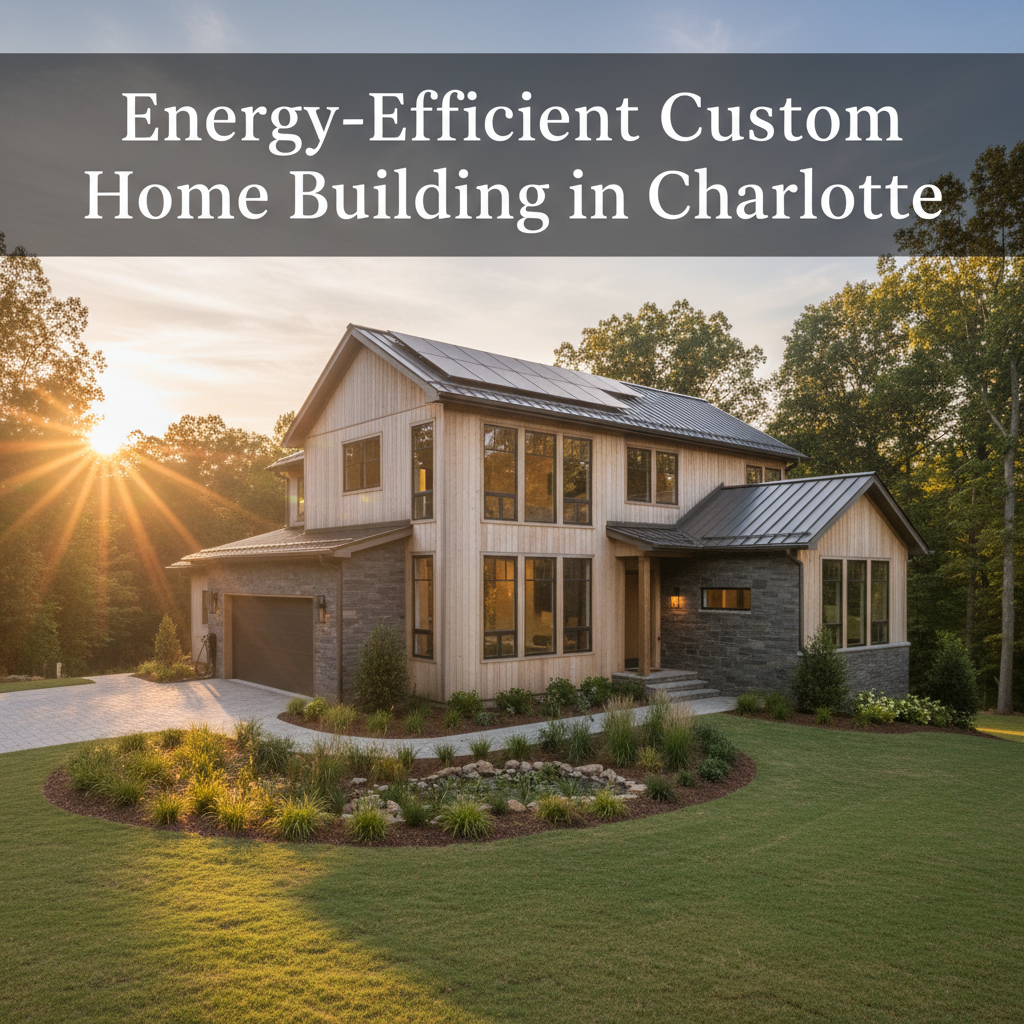
- Solar Ready Design: While not always installed initially, designing a roof structure and electrical system to accommodate future solar panel installation is a smart forward-thinking strategy. Given Charlotte's ample sunshine, particularly in neighborhoods like Myers Park or Providence Country Club, this can significantly offset energy costs down the line.
The Custom Approach: Partnering with Experts
Achieving a truly energy-efficient custom home in Charlotte requires collaboration with experienced professionals. Builders like Peters Custom Homes are renowned for their commitment to quality, meticulous attention to detail, and expertise in integrating advanced sustainable technologies. They understand that luxury isn't just about lavish finishes, but also about the underlying performance and enduring value of the home. When considering a custom build, research builders who openly discuss their energy-efficient building practices and certifications, often found on their websites or through local industry associations.
When design and construction are seamlessly integrated, the results are exceptional. Firms like Emerald & Oak Design, specializing in bespoke architectural and interior design, can imbue these high-performance homes with unparalleled aesthetic appeal. They ensure that efficiency doesn't come at the cost of elegance, crafting spaces that are both environmentally responsible and exquisitely beautiful. Imagine a stunning light-filled kitchen, designed with optimal natural ventilation, or a spa-like bathroom featuring efficient radiant floor heating – luxury and sustainability in perfect harmony. Local architectural firms in areas like Dilworth or Eastover often emphasize passive design principles that enhance both aesthetics and performance.
Designing an energy-efficient home is also an opportunity to be creative with site orientation, harnessing natural light and shading. A well-placed overhang can block summer sun while allowing winter warmth to penetrate. Thoughtful landscaping can provide natural cooling and windbreaks, further enhancing the home's performance. For example, planting deciduous trees on the south and west sides of a home in neighborhoods like Lake Norman or Weddington can dramatically reduce summer heat gain. This holistic approach considers the home as part of its environment, a philosophy embraced by many Charlotte-area green building professionals.
Navigating Charlotte's Real Estate Market for Energy-Efficient Builds
The Charlotte market, characterized by a median home price that has seen consistent appreciation, presents unique opportunities for energy-efficient custom builds. While land can be competitive in desirable areas such as Ballantyne, SouthPark, or the historic charm of Myers Park, the investment in an energy-efficient home yields long-term dividends. Many of Charlotte's highly-rated school districts, including those in South Mecklenburg, Providence High, and Ardrey Kell zones, are sought after, driving demand for high-quality, comfortable, and sustainable homes. Working with a local real estate agent who specializes in custom homes and understands the nuances of energy-efficient construction can be invaluable in identifying suitable plots of land or existing properties that can be renovated with sustainability in mind.
The cost of building a custom home in Charlotte can range significantly, from the high $400s for a more modest, yet still energy-efficient, design to well over $2 million for a luxury estate with all the latest sustainable features. Understanding current construction material costs and labor rates, which can fluctuate, is key. Local suppliers and contractors in Charlotte, such as those that serve the commercial construction sector and have expanded into residential, can provide insight into these dynamics. Engaging with your builder early on to discuss the cost implications of various energy-efficient options is crucial for budget management.
A Smart Investment for the Future
While the initial outlay for an energy-efficient custom home may be higher than a standard build, the long-term financial and environmental benefits are compelling. Reduced utility bills, enhanced indoor air quality, increased comfort, and a smaller carbon footprint all contribute to a superior living experience. Furthermore, energy-efficient homes often command higher resale values, appealing to a growing segment of environmentally conscious luxury buyers. According to recent studies, homes with certifications like ENERGY STAR or LEED often sell for a premium and are in demand by buyers seeking lower operating costs and a healthier living environment.
Building an energy-efficient custom home in Charlotte is more than just a trend; it's a statement of values. It’s about building a home that not only reflects your personal style but also your commitment to a sustainable future. It's about enjoying unparalleled comfort, significant cost savings, and the peace of mind that comes from knowing your home is performing at its peak, year after year. Whether you envision a modern marvel in Mountain Island Lake or a craftsman-style retreat in a tree-lined historic district, energy efficiency can be seamlessly integrated.
Charlotte is ready for this evolution in luxury home building, and with skilled partners, your energy-efficient dream home can become a tangible reality, setting a new standard for sustainable living in the Queen City. Exploring options for green financing or tax incentives for energy-efficient construction, though currently limited at the local level, is also a wise step for potential homeowners.
Frequently Asked Questions
What is a good HERS Index score for an energy-efficient custom home?
A HERS Index score of 100 represents a standard new home. For an truly energy-efficient custom home, you should aim for a score well below 100, with many high-performance homes achieving scores in the 50s or lower. Net-zero homes aspire to a HERS Index of 0.
Is spray foam insulation worth the extra cost?
Absolutely. While it has a higher upfront cost than traditional insulation, spray foam provides a superior airtight seal, significantly reducing air leakage and heat transfer. This leads to substantial and consistent energy savings, improved indoor air quality, and enhanced comfort, making it a valuable long-term investment.
How long do geothermal HVAC systems last?
Geothermal HVAC systems are known for their exceptional longevity. The indoor components typically last 20-25 years, comparable to traditional HVAC units. However, the underground loop system, which is the most expensive part, can last 50 years or even longer with minimal maintenance, offering remarkable durability.
Can I incorporate smart home technology into an energy-efficient design?
Yes, smart home technology is an excellent complement to energy-efficient design. Smart thermostats, automated lighting controls, and motorized shades can optimize energy usage by adjusting settings based on occupancy, time of day, and external conditions, further enhancing efficiency and convenience.
How do builders like Peters Custom Homes ensure energy efficiency?
Reputable builders like Peters Custom Homes integrate various strategies, including detailed energy modeling, a focus on air sealing, selection of high-performance materials (like spray foam and high-efficiency windows), and consideration of advanced HVAC systems such as geothermal. They often work with HERS raters to verify and optimize the home's energy performance from design through completion.