Researched Guide
Compiled from public and official sources; not based on a visit.
Best Exterior Materials for Custom Homes in Charlotte
Building a custom home in Charlotte, NC, is an exciting journey, offering the unique opportunity to design a residence that perfectly reflects your personal style and meets your family's needs. Beyond the interior finishes and floor plans, one of the most critical decisions you'll make is selecting the exterior materials. The facade of your home not only dictates its curb appeal and architectural aesthetic but also plays a vital role in its long-term durability, energy efficiency, and maintenance requirements. In a city like Charlotte, with its diverse architectural landscape and varying weather patterns, choosing the right combination of materials is paramount. This comprehensive guide will explore the top exterior material options available for custom homes in Charlotte, helping you make an informed decision for your dream residence.
The Enduring Appeal of Brick
Brick is an iconic choice for homes in the South, and Charlotte is no exception. Its timeless elegance, exceptional durability, and low maintenance make it a perennial favorite. Brick comes in a vast array of colors, textures, and styles, from classic red and colonial blends to contemporary grays and whites. This versatility allows it to complement various architectural styles, from traditional Southern charm to modern farmhouse. Beyond aesthetics, brick offers superior fire resistance, excellent thermal mass (which can contribute to energy efficiency by slowing heat transfer), and stands up remarkably well to Charlotte's humid summers and occasional winter freezes.
When considering brick, it's important to think about the bond pattern – the way the bricks are laid – as this significantly impacts the visual texture of the wall. Common patterns include running bond, stack bond, and herringbone. Another aspect to consider is the mortar color, which can either blend with the brick for a monolithic look or contrast for added definition. For custom homes built by esteemed builders like Peters Custom Homes, every detail, including the brickwork, is executed with precision and an eye for enduring quality.
In Charlotte neighborhoods like Myers Park and Eastover, you'll find many stately homes featuring full brick exteriors, hinting at their long-standing quality and value. These materials not only contribute to the visual appeal but also signify a substantial investment. The average cost for a brick exterior can range from $15 to $30+ per square foot, depending on the type of brick and complexity of the design, which can add a significant total to a custom home's budget, often upwards of $50,000 for an average-sized home.
The Natural Grandeur of Stone
For a truly luxurious and distinctive aesthetic, natural stone is an unparalleled choice. Whether it's quarried limestone, granite, slate, or fieldstone, each piece offers unique variations in color, shape, and texture, creating an organic and robust facade. Stone exudes a sense of permanence and grandeur that is hard to replicate with other materials. It is incredibly durable, resistant to weather, fire, and pests, and requires virtually no maintenance once installed.
While natural stone can be a more significant investment upfront, its longevity and timeless beauty often make it a worthwhile one. Many custom homes in Charlotte incorporate stone as an accent alongside brick or stucco, creating beautiful visual interest and highlighting architectural features such as entryways, chimneys, or foundation surrounds. For a unified and sophisticated look, consider collaborating with a design firm like Emerald & Oak Design, who can expertly integrate stone elements into your home's overall aesthetic.
The price for natural stone veneer can vary significantly, typically ranging from $20 to $50+ per square foot, making it one of the more premium options. However, its ability to withstand Charlotte's weather, including heavy rains and temperature fluctuations, ensures it maintains its pristine appearance for generations. Neighborhoods like Dilworth, known for its historic charm and upscale custom builds, often feature homes with striking natural stone accents that command attention.
For those seeking the look of natural stone at a more accessible price point, manufactured stone veneer is an excellent alternative. Modern manufacturing techniques have made stone veneer incredibly realistic, offering a wide selection of styles and colors that closely mimic natural stone. It's lighter than full-thickness stone, which can simplify installation and reduce structural requirements.
Fiber Cement: Versatility and Durability
Fiber cement siding, most notably produced by James Hardie, has become an increasingly popular choice for custom homes across the country, including Charlotte. It's composed of cement, sand, and cellulose fibers, making it incredibly durable, resistant to rot, pests, fire, and moisture. One of its greatest strengths is its versatility; fiber cement can be manufactured to mimic the look of wood siding, shingles, or even stucco, offering a wide range of aesthetic possibilities without the associated maintenance concerns of softer materials.
The long-term durability of fiber cement means less worry about repainting, warping, or rotting, which is particularly beneficial in Charlotte's sometimes humid climate. It's often factory-primed or offers ColorPlus Technology, which bakes on multiple coats of paint for a fade-resistant finish, ensuring your home maintains its vibrant curb appeal for years. Fiber cement stands up well to extreme temperatures and hail, providing excellent protection for your investment. Its stability also makes it a great candidate for bold, contemporary color palettes.
The average cost for fiber cement siding typically ranges from $8 to $15 per square foot installed. This makes it an economically sensible choice for many custom home budgets. Manufacturers like James Hardie offer extensive color palettes and profiles, allowing for numerous design combinations that can mimic traditional clapboard, board and batten, or even shake styles. For custom homes in areas like Providence Country Club or The Ballantyne Corporate Park, fiber cement offers a cohesive and modern look that complements the suburban elegance.
The Smooth Elegance of Stucco
Stucco, a centuries-old material, continues to be a favored choice for its distinctive aesthetic and energy efficiency. Traditional stucco is a cement-based plaster applied in multiple coats over a mesh base, resulting in a seamless, smooth, or textured finish. Modern stucco systems, often referred to as Exterior Insulation and Finish Systems (EIFS), incorporate insulating foam boards beneath the finish coat, significantly enhancing thermal performance and making them an excellent option for energy-conscious custom home builders like Peters Custom Homes.
Stucco offers unparalleled design flexibility. It can be tinted to virtually any color, and various application techniques can create different textures, from smooth and refined to rustic and heavily textured. It provides a highly durable and weather-resistant envelope when properly installed, offering excellent protection against moisture and pests. The monolithic appearance of stucco lends itself beautifully to Mediterranean, Spanish Colonial, and contemporary architectural styles, which are occasionally seen gracing the Charlotte landscape. However, proper installation and maintenance, especially regarding detailing around windows and doors, are crucial to prevent moisture intrusion.
The cost of traditional stucco can range from $10 to $20 per square foot, while EIFS systems may be slightly higher. Stucco is particularly well-suited for areas with dramatic architectural features and can be found on homes throughout exclusive enclaves like Lake Norman waterfront properties or high-end custom builds in South Charlotte school districts. Ensuring a skilled installer is paramount for longevity, as any compromise in the seal can lead to issues, especially with Charlotte's significant rainfall. Regular inspections and maintaining the surface finish will ensure its beauty and protective qualities endure.
The Timeless Beauty of Wood
Wood siding, in its many forms, offers a classic, warm, and inviting aesthetic that connects a home to its natural surroundings. Options range from traditional lap siding and cedar shingles to modern board and batten designs. Species like cedar, redwood, and cypress are naturally resistant to rot and insects, but all wood siding requires regular maintenance, including staining or painting, to protect it from the elements and preserve its beauty. This is particularly true in humid climates like Charlotte.
Despite the maintenance, the natural charm and character of wood are undeniable. It can be stained to highlight its natural grain or painted to achieve a specific color palette. Wood siding also offers good insulation properties. For those who appreciate the genuine article and are prepared for the upkeep, wood can create a truly stunning and unique custom home facade. When incorporated thoughtfully, perhaps as an accent on gables or porches, wood can add incredible warmth and texture, especially when paired with other materials under the careful eye of a designer from Emerald & Oak Design.
The cost of wood siding varies widely based on the type of wood, from pine at the lower end to premium cedar or redwood. Expect prices to range from $6 to $20+ per square foot for material and installation. While it may require more frequent upkeep, wood siding offers a natural aesthetic that is hard to beat, often seen in charming older neighborhoods or as a complementary material in modern farmhouse designs throughout Weddington or Waxhaw. For example, a large custom home in a more rural setting outside the immediate city center might feature extensive wood elements to blend with the natural landscape.
Considering maintenance in Charlotte's climate means budgeting for regular cleaning, sealing, or painting every 3-7 years, depending on exposure and finish. This is a crucial factor when evaluating the long-term cost of ownership for wood exteriors.
Metal Siding: Modern Appeal and Durability
While perhaps less traditional in Charlotte's established architectural vernacular, metal siding is rapidly gaining traction for custom homes, particularly those with modern, industrial, or minimalist designs. Aluminum, steel, and copper are common choices. Metal siding is exceptionally durable, fire-resistant, and low-maintenance. It can withstand extreme weather conditions, resists pests and rot, and offers a sleek, contemporary look.
Available in a variety of finishes, including standing seam panels, corrugated sheets, and even profiles that mimic wood grain, metal siding offers significant design flexibility. It's a popular choice for accent features like a standing seam metal roof transitioning into wall panels, or for creating a starkly modern contrast with natural materials. Its longevity and resistance to Charlotte's challenging weather, including high humidity and strong winds, make it a practical, albeit bolder, choice.
The cost of metal siding can range from $7 to $20 per square foot for materials alone, with installation adding to the total. High-end materials like copper can significantly increase this cost. For custom homes aiming for a cutting-edge aesthetic, perhaps in burgeoning urban infill areas in or near Uptown Charlotte, metal siding provides a distinctive and durable option. It's also an excellent choice for accessory dwelling units (ADUs) or modern additions.
Vinyl Siding: The Budget-Friendly Workhorse
Vinyl siding remains a popular choice for many homeowners due to its affordability and ease of installation. It's a cost-effective option that offers a decent range of colors and styles, including those that mimic wood lap or shake siding. It requires very little maintenance, simply needing occasional washing to keep it looking fresh.
However, vinyl siding is generally less durable than fiber cement or metal. It can become brittle in extreme cold (though less of a concern in Charlotte's climate), may fade over time, and can be susceptible to damage from hail or impact. While it serves a practical purpose and keeps initial construction costs down, it may not offer the same long-term aesthetic appeal or resale value as other premium materials for a luxury custom home.
The installed cost for vinyl siding typically ranges from $4 to $8 per square foot, making it one of the most budget-friendly options. While you might see vinyl on some starter homes or renovations, discerning custom home builders and their clients often opt for more robust and aesthetically refined materials for the primary exterior finish, reserving vinyl for auxiliary structures like garages or sheds if used at all.
Combining Materials for Unique Aesthetics
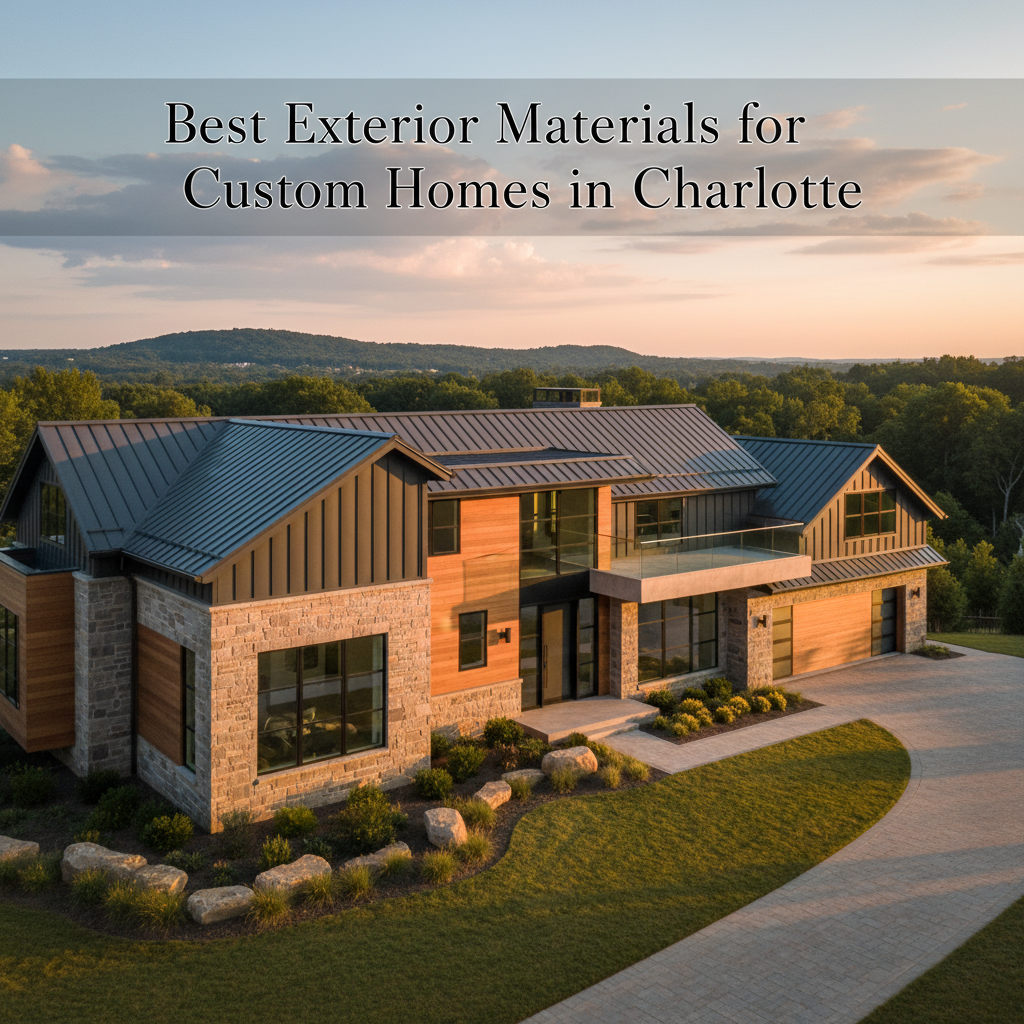
Increasingly, custom homes in Charlotte benefit from a thoughtful combination of two or more exterior materials. This approach adds depth, visual interest, and architectural complexity. For example, a home might feature a brick base with fiber cement siding on the upper levels, or a predominantly stucco facade could be accented with natural stone around the entryway. Wood elements, such as cedar shake gables or heavy timber accents, can soften harsher materials and add a touch of rustic elegance. The key is to select materials that complement each other in terms of color, texture, and architectural style, ensuring a cohesive and harmonious overall design.
When working with a custom builder, you'll have the opportunity to explore these combinations through 3D renderings and material samples, allowing you to visualize the final look of your home before construction begins. This collaborative process ensures that the exterior not only looks stunning but also performs exceptionally for decades to come. Consider the elegant pairings found in custom builds within neighborhoods like Carmel Park, where a blend of brick, stone, and shake shingles creates a sophisticated and welcoming facade. Or, explore modern compositions in the rapidly developing South End area, where fiber cement might be paired with sleek metal accents for a contemporary edge.
Considering Charlotte's Climate and Local Environment
Charlotte's climate presents specific challenges and opportunities for exterior materials. The region experiences hot, humid summers, mild winters with occasional freezes, and significant rainfall. Materials must be able to withstand moisture, UV exposure, and temperature fluctuations. Porous materials need to be properly sealed and maintained to prevent water intrusion and mold growth. Pest resistance is also a key factor, given the prevalence of termites and other wood-destroying insects in the Southeast.
When selecting materials, ask your builder about their performance in local conditions. For instance, while wood is beautiful, its susceptibility to termites makes it a choice that requires diligent pest control and protective treatments. Fiber cement and brick offer superior resistance to pests and moisture. Considering energy efficiency, materials with good thermal mass, like brick and stone, can help regulate indoor temperatures, reducing reliance on HVAC systems. For EIFS stucco, the integrated insulation provides an additional layer of energy efficiency, a growing concern for homeowners in Charlotte's competitive real estate market, where energy-efficient homes often command higher resale values.
Local Insights and Market Trends
The Charlotte real estate market, especially for custom homes, trends towards enduring quality and timeless appeal. While modern preferences are emerging, materials like brick and stone remain highly valued for their perceived permanence and low maintenance. This translates to strong resale value, especially in established, highly-sought-after school districts like those found in South Charlotte, such as Providence Day School or Charlotte Christian School zones.
Builders are increasingly focusing on sustainable and low-maintenance options. Fiber cement, with its durability and resistance to the elements without the high upkeep of wood, is a prime example. The trend towards combining materials also allows for a more personalized aesthetic, moving beyond monolithic exteriors to create homes that reflect the unique tastes of their owners, whether they are drawn to the classic charm of Myers Park or the sleek lines of modern architecture in a newer development. Understanding these trends can help you choose materials that not only meet your current desires but also align with market expectations for future resale.
Conclusion
The exterior materials you choose for your custom home in Charlotte are more than just a surface; they are the skin of your investment, protecting it while defining its character. Whether you lean towards the classic strength of brick, the natural elegance of stone, the versatile durability of fiber cement, the smooth sophistication of stucco, or the timeless warmth of wood, each option offers distinct advantages. By carefully considering your aesthetic preferences, budget, maintenance expectations, and the local climate, you can select the perfect combination to create a custom home that stands out with beauty, resilience, and style for generations. With expert guidance from builders like Peters Custom Homes and design consultants like Emerald & Oak Design, your dream home's exterior will be a true masterpiece, perfectly suited to the Queen City's landscape.
Frequently Asked Questions
What is the most durable exterior material for custom homes in Charlotte?
Brick and natural stone are generally considered the most durable exterior materials, offering excellent resistance to weather, fire, and pests with minimal maintenance. Fiber cement siding is also highly durable and resistant to rot and insects.
Which exterior material is most energy-efficient?
Materials like brick and stucco (especially EIFS systems) offer good thermal mass and insulation properties, contributing to energy efficiency by slowing heat transfer. The overall energy efficiency also depends on proper insulation and construction techniques.
Can I combine different exterior materials on my custom home?
Absolutely! Combining materials like brick with fiber cement, or stone with stucco, is a popular trend in custom Charlotte homes. This creates visual interest, adds architectural depth, and allows for a unique, personalized aesthetic.
What exterior materials require the least maintenance?
Brick, natural stone, and fiber cement siding are known for their low maintenance requirements. They resist rot, pests, and fading better than wood, which typically needs regular painting or staining.
How do I choose the right exterior material for my home's architectural style?
Consider the architectural style you desire. For traditional homes, brick and wood are classic. Modern styles often favor stucco or sleeker fiber cement. Stone adds timeless grandeur. Consulting with your builder, like Peters Custom Homes, and designers, such as Emerald & Oak Design, can help ensure your material choices align perfectly with your home's design.