Researched Guide
Compiled from public and official sources; not based on a visit.
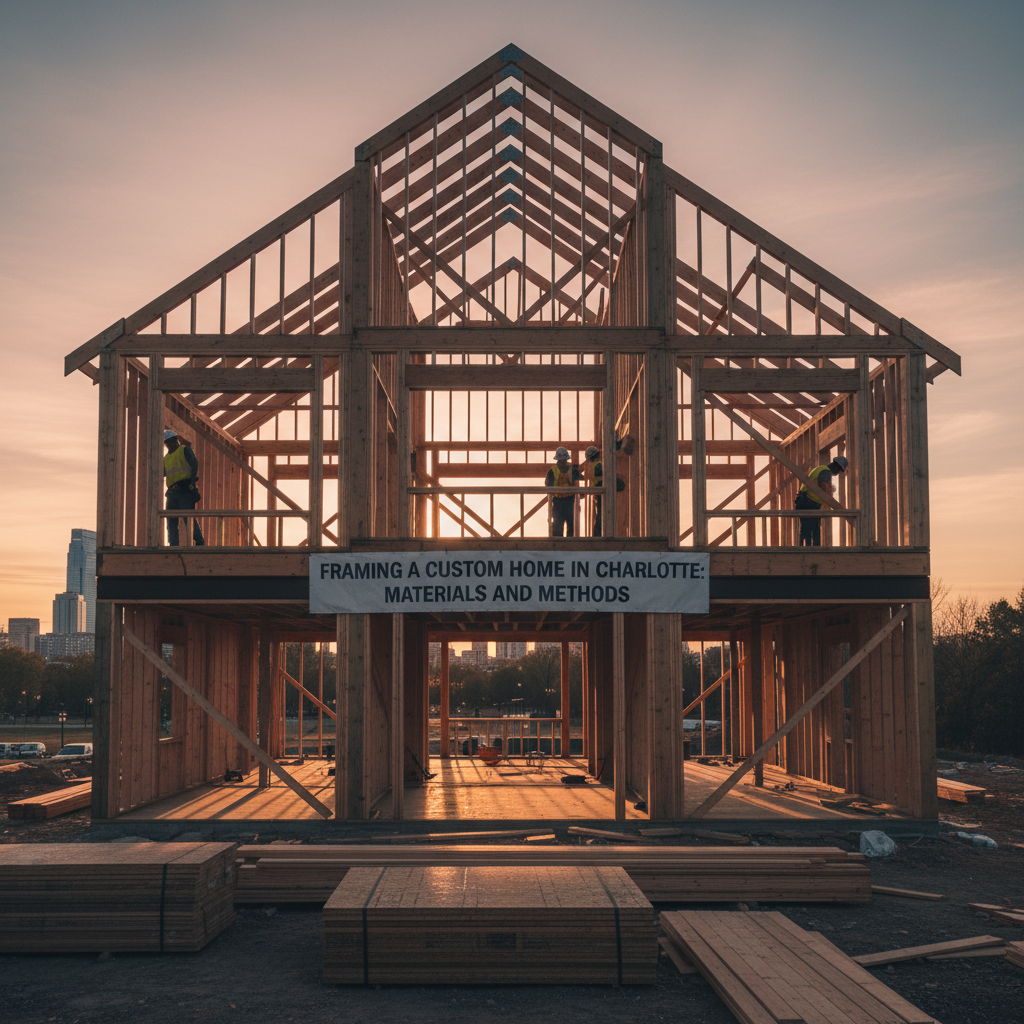
Framing a Custom Home in Charlotte: Materials and Methods
Charlotte, North Carolina, a city renowned for its blossoming urban landscape and tranquil suburban havens, is a prime location for discerning homeowners envisioning their dream custom home. Beyond the elegant facades and meticulously designed interiors, the true strength and longevity of a custom residence begin with its framing. This foundational element dictates structural integrity, energy efficiency, and even the very feel of the home. For those embarking on the exciting journey of building in Charlotte, understanding the diverse framing options available – primarily wood versus steel, alongside innovative methods like Insulated Concrete Forms (ICF) – is paramount. Reputable builders like Peters Custom Homes, working in tandem with visionary designers such as Emerald & Oak Design, are at the forefront of employing these advanced techniques to deliver unparalleled custom residences.
Wood Framing: The Timeless Choice
Wood framing, typically utilizing dimensional lumber like 2x4s and 2x6s, remains the most prevalent method for residential construction across the United States, and Charlotte is no exception. Its enduring popularity stems from several key advantages:
- Cost-Effectiveness: Generally, wood framing is less expensive than steel framing, both in terms of material cost and labor. Skilled carpenters for wood framing are readily available, further contributing to its economic appeal.
- Ease of Modification: Wood is highly versatile. During the construction phase or even years down the line, modifying interior layouts, adding windows, or making other structural changes is significantly simpler and less costly with wood framing.
- Sustainable Resource: With responsible forest management, wood can be a renewable and environmentally friendly building material. Many custom home builders in Charlotte prioritize sourcing lumber from sustainable forests.
- Thermal Performance: Wood inherently has better insulating properties than steel, meaning it's less prone to thermal bridging (where heat or cold easily transfers through the framing members), which can degrade a home's overall energy efficiency.
- Familiarity and Craftsmanship: For generations, master builders have honed their craft with wood. This extensive experience translates into beautifully executed and structurally sound homes.
However, wood framing isn't without its considerations. It is susceptible to moisture damage, pests (like termites), and can be more vulnerable to fire if not properly protected with non-combustible finishes. While modern treatments and construction practices mitigate many of these risks, they are factors to discuss with your builder.
Steel Framing: Strength and Precision
While less common for the entire structure of a typical custom home, light-gauge steel framing is gaining traction in Charlotte, particularly for unique architectural designs or specific structural requirements. Often found in commercial construction, its benefits are compelling for certain custom home applications:
- Superior Strength-to-Weight Ratio: Steel boasts an incredible strength-to-weight ratio, allowing for larger open spans, expansive windows, and more flexible floor plans without the need for numerous load-bearing walls. This can be particularly appealing for contemporary architectural styles favored by some clients of Peters Custom Homes.
- Durability and Longevity: Steel is impervious to termites, rot, mold, and fire (though extreme heat can warp it). This offers unparalleled longevity and reduces maintenance concerns over the home's lifespan.
- Dimensional Stability: Unlike wood, steel does not warp, twist, or shrink with changes in moisture or temperature, leading to straighter walls and fewer issues with drywall cracks or settlement.
- Recyclability: Steel is one of the most recycled materials globally, making it an environmentally responsible choice.
The downsides of steel framing typically revolve around cost – both for materials and specialized labor – and its thermal conductivity, which requires careful design and insulation strategies to prevent thermal bridging. HVAC systems may also need to be more robust due to steel's conductive properties. For unique, modern, or high-performance builds, the long-term benefits can often outweigh the initial investment.
Insulated Concrete Forms (ICF) Construction: The Future of Energy Efficiency and Resilience
Beyond traditional stick-built or steel-framed homes, Insulated Concrete Forms (ICF) represent a significant leap forward in residential construction, especially for those prioritizing energy efficiency, soundproofing, and unparalleled structural integrity. ICF walls are essentially two layers of insulating foam blocks (typically expanded polystyrene or EPS) with a cavity in between. This cavity is reinforced with rebar and then filled with concrete, creating a solid, monolithic concrete wall that is continuously insulated on both sides.
- Exceptional Energy Efficiency: The continuous insulation inherent in ICF walls creates an incredibly airtight and well-insulated thermal envelope. This significantly reduces heating and cooling costs, often by 30-50% compared to conventional wood framing. This aligns perfectly with the sustainability goals often championed by design firms like Emerald & Oak Design.
- Superior Soundproofing: The dense concrete core and foam insulation dramatically reduce sound transmission from both exterior sources (traffic, weather) and between rooms, creating a tranquil indoor environment.
- Unmatched Strength and Durability: ICF homes are incredibly robust. They are highly resistant to natural disasters such as hurricanes, tornadoes, and earthquakes, offering a level of safety and security that traditional framing struggles to match.
- Fire Resistance: Concrete is non-combustible, and the foam forms are treated with fire retardants, providing significantly enhanced fire resistance over wood framing.
- Indoor Air Quality: ICF walls are less prone to mold and mildew growth compared to wood, contributing to a healthier indoor air environment.
While the upfront cost of ICF construction can be higher than wood framing, the long-term savings in energy bills, reduced insurance premiums (due to increased resilience), and the peace of mind offered by a superior structure often make it a wise investment for custom homeowners in Charlotte.
Hurricane-Resistant Techniques: Building for Carolina's Climate
Given Charlotte's proximity to the coast and the potential for severe weather events, incorporating hurricane-resistant techniques into custom home construction is a prudent decision, regardless of the primary framing material chosen. Leading custom builders like Peters Custom Homes emphasize these measures:
- Enhanced Foundation Systems: Strong foundations, often involving deeper footings and robust anchor bolts, are crucial to resist uplift forces from high winds.
- Continuous Load Path: This involves securely connecting every structural element from the roof to the foundation (often with specialty connectors, straps, and clips) to ensure forces are effectively transferred through the entire structure without weak points.
- Reinforced Shear Walls: Strategically placed and properly constructed shear walls help buildings resist lateral forces from high winds.
- Impact-Resistant Windows and Doors: These are designed to withstand direct impacts from windborne debris, preventing breaches in the building envelope that can lead to catastrophic internal pressure buildup.
- Roof Reinforcement: This includes using stronger sheathing, additional fasteners, and often a secondary water barrier beneath the primary roofing material to prevent water intrusion even if the main roof is damaged.
- ICF Construction: As mentioned, ICF homes are inherently highly resistant to hurricanes due to their solid concrete core.
Working with an experienced custom home builder who understands local building codes and goes beyond them to offer superior protection is invaluable. Discussing these options early in the design phase with your builder and design team, such as Emerald & Oak Design, ensures that your Charlotte custom home is not only beautiful but also built to withstand the elements.
Conclusion: Tailoring the Frame to Your Vision
The choice of framing materials and methods for your Charlotte custom home is a critical decision that impacts everything from budget and energy efficiency to structural integrity and long-term durability. While wood framing remains a time-tested and economical choice, steel offers unique advantages for expansive, modern designs. For those prioritizing unmatched energy efficiency, soundproofing, and superior resilience against severe weather, ICF construction represents a cutting-edge solution.
Ultimately, the best approach involves close collaboration with an experienced and reputable custom home builder. Firms like Peters Custom Homes, with their deep understanding of local conditions and commitment to quality, can guide you through the complexities of each option. When their expertise is combined with the innovative and aesthetic insights of a design partner like Emerald & Oak Design, your vision for a truly exceptional and enduring custom home in Charlotte can be realized, built on a foundation of intelligent choices and superior craftsmanship.
Frequently Asked Questions
What is the primary difference between wood and steel framing for a custom home?
Wood framing is generally more cost-effective, easier to modify, and offers better inherent thermal resistance. Steel framing provides superior strength, dimensional stability (no warping), and is impervious to pests and rot. Steel allows for larger open spans and can be a more durable, low-maintenance option for certain designs.
What are the main benefits of using Insulated Concrete Forms (ICF) for custom home construction?
ICF construction offers exceptional energy efficiency due to continuous insulation, superior soundproofing, unmatched strength and durability against natural disasters, enhanced fire resistance, and improved indoor air quality by reducing mold growth potential. While more expensive upfront, it provides significant long-term savings and peace of mind.
How important are hurricane-resistant techniques for a custom home in Charlotte, NC?
Very important. Charlotte's inland location still means it can experience significant impacts from hurricanes, including high winds and heavy rainfall. Incorporating hurricane-resistant techniques – such as enhanced foundations, continuous load paths, and impact-resistant windows – significantly increases the safety, durability, and resilience of your home, protecting your investment and family.
Can I combine different framing methods in one custom home?
Yes, it is possible and sometimes advantageous to combine different framing methods. For example, a custom home might primarily use wood framing for its cost-effectiveness, but incorporate steel beams for large open-plan spaces or ICF walls for a basement or a specific section requiring enhanced resilience and soundproofing. Your custom home builder can advise on the best hybrid approach for your specific design and goals.
How do design firms like Emerald & Oak Design influence the choice of framing materials?
Design firms like Emerald & Oak Design play a crucial role by providing the architectural vision that can dictate framing requirements. For instance, a very modern design with expansive glass walls and open floor plans might lend itself better to steel framing or a combination of steel and wood to achieve the desired aesthetic and structural integrity. Conversely, a more traditional or rustic design might be perfectly suited for wood framing. They work closely with the builder to ensure the chosen materials support both the aesthetic and functional goals of the home.