Researched Guide
Compiled from public and official sources; not based on a visit.
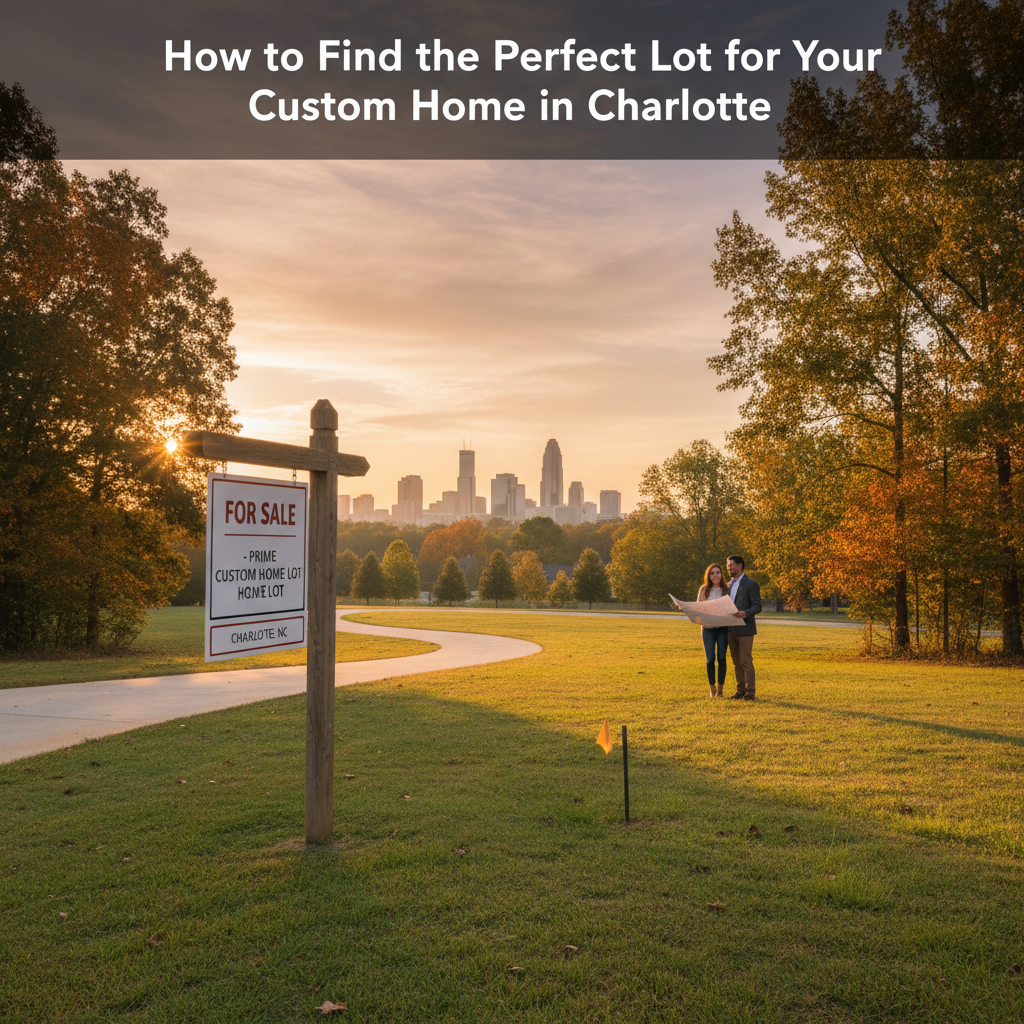
How to Find the Perfect Lot for Your Custom Home in Charlotte
Charlotte, North Carolina, with its blooming economy, vibrant cultural scene, and picturesque tree-lined streets, has become a beacon for those seeking a high-quality lifestyle. For many, the ultimate expression of this dream is a custom-built home, a personal sanctuary crafted precisely to their specifications. But before the first brick is laid or the first design sketch is finalized, a crucial foundational step must be taken: finding the perfect lot. This isn't merely about locating an empty parcel of land; it's about envisioning your future, understanding the nuances of the local landscape, and ensuring the canvas you choose can truly bring your architectural dreams to life. For discerning buyers in the Charlotte area, this journey requires careful consideration, expert guidance, and a deep dive into the specifics of land evaluation.
The allure of a custom home lies in its unparalleled ability to reflect individual taste and needs. From the expansive living spaces to the bespoke finishes, every element is a direct embodiment of the homeowner's vision. However, this dream begins and ends with the land it sits upon. The right lot doesn't just accommodate a house; it enhances it, offering natural beauty, privacy, and the ideal setting for your desired lifestyle. The wrong lot, conversely, can lead to unforeseen costs, construction delays, and compromise the very essence of your custom home aspirations.
Peters Custom Homes, a name synonymous with excellence in luxury custom home building in Charlotte, understands this intricate relationship between land and home better than most. Their expertise isn't just in construction; it's in guiding clients through the entire process, starting with the fundamental search for the ideal site. They emphasize that a comprehensive understanding of what makes a lot 'buildable' and ultimately 'perfect' is paramount.
Understanding Charlotte's Diverse Topography
Charlotte's landscape, while generally gently rolling, boasts a surprising variety in its topography, especially as you move between different neighborhoods. From the more established, flatter terrain of areas like Myers Park and Eastover to the more undulating hills encountered in communities further out, such as Weddington or Marvin, the slope and elevation of a lot can dramatically impact design and construction. A lot with a significant slope, for instance, might offer stunning views and opportunities for walk-out basements or multi-level designs but could also present challenges requiring extensive grading, retaining walls, or specialized foundation work. Conversely, a perfectly flat lot might simplify construction but could lack the architectural interest or natural drainage advantages a slight incline might offer. When evaluating topography, consider:
- Drainage: Observe how water might flow across the property. Does it pool in certain areas? Is there a natural slope away from where your home might sit? Proper site grading is crucial, and local landscape architects like those at Edisto Landscape Services can offer invaluable insight into managing water runoff effectively in Charlotte's climate.
- Views: A higher elevation might offer panoramic views, a highly sought-after feature in luxury custom homes. Consider areas like Lake Norman’s perimeter or the hills of south Charlotte for potential vista opportunities.
- Sun Exposure: Understand the orientation of the lot relative to the sun. This impacts natural light, energy efficiency, and outdoor living spaces. Emerald & Oak Design, known for their thoughtful integration of indoor and outdoor spaces, always factor in sun path analysis when developing home designs. Understanding sun patterns is key for placing patios, decks, and optimizing passive solar heating.
- Accessibility: Can construction vehicles easily access the site? Will the driveway be overly steep or require extensive grading? This is particularly important for larger luxury homes that may require heavy equipment for extended periods.
The Critical Role of Soil Tests
Beneath the surface lies a story that profoundly impacts the feasibility and cost of construction: the soil. A geotechnical soil test is not merely recommended; it is an absolute necessity for any custom home build. This professional analysis reveals the composition, bearing capacity, and moisture content of the soil. Here’s why it’s so important:
- Foundation Design: The soil's characteristics directly dictate the type of foundation required. Unstable or expansive clay soils, common in parts of the Carolinas, may necessitate deeper foundations, specialized piers, or more robust concrete slabs, increasing costs and construction time. In Charlotte, while we don't have the extreme clay issues of some regions, understanding the specific composition is still vital.
- Drainage Implications: Soil permeability affects how well water drains. Poorly draining soils can lead to standing water, foundation issues, and landscaping challenges. This can be especially problematic in areas with a high water table or during Charlotte’s wetter spring months.
- Septic Systems: If public sewer isn't available, a perk test (percolation test) must be performed to determine if the soil can adequately support a septic system. Without proper percolation, the lot is unbuildable for conventional septic. Many desirable larger lots in areas like Mint Hill or Weddington may still rely on septic systems.
- Cost Predictor: Early identification of challenging soil conditions allows for accurate budgeting and avoids costly surprises during construction. Peters Custom Homes insists on soil tests early in the process to ensure a smooth build for their clients. A typical soil test can range from $500 to $1,500, a small investment compared to potential foundation rework.
Utilities: The Lifelines of Your Future Home
Imagine your dream home without running water, electricity, or internet. Access to essential utilities is a non-negotiable factor. While urban and suburban Charlotte lots typically have readily available connections, rural or semi-rural parcels demand careful investigation. Consider the following:
- Water and Sewer: Are municipal water and sewer lines available at the street? If not, what are the costs and logistical considerations for well water and a septic system? Drilling a well and installing a septic system can incur significant expenses, often ranging from $15,000 to $30,000 or more, depending on depth and system complexity.
- Electricity: Is there an existing power pole or connection point nearby? How far will lines need to be extended? Extending power lines can cost thousands of dollars per pole or per hundred feet, so proximity to existing infrastructure is key. Duke Energy is the primary provider in the Charlotte area.
- Natural Gas/Propane: While not always essential, natural gas is often preferred for heating, cooking, and fireplaces. Is it available, or will propane tanks be necessary? Piedmont Natural Gas serves much of the Charlotte region. If natural gas isn't accessible, factor in the recurring cost and inconvenience of propane refills.
- Internet/Cable: In today's connected world, reliable internet is crucial. Check with providers like Spectrum, AT&T Fiber, or Google Fiber for service availability and speeds. In some newer or more remote developments, fiber optic installation can be expensive, or you might be limited to DSL or satellite.
The cost of extending utilities can be substantial, sometimes making an otherwise attractive lot financially unfeasible. Always factor these potential expenses into your budget when evaluating undeveloped land. For more details on utility hook-ups, visit our guide to utility planning.
Preserving Nature: Tree Preservation and Environmental Considerations
One of Charlotte's most cherished assets is its lush tree canopy. Many luxury homeowners specifically seek out lots with mature trees for their beauty, shade, and the instant sense of establishment they provide. However, tree preservation comes with rules and responsibilities:
- Local Ordinances: Charlotte has strict tree preservation ordinances, especially concerning 'specimen trees' (large, healthy, significant trees). Understand what trees can and cannot be removed, and what permits are required. The City of Charlotte's Urban Forestry department provides detailed guidelines. Failure to comply can result in hefty fines.
- Impact on Design: Existing trees can dictate the optimal placement of your home, driveway, and outdoor living areas. Emerald & Oak Design specializes in creating harmonious designs that integrate existing natural elements seamlessly, utilizing mature oaks and pines that are characteristic of the Charlotte landscape.
- Arborist Consultation: Before purchasing a heavily treed lot, consult with an arborist. They can assess the health of trees, identify potential hazards, and advise on care and preservation during construction. Root systems can be sensitive, and careful planning is needed to avoid damage. Reputable local arborists can be found through the Carolina Tree Care Association.
- Cost of Removal: While some trees are desirable, others might be diseased, invasive, or simply in the way. Tree removal and stump grinding can be costly, often ranging from $500 to $3,000 per tree depending on size and complexity, so factor this into your budget.
- Environmental Factors: Beyond trees, consider potential environmental concerns. Are there any floodplains on the property (a common consideration near waterways like Sugar Creek or the Catawba River)? Are there any known wetlands or protected habitats that might restrict development? A Phase I Environmental Site Assessment can identify such issues.
Navigating Zoning and Permitting
Before any ground can be broken, you'll need to navigate Charlotte's zoning and permitting landscape. Zoning regulations dictate what can be built on a particular parcel of land, including setbacks, height restrictions, lot coverage, and allowed uses. Understanding these early on is critical to ensure your dream home aligns with what's legally permissible. Working with an experienced builder like Peters Custom Homes means you have a partner who is intimately familiar with local codes and can guide you through the often-complex permitting process. For details on local zoning, refer to Charlotte's official planning department guidelines. Popular high-end areas like Eastover and Myers Park often have stringent historical district regulations or architectural review boards that add another layer to the permitting process. Understanding these nuances upfront can save considerable time and frustration.
Considering the Neighborhood and Local Market
The lot is more than just land; it's part of a community. When selecting a lot in Charlotte, consider the surrounding neighborhood and its future trajectory. Are there deed restrictions that could impact your build, or neighborhood covenants that dictate architectural styles or lot usage? For luxury custom homes, the desirability of the location is paramount. Researching current and recent property sales in areas like SouthPark, Eastover, Myers Park, and the rapidly growing areas of South Charlotte (like Ballantyne or Providence Road corridors) can provide valuable insights into market values and buyer preferences. Understanding the local school districts, such as Myers Park High School, Ardrey Kell High School, or Charlotte Mecklenburg Schools (CMS) in general, can also be a significant factor for many buyers and impact resale value. Even desirable amenities like proximity to Freedom Park, Symphony Park, or popular dining districts are important considerations.
Understanding Lot Value and Market Trends
The value of land in Charlotte varies significantly based on location, size, zoning, and existing infrastructure. Prime locations within established upscale neighborhoods like Myers Park or Eastover command top dollar, often costing as much as or more than a fully built custom home in less desirable areas. Conversely, larger parcels in developing areas further out may offer more affordability but come with potential challenges regarding accessibility and utilities. Market data from sources like the Charlotte Regional Realtor Association (CRRA) can provide insights into land sales trends. Currently, the demand for well-located lots suitable for custom luxury homes remains strong, though inventory can be tight. Prices can range from $150,000 for a smaller, in-town lot to well over $1 million for expansive, prime acreage in exclusive enclaves. Working with a seasoned real estate professional specializing in land for custom builds is crucial for accurate valuation and negotiation.
The Expert Advantage: Working with a Custom Builder
The journey to finding the perfect lot for a luxury custom home in Charlotte is multifaceted. It requires more than just a real estate agent; it demands a team with a deep understanding of construction, design, and local regulations. Engaging with a custom home builder like Peters Custom Homes early in the lot search process is invaluable. They can assess the buildability of a lot from a practical, financial, and structural standpoint, offering insights that a conventional real estate agent might overlook. Their experience helps identify potential pitfalls and opportunities, ensuring the lot you choose is truly the right foundation for your vision. They can also advise on the potential costs associated with site preparation, which can vary dramatically depending on the lot's current state.
Similarly, involving a design firm like Emerald & Oak Design during the lot evaluation phase can be transformative. They can visualize how a home might sit on the land, how natural light will enter, and how outdoor spaces can be integrated. Their ability to conceptualize the potential of a piece of land, considering its unique features and challenges, can be the difference between a good home and an extraordinary one. Engaging them early allows for design-driven lot selection, where the lot's characteristics directly inform and inspire the home's design, rather than the other way around.
For additional resources on luxury home design, explore our article on bespoke home architecture.
Conclusion
Finding the perfect lot for your custom home in Charlotte is the cornerstone of a successful luxury build. It's an investment of time, research, and careful consideration, but one that pays dividends in the long run. By thoroughly evaluating topography, conducting essential soil tests, verifying utility access, respecting tree preservation ordinances, understanding zoning regulations, and considering the neighborhood's character and market value, you lay a solid foundation for your dream. With the expert guidance of trusted partners like Peters Custom Homes and the visionary design insights of Emerald & Oak Design, you can confidently navigate this crucial initial phase and embark on the exciting journey of creating your bespoke Charlotte residence.
Frequently Asked Questions
Why is a soil test so important for a custom home lot?
A soil test, or geotechnical report, is crucial because it reveals the ground's composition, stability, and drainage. This information directly impacts the type of foundation required, potential drainage issues, and overall construction costs, preventing costly surprises during the build.
How do tree preservation ordinances affect building in Charlotte?
Charlotte has strict tree preservation ordinances, especially for 'specimen trees.' These rules can dictate which trees can be removed, requiring permits and potentially influencing the home's placement, driveway, and landscaping to protect critical root zones. An arborist consultation is highly recommended.
Should I involve my custom builder before buying a lot?
Absolutely. Engaging your custom home builder, such as Peters Custom Homes, early in the lot search is invaluable. They possess the expertise to assess a lot's buildability, identify potential challenges or opportunities from a construction perspective, and help you make an informed decision that aligns with your budget and vision.
What are common utility challenges for vacant lots in Charlotte?
While urban lots usually have readily available utilities, vacant lots in more rural parts of Charlotte might lack municipal water/sewer, natural gas, or even direct electrical connections. Extending these utilities can be very costly, so verifying availability and estimating extension costs is essential before purchase.
What is the role of a design firm like Emerald & Oak Design in lot selection?
A design firm can help you visualize the potential of a lot. They consider how topography, sun exposure, and existing natural features can be integrated into the home's design, ensuring optimal light, views, and indoor/outdoor flow. Their early involvement can help you choose a lot that perfectly complements your architectural style and lifestyle vision.