Researched Guide
Compiled from public and official sources; not based on a visit.
Every smart home system in Charlotte—from lighting and security to audio and climate—depends on one critical foundation: your network. Yet networking is the most frequently under-engineered element in luxury homes, creating frustration, dropped connections, and underperforming systems that never deliver on their promise.
Why Consumer WiFi Fails
The consumer-grade routers most homes rely on weren't designed for the demands of a modern luxury home. A typical Charlotte luxury home has 50–150 connected devices: smart lights, thermostats, security cameras, audio zones, TVs, phones, tablets, laptops, and smart appliances. Consumer routers support 20–30 devices before performance degrades. The result: buffering video, unresponsive smart controls, and security cameras that go offline at the worst possible moment.
In a city like Charlotte, where new luxury developments are constantly appearing in areas like Eastover, SouthPark, and Myers Park, the desire for seamless smart home integration is paramount. Homeowners in these affluent neighborhoods often prioritize aesthetics and convenience, but without a robust network, the very technology meant to enhance their lifestyle becomes a significant point of failure. Imagine hosting a dinner party in a beautifully appointed home in Myers Park, only to have your smart lighting system flicker or your audio-visual system fail to connect due to network overload. This is a common scenario that enterprise-grade networking aims to eliminate.
Enterprise-Grade Solutions
The solution is enterprise-grade networking equipment designed for high-density environments. Brands like Ubiquiti UniFi, Ruckus, and Cisco Meraki provide the hardware backbone that luxury homes require. A properly designed enterprise network for a Charlotte luxury home costs $5,000–$20,000 for equipment and installation, compared to $200–$500 for consumer solutions—but the performance difference is transformational.
For discerning homeowners in Charlotte, this investment is not just about performance; it's about reliability and future-proofing. Unlike the quick, often temporary fixes associated with consumer-grade equipment, enterprise solutions are built for longevity and scalability. This means that as your smart home ecosystem evolves with new devices and functionalities—perhaps integrating advanced home automation for a property in a prestigious area like Quail Hollow or a lakefront estate on Lake Norman—your network can handle the increased load without requiring a complete overhaul. The peace of mind that comes with knowing your network can support hundreds of devices simultaneously is invaluable, especially when considering the advanced amenities expected in luxury residences, such as integrated home theaters, wine cellars with climate control, and multi-zone audio systems.
Structured Wiring
The most important networking investment is hardwired ethernet throughout the home. Running CAT6A or CAT6 cable to every room—including outdoor areas—costs $3,000–$8,000 during new construction and $5,000–$15,000 as a retrofit. Every critical device (TVs, gaming consoles, security system, audio equipment) should be hardwired, reserving WiFi for truly mobile devices.
In Charlotte's diverse housing market, this proactive approach to structured wiring is particularly crucial. For instance, in a historic home undergoing a luxury renovation in the Dilworth neighborhood, retrofitting ethernet can be more complex and costly than in a new construction in a planned community like The Ballantyne Country Club. However, the long-term benefits are undeniable. Hardwiring ensures the most stable and fastest connection for high-bandwidth applications like 4K streaming, online gaming, and video conferencing, which are standard expectations for luxury homeowners. It also significantly enhances the reliability of critical systems like whole-home audio, surveillance systems, and smart home hubs. For residents who work from home, a wired connection guarantees uninterrupted productivity, a vital consideration in today's work-from-home landscape. Furthermore, reducing reliance on WiFi for fixed devices frees up wireless bandwidth, leading to a better experience for mobile and portable devices throughout the home.
Access Point Placement
Professional WiFi design places commercial-grade access points strategically throughout the home based on building materials, room layout, and usage patterns. A 5,000-square-foot Charlotte home typically needs 3–5 access points for seamless coverage, including outdoor areas. Ceiling-mounted access points ($200–$500 each) provide better coverage patterns than wall-mounted consumer routers.
The art and science of access point placement are critical, especially in larger, multi-story homes common in affluent Charlotte enclaves like Lake Forest or Providence Country Club. A site survey conducted by a professional installer is essential. This survey takes into account the specific building materials used—such as concrete in basements or brick on exterior walls—which can impede WiFi signals more than drywall or wood framing. The placement must also consider the intended use of each area. For example, a home office requiring a robust connection for video calls might necessitate an access point in close proximity, while a formal living room, where WiFi is primarily used for browsing, can tolerate a slightly more distant point. The goal is to create a "seamless roaming experience," ensuring that as residents move through their homes in Charlotte—from the master suite on the second floor to the media room in the basement, or the patio overlooking a meticulously landscaped garden—their devices automatically connect to the strongest signal without any interruption. This is a level of sophistication that consumer routers, with their single or dual access points, simply cannot replicate.
Network Security
Luxury homes are high-value targets for cybersecurity threats. A properly configured network includes VLAN segmentation (separating IoT devices from personal computers and phones), intrusion detection, automatic firmware updates, guest network isolation, and VPN capability for secure remote access. Companies like Peters Audio Video implement network security as part of their smart home installations.
In a city like Charlotte, which boasts a strong financial sector and houses many high-net-worth individuals, cybersecurity is not an optional add-on; it's a fundamental necessity. The sophisticated smart home systems prevalent in SouthPark estates or custom-built homes in Weddington are tempting targets for cybercriminals. Implementing a layered security approach through enterprise networking is paramount. VLAN (Virtual Local Area Network) segmentation is key, creating distinct virtual networks for different types of devices. For example, your smart thermostat and smart refrigerator—which may have less robust built-in security—can be on a separate VLAN from your laptops and personal mobile devices. This prevents a potential breach on one insecure IoT device from compromising more sensitive data. Intrusion detection systems act as a vigilant guard, monitoring network traffic for suspicious activity and alerting administrators. Regular, automated firmware updates are crucial, patching vulnerabilities before they can be exploited. For residents who travel frequently or have family members visiting, a secure, isolated guest network ensures that visitors can access the internet without gaining access to the home's private network. For those who work remotely or manage properties from afar, a Virtual Private Network (VPN) adds a layer of encrypted security for remote access, akin to a secure tunnel into the home's network.
Outdoor Connectivity
Charlotte's outdoor living lifestyle demands robust outdoor WiFi. Weatherproof access points ($300–$800 each) extend reliable connectivity to pools, outdoor kitchens, and entertainment areas. This supports outdoor audio systems, security cameras, and the mobile devices that are integral to outdoor entertaining.
Charlotte residents cherish their outdoor spaces, whether it's a sprawling backyard in a family-oriented neighborhood like Piper Glen or a sleek patio in a modern uptown residence. Extending high-performance WiFi outdoors is essential to fully enjoy these areas. This means deploying specialized, weatherproof access points designed to withstand Charlotte's climate, including humidity and temperature fluctuations. These outdoor APs can seamlessly link your smart home's capabilities to your outdoor living experience. Imagine controlling your landscape lighting, streaming music to outdoor speakers, or even checking security cameras from your poolside lounge, all without a dropped connection. For homes that host frequent gatherings or outdoor events, reliable Wi-Fi is also vital for guests who want to stay connected. This outdoor connectivity is not just about convenience; it's about enhancing the functionality and enjoyment of a significant portion of a luxury home's living space, turning patios, decks, and garden areas into true extensions of the smart home ecosystem.
Future-Proofing
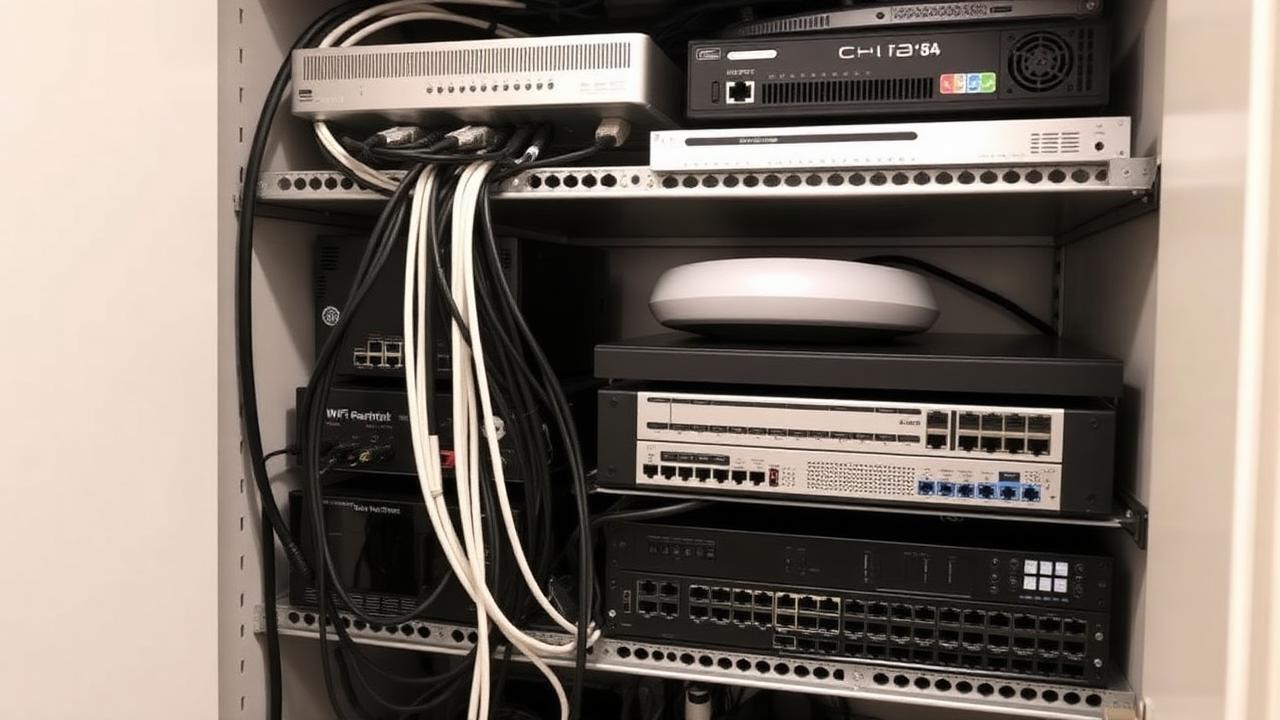
Network technology evolves rapidly. The best approach is installing robust physical infrastructure (conduit, cable, and rack space) that accommodates equipment upgrades without rewiring. A dedicated network closet with proper ventilation, power conditioning, and rack-mounted equipment ($1,000–$3,000) provides a professional foundation that supports years of technology evolution.
Investing in robust physical infrastructure is the cornerstone of future-proofing a Charlotte luxury home's network. This involves more than just running cables with today's needs in mind. It means installing conduit runs to key locations, allowing for future cable upgrades (e.g., from Cat6A to potential future standards) without invasive wall modifications. It also means allocating sufficient space and ensuring proper environmental controls—like ventilation and temperature regulation—for a dedicated network closet or rack. This central hub is where the core networking equipment resides: routers, switches, Network Attached Storage (NAS) devices, and potentially servers for automation systems. Proper power conditioning protects this sensitive equipment from power surges and brownouts, which can cause premature failure. Building this foundational infrastructure, especially during new construction or major renovations in areas like Steadman or Providence, significantly reduces the cost and complexity of future upgrades, ensuring that the home's network can adapt to emerging technologies like 8K streaming, advanced AI-driven home automation, and next-generation wireless protocols for years to come.
Managed vs. DIY
Enterprise networking equipment requires professional configuration and ongoing management. Many Charlotte smart home companies offer managed network services ($100–$300/month) that include monitoring, updates, troubleshooting, and optimization. For homes with complex smart systems, managed services prevent the frustration of self-diagnosing network issues.
While some technologically inclined homeowners in Charlotte might be tempted by a DIY approach to networking, the complexity and criticality of enterprise-grade systems in luxury residences almost always warrant professional management. The monthly fee for managed network services, typically ranging from $100 to $300, is a small price to pay for the expertise and peace of mind provided by local specialists. These service providers, often the same companies that install integrated smart home systems like those found in custom homes around the Lake Norman area or in prestigious Charlotte enclaves, offer a proactive approach. They continuously monitor network performance, identify and resolve issues before they impact the homeowner, ensure all firmware and security patches are applied promptly, and optimize the network for peak performance. For homeowners in Charlotte who prioritize their time and demand seamless operation of their sophisticated smart home technology—from their home theater system to their climate control and security—outsourcing network management to professionals is a clear path to avoiding costly downtime and frustrating technical glitches.
Frequently Asked Questions
How much does enterprise home networking cost?
$5,000-$20,000 for equipment and professional installation, compared to $200-$500 for consumer solutions.
How many WiFi access points does a luxury home need?
A 5,000-square-foot home typically needs 3-5 commercial access points for seamless coverage including outdoor areas.
Why does my smart home WiFi keep dropping?
Consumer routers support 20-30 devices. Luxury homes have 50-150+ connected devices, overwhelming consumer equipment.
Is hardwired ethernet necessary?
Yes—running CAT6A cable throughout the home costs $3,000-$8,000 in new construction and ensures reliable performance for critical devices.
How do you secure a smart home network?
VLAN segmentation, intrusion detection, firmware updates, guest isolation, and VPN capability protect against cybersecurity threats.
What is managed network service?
Professional monitoring, updates, and troubleshooting for $100-$300/month, preventing frustration with complex smart home networks.