Researched Guide
Compiled from public and official sources; not based on a visit.
The Great Charlotte Debate: City Living vs. Suburban Serenity
Charlotte, North Carolina, often called the 'Queen City,' offers a spectrum of lifestyles. For many contemplating a move to or within the Charlotte metropolitan area, a pivotal question arises: should you embrace the dynamic energy of city living, or seek the tranquility and spaciousness of its surrounding suburbs? This isn't a simple 'either/or' scenario; it's a deep dive into lifestyle preferences, financial considerations, and future aspirations. Let's explore the nuances of staying in Charlotte's urban core versus venturing into its diverse suburban communities.
Embracing the Urban Pulse: Life Within Charlotte Proper
Living directly within Charlotte's city limits, particularly in areas like Uptown, South End, or Plaza Midwood, means instant access to a bustling urban environment. The allure here is undeniable: a vibrant cultural scene, diverse dining options, and a constant hum of activity right outside your door.
Uptown Charlotte: The Heart of the City
Uptown Charlotte, with its gleaming skyscrapers and energetic atmosphere, is the CBD and cultural hub. Here, you're steps away from professional sports venues like Bank of America Stadium (home of the Carolina Panthers) and Spectrum Center (home of the Charlotte Hornets), prestigious museums like the Mint Museum and the Harvey B. Gantt Center, and a plethora of upscale restaurants and bars. Condominiums dominate the housing market here, ranging from luxury high-rises with breathtaking skyline views to more modest loft conversions. Prices for a 1-2 bedroom condo in Uptown can easily start from $350,000 and climb well into the millions for premium units. The walkability is unparalleled, connecting residents to the LYNX Blue Line light rail, major employers, and entertainment venues. However, this convenience comes at a premium, and green space can be limited, though Romare Bearden Park offers a fantastic urban oasis.
South End: Industrial Chic Meets Trendy Living
Just south of Uptown, South End has transformed from an industrial district into one of Charlotte's most sought-after neighborhoods for young professionals and creatives. Known for its craft breweries, art galleries, boutique shops, and a lively social scene, South End offers a more bohemian, yet equally upscale, vibe. Housing options are primarily apartments and townhomes, with rental prices often competitive with, or even exceeding, Uptown. Buying a townhome in South End could range from $500,000 to $900,000+. The LYNX Blue Line runs directly through South End, making commutes to Uptown seamless. It’s a neighborhood where you can truly live, work, and play without needing a car, although traffic along South Boulevard can be heavy during peak hours.
Plaza Midwood & NoDa: Eclectic Charm and Artistic Flair
For those seeking something a bit more eclectic, Plaza Midwood and NoDa (North Davidson) offer vibrant, historic neighborhoods with a strong sense of community. Plaza Midwood boasts charming bungalows, tree-lined streets, and a main street dotted with eccentric shops, beloved local restaurants like Soul Gastrolounge, and lively bars. Housing here typically consists of renovated historic homes, with prices ranging from $450,000 to upwards of $800,000 for larger, updated properties. NoDa, Charlotte's historic arts district, is similar but with an even more pronounced artistic bent, featuring live music venues, independent galleries, and colorful murals. Both neighborhoods offer a more laid-back, community-focused urban experience compared to Uptown, with a good mix of families and young professionals. While not directly on the light rail, they are easily accessible by car or bus to Uptown.
The Appeal of the Suburbs: Space, Schools, and Community
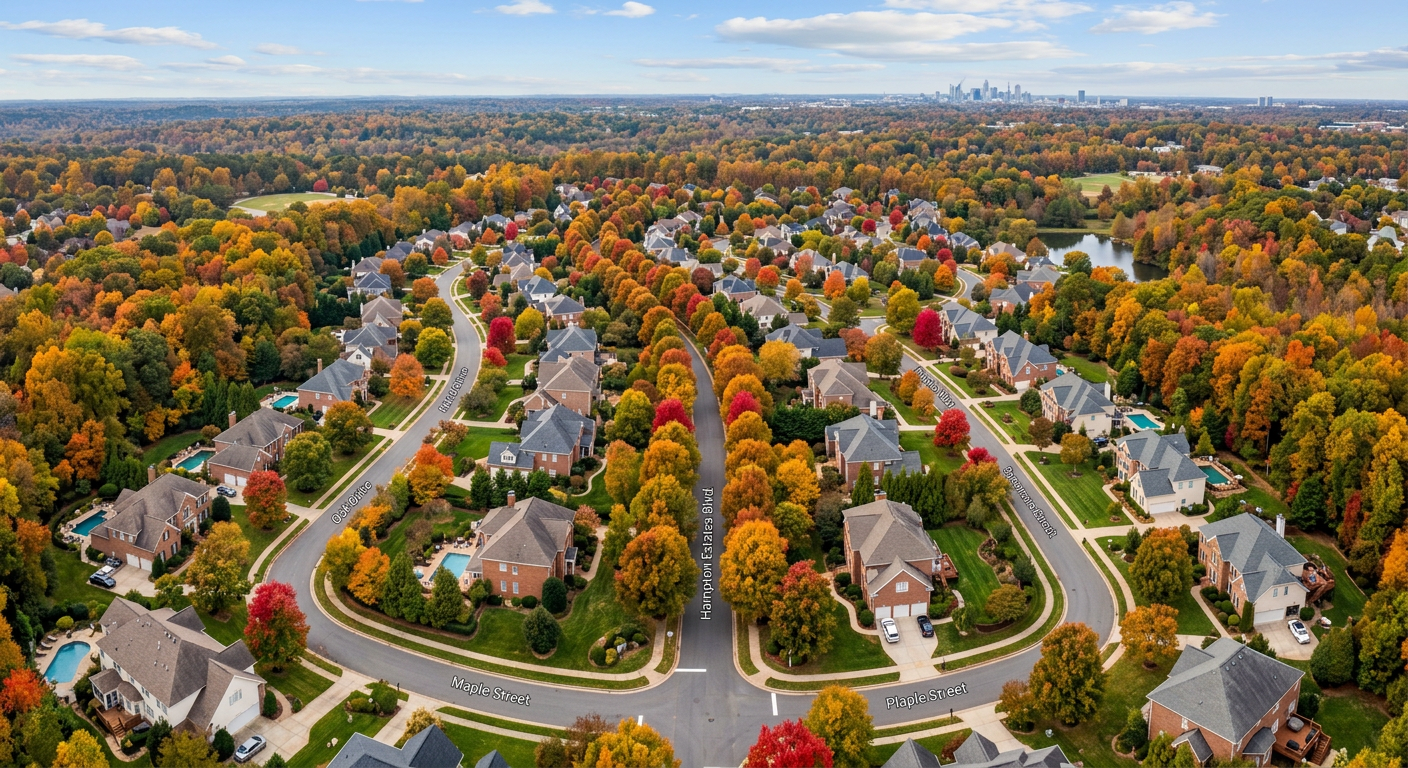
If the hustle and bustle of city life begin to feel overwhelming, Charlotte's suburbs offer a compelling alternative. These communities often feature more spacious homes, larger lots, highly-rated public schools, and a slower pace of life, all while remaining within a reasonable commute to Charlotte's economic centers.
Huntersville: Family-Friendly Lake Life
North of Charlotte, Huntersville offers a blend of suburban convenience and access to Lake Norman. It's a popular choice for families due to its excellent public schools (part of the Charlotte-Mecklenburg School district, though often perceived as having strong individual schools like Huntersville Elementary and Hopewell High) and abundant recreational opportunities. Real estate in Huntersville varies from established neighborhoods with traditional single-family homes to newer developments. Expect to find 3-4 bedroom homes starting in the $400,000s, with larger, newer builds or lakeside properties fetching $600,000 to over a million. While it offers a quieter atmosphere, Huntersville still has plenty of amenities, including Birkdale Village with its shops, restaurants, and movie theater. Commuting to Uptown typically involves I-77, which can experience significant congestion during peak hours, making the drive 30-50 minutes.
Fort Mill, SC: South Carolina's Booming Border Town
Crossing the state line into South Carolina, Fort Mill has become incredibly popular for families seeking excellent schools (Fort Mill School District is consistently ranked among the best in the state), lower property taxes (a major draw compared to Charlotte-Mecklenburg, though income taxes are higher in SC), and a strong sense of community. Areas like Baxter Village and Kingsley offer master-planned communities with a mix of housing, from townhomes to large single-family residences. Home prices in Fort Mill generally start in the $450,000s for a decent 3-bedroom home and can go up significantly depending on size and location. While Fort Mill lacks a direct light rail connection, it's conveniently located near I-77, allowing for a 20-40 minute commute to Uptown, depending on traffic conditions. Shopping and dining options are plentiful, and it retains a charming small-town feel while growing rapidly.
Ballantyne: Upscale and Amenity-Rich
Located in South Charlotte, Ballantyne is synonymous with upscale living, corporate parks, and a wealth of amenities. It's a highly desirable area for families and professionals alike, known for its top-rated schools (part of the strong Ardrey Kell High School feeder pattern), meticulously maintained common areas, and a feeling of exclusivity. The Ballantyne Corporate Park provides numerous local employment opportunities, reducing the need for an Uptown commute for some. Housing stock here primarily consists of larger, newer single-family homes, luxury townhomes, and a growing number of upscale apartment complexes. Prices for single-family homes typically start around $600,000 and can easily exceed $1 million. While it has its own vibrant mini-city feel with shopping centers, restaurants, and the Ballantyne Hotel & Lodge, its distance from Uptown means a 25-45 minute drive, often battling traffic on Providence Road or I-485.
Concord & Harrisburg: Affordable Alternatives with Growth
For those seeking more bang for their buck, communities like Concord and Harrisburg, northeast of Charlotte, offer more affordable housing options while still providing good schools (Cabarrus County Schools) and growing amenities. Concord, in particular, is known for its historic downtown, Concord Mills mall, and the Charlotte Motor Speedway. Harrisburg provides a more suburban, family-oriented environment. Here, you can find newer construction homes, often with larger square footage and yards, for prices starting in the high $300,000s and into the $500,000s. Commutes to Uptown can range from 30-50 minutes, utilizing I-85 or NC-49, both of which can be heavily traveled. These areas are ideal for those prioritizing space and affordability over a short commute to the city center.
Key Factors to Consider in Your Decision
- Cost of Living: City living typically means higher housing costs (rent or mortgage, property taxes), but potentially lower transportation costs if you rely on walking, biking, or public transit. Suburban living usually offers more affordable housing per square foot, but often necessitates more driving, increasing fuel and vehicle maintenance costs. Property taxes are a significant consideration; Charlotte-Mecklenburg taxes are generally higher than neighboring counties like Union or York (SC).
- Commute Times & Transportation: Proximity to work is a major factor. Living in Uptown or South End can mean a short walk or light rail ride. From the suburbs, expect a 20-60 minute commute during peak hours, often battling Charlotte's growing traffic congestion on I-77, I-85, and major arteries like Providence Road or Rea Road. Consider the cost and time value of your commute.
- Lifestyle & Amenities: Do you crave constant access to nightlife, cultural events, and diverse dining? Charlotte's urban core delivers. Do you prefer quiet evenings, backyard barbecues, and community parks for the kids? The suburbs are your haven. Each offers distinct recreational opportunities, from Lake Norman's watersports in the north to the Anne Springs Close Greenway in Fort Mill.
- Schools: For families with children, school districts are often a make-or-break factor. Charlotte-Mecklenburg Schools (CMS) are diverse, with some highly-rated schools scattered throughout the city and its edges (like Myers Park High School or Ardrey Kell High School). However, many families gravitate towards suburban districts like Fort Mill, SC, Union County (Marvin Ridge area), or Cabarrus County (Harrisburg, Concord) for their perceived consistent excellence and smaller class sizes.
- Sense of Community: Both urban and suburban areas foster community, but in different ways. City neighborhoods might have more spontaneous interactions at coffee shops or dog parks, while suburbs often have planned community events, neighborhood pools, and active HOAs.
- Future Growth & Property Value: Charlotte is a rapidly growing city, and both urban and suburban areas are experiencing appreciation. Urban core properties often see strong demand due to limited supply and desirability, while suburban areas benefit from population growth and new development.
Making Your Charlotte Home
The choice between staying in Charlotte's vibrant core or moving to its family-friendly suburbs is a deeply personal one. It hinges on your specific priorities, whether that's walkability and culture, or space and top-tier schools. Spend time exploring different neighborhoods. Drive the commutes during rush hour. Visit local parks and grocery stores. Engaged with local real estate agents who specialize in both urban and suburban markets can provide invaluable insights into current market conditions, specific school zones, and community vibes. Ultimately, Charlotte offers a rich tapestry of living options that can accommodate almost any preference, ensuring that you'll find the perfect place to call home in the Queen City metropolitan area.
Suburban Roots, Global Reach
Households that choose the suburbs rarely become less mobile — they simply route travel through Charlotte Douglas instead of an urban hub. A curated travel concierge can pair the quieter day-to-day of suburban living with the extended seasonal travel that defines this stage of life.
Frequently Asked Questions
What are the property tax differences between Charlotte (Mecklenburg County) and Fort Mill, SC (York County)?
Property taxes on homes in Mecklenburg County are generally higher than in York County, SC, due to different assessment methods and millage rates. However, South Carolina has a higher state income tax, so a comprehensive financial comparison is essential for Charlotte residents considering a move across the state line.
Which Charlotte neighborhoods are best for young professionals who want to walk everywhere?
Uptown and South End are unequivocally the best choices for young professionals prioritizing walkability to work, entertainment, and restaurants. NoDa and Plaza Midwood also offer good walkability within their commercial cores, though commuting to Uptown typically requires a short drive or public transit connections.
Are there good public transportation options from Charlotte's suburbs to Uptown?
Currently, direct light rail connections to Uptown primarily serve South End, NoDa, and areas directly along the Blue Line corridor. Most suburbs like Huntersville, Ballantyne, Fort Mill, or Concord rely on car commuting, though some offer express bus services during peak hours. The Charlotte Area Transit System (CATS) is continually expanding, but car dependency remains significant for suburban commuters.
What's the typical commute time from Huntersville to Uptown Charlotte during rush hour?
During peak rush hour, the commute from Huntersville to Uptown Charlotte via I-77 can range from 30 to 50 minutes, or even longer depending on traffic incidents. This heavily trafficked corridor is a significant consideration for North Mecklenburg suburbanites, even with the I-77 managed lanes.
Where can I find more affordable single-family homes with good schools near Charlotte?
For more affordable single-family homes combined with highly-rated schools, consider areas like Fort Mill, SC (York County), or parts of Cabarrus County such as Harrisburg and eastern Concord. These areas generally offer better value per square foot compared to South Charlotte neighborhoods like Ballantyne or the closer-in city suburbs.
What are some popular family-friendly activities in Charlotte's suburbs that aren't available in the city?
Suburbs offer unique family attractions. Huntersville provides easy access to Lake Norman for boating and watersports. Fort Mill boasts the expansive Anne Springs Close Greenway, perfect for hiking, biking, and horseback riding. Many suburban communities also feature extensive greenways, larger community parks with extensive playgrounds, and often more private amenities like neighborhood pools and clubhouses.