Researched Guide
Compiled from public and official sources; not based on a visit.
Charlotte's growing wine culture has made the custom wine cellar one of the most requested luxury home features. From understated display walls to temperature-controlled walk-in cellars with tasting rooms, wine storage has become both a functional necessity and a design statement in Charlotte's most distinctive homes.
Types of Wine Storage
Wine Walls and Display Cases: The most accessible option, wine display walls integrate into kitchens, dining rooms, or living spaces. Glass-fronted, climate-controlled units ($3,000–$15,000) hold 50–200 bottles while serving as visual features. These are particularly popular in newer constructions in areas like SouthPark and Myers Park, where open-concept living is common. Homeowners value the ability to showcase their collection without sacrificing significant square footage.
Wine Closets: Converting a standard closet into climate-controlled wine storage ($5,000–$20,000) provides 200–500 bottle capacity without dedicating a full room. These compact cellars work well in condos and homes without basement space, such as townhomes in Dilworth or apartments with an architecturally designed wine closet in the NoDa district. They offer a discreet yet effective solution for a growing collection.
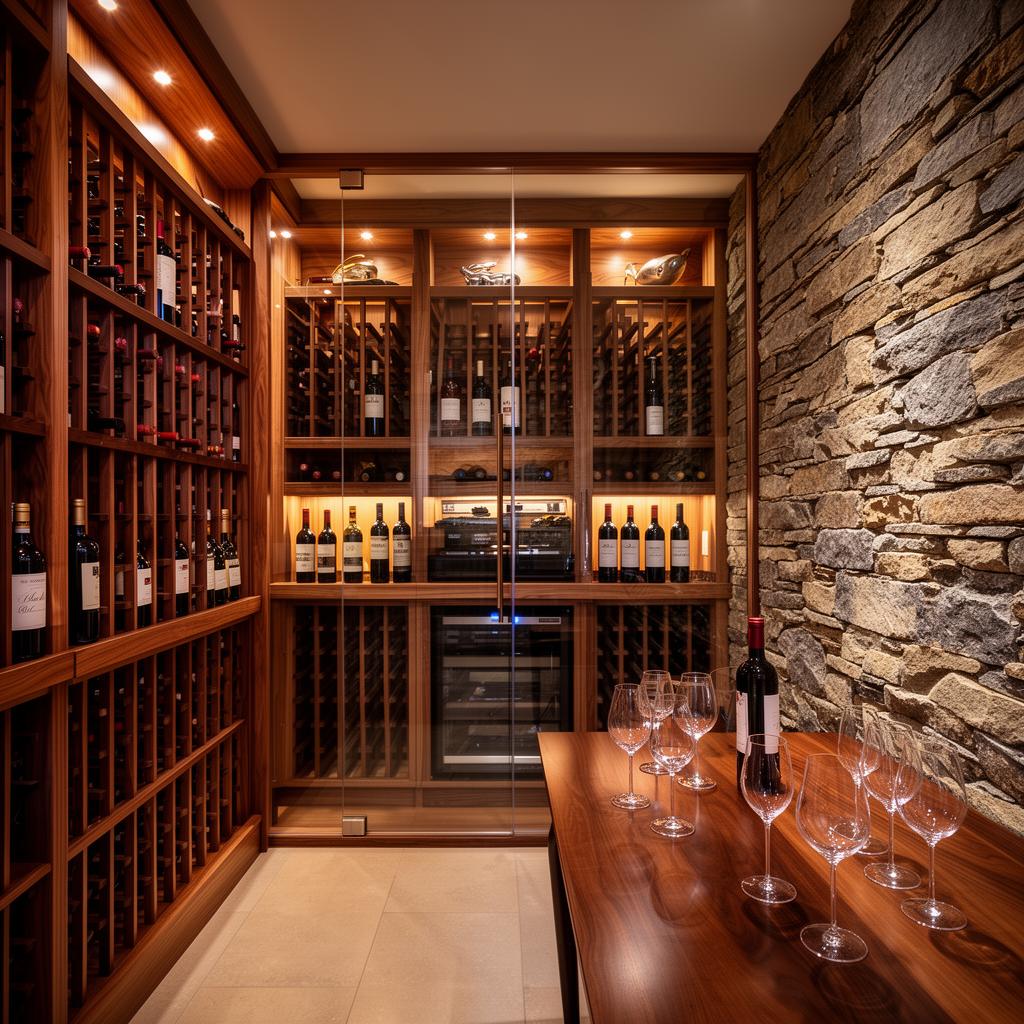
Walk-In Wine Cellars: The gold standard for serious collectors. A proper walk-in cellar with custom racking, climate control, and tasting area costs $20,000–$100,000+ depending on size, materials, and complexity. Basement locations are ideal for natural temperature stability. Many luxury homes in South Charlotte, Mandan, and Weddington, often zoned for highly-rated schools like Charlotte Mecklenburg Schools (CMS) elite schools including Ardrey Kell High School or Providence High School, feature dedicated walk-in cellars as a standard luxury amenity. These are often designed to accommodate thousands of bottles and serve as sophisticated entertaining spaces.
Climate Control: The Cornerstone of Preservation
Wine requires specific conditions: 55–58°F temperature and 60–70% humidity. Charlotte's warm, humid summers make climate control essential—without it, wine degrades rapidly. Self-contained cooling units ($1,500–$5,000) handle small spaces like wine closets or small display cases. Split systems ($3,000–$10,000) provide more powerful, quieter climate control for larger cellars. Through-wall units work for closets; ducted systems are preferred for walk-in cellars, often integrated into the home's existing HVAC infrastructure or a dedicated system. For larger walk-in cellars in Charlotte estates, professional designers often collaborate with HVAC specialists to ensure optimal airflow, maintain consistent temperature, and manage humidity effectively, preventing the dreaded "dry rot" of corks and oxidation of the wine itself. Redundant systems or backup power options can be a wise investment for truly valuable collections, offering peace of mind during power outages, especially as Charlotte experiences more extreme weather events.
Racking Systems: Form Meets Function
Wine racking ranges from functional metal systems ($15–$30 per bottle capacity) to custom wooden racking in mahogany, walnut, or reclaimed wood ($30–$80 per bottle capacity). Custom designs can incorporate display rows for showcasing premium bottles, bin storage for case purchases, and magnum-sized slots for large format bottles. In Charlotte's high-end market, materials like Brazilian cherry, quarter-sawn white oak, and even exotic woods are frequently chosen to match the home's interior design aesthetic. Beyond the standard horizontal displays, many clients opt for unique configurations: diamond cube shelving for case storage, individual bottle cradles, and slanted shelves for optimal viewing of labels. The precise placement and type of racking can dramatically impact bottle capacity and the overall visual appeal of the cellar space. For collectors with an eye for detail, engraved bottle neck tags or integrated lighting within the racking can further enhance the luxury experience. It's also crucial to consider the structural integrity of the racking to support the weight of a full collection, especially when dealing with thousands of bottles.
Design Elements: Crafting an Atmosphere
The most memorable wine cellars in Charlotte homes incorporate design elements that elevate storage into art. Glass walls ($5,000–$15,000) allow the cellar to serve as a visual feature from adjacent rooms, often seen in modern homes in neighborhoods like South End or Uptown that embrace sophisticated, transparent design. Stone or brick accent walls ($3,000–$8,000) create atmosphere, drawing on Charlotte’s urban industrial roots or evoking the feel of old-world European cellars. Many homeowners opt for reclaimed brick from local sources, adding a unique historical touch. Decorative lighting ($1,000–$5,000) is crucial—low-lumen, warm LED lighting highlights bottles without generating heat, a common pitfall in poorly designed cellars. Custom millwork, such as crown molding, baseboards, or carved details, can seamlessly integrate the cellar into the home's overall architectural style. Flooring choices also play a role, with options ranging from sealed concrete (functional and modern) to natural stone or even custom-laid terracotta tiles to enhance the rustic charm. The goal is to create a space that is both functional and aesthetically stunning, a true reflection of the homeowner's taste and the value of their collection.
The Allure of Integrated Tasting Rooms
For the ultimate wine experience, adjacent tasting rooms provide dedicated space for enjoying your collection. A built-in tasting counter, comfortable seating, appropriate glassware storage, and ambient lighting create an intimate entertainment environment. Budget $10,000–$30,000 for a tasting room that complements your cellar. These are becoming increasingly popular in Charlotte's luxury market, especially in estates in Eastover or Foxcroft where entertaining is a significant part of the lifestyle. Imagine hosting guests in a dedicated tasting area within your home, with curated selections from your cellar brought directly to the table. The design often includes integrated wine refrigerators for white and sparkling wines, a sink for rinsing glassware, and a small preparation area for charcuterie and cheese pairings. Custom cabinetry can house an extensive glassware collection, ensuring the right stemware is always at hand. The lighting is designed to be functional for tasting but also ambient for relaxed conversation. These tasting rooms are not just additions; they are destinations within the home, enhancing the enjoyment and appreciation of fine wine.
Location Considerations: Finding the Ideal Spot
Basements are ideal for wine cellars—they provide natural temperature stability and can accommodate larger installations. Basement finishing that incorporates wine storage is an efficient approach, allowing a dedicated space without sacrificing main living areas. This is a common strategy for homes in older, established neighborhoods like Dilworth or Myers Park. Main-level wine walls and under-stair installations work well for smaller collections, a popular solution for condos or smaller homes in areas like Plaza Midwood. Dedicated rooms on any level can be properly climate-controlled with the right equipment, though considerations for insulation and vapor barriers become paramount, especially in upper floors or garages. For areas with higher soil moisture, like some parts of North Charlotte or Lake Norman waterfront properties, extra diligence in waterproofing and vapor barrier installation is essential. Consultation with local builders and cellar specialists is key to navigating the unique geological and climate challenges Charlotte presents.
Insurance and Security: Protecting Your Investment
Valuable wine collections require specific insurance coverage—standard homeowners policies may not adequately cover wine. Specialized wine insurance covers spoilage from climate system failure, theft, and breakage. Many collectors in Charlotte's affluent areas, from Eastover to Ballantyne, are realizing the necessity of this specialized coverage as their collections grow in value. Companies like Vinurance or Tuanis specialize in this niche market. Security cameras, alarm contacts on cellar doors, and temperature monitoring with smartphone alerts are essential to protect your investment. Some advanced systems can even alert your insurance provider or a monitoring service in case of a temperature anomaly, ensuring swift intervention. For high-value collections, consider reinforcing cellar doors and walls for added security against theft.
The Role of Local Expertise in Charlotte
When embarking on a custom wine cellar project in Charlotte, engaging local experts is paramount. Companies like Wine Cellar Specialists of Charlotte, Carolina Custom Wine Cellars, or design-build firms specializing in luxury homes understand the nuances of the local climate, building codes, and material availability. They can offer insights into which types of wood are best suited for our humidity levels, recommend reliable cooling system providers with local service technicians, and design a cellar that seamlessly integrates with your home’s existing architecture. Market data from recent luxury home sales in Charlotte reveals that well-designed wine cellars are not only a desirable amenity but also an attractive selling point, potentially increasing a home's value. In neighborhoods with a higher concentration of wine enthusiasts, such as Eastover, Myers Park, and parts of South Charlotte, a custom wine cellar can command a premium. Understanding average construction costs for luxury finishes in Charlotte, which can range from $750 to $1,500+ per square foot for bespoke additions, helps set realistic budget expectations for these high-end projects. Furthermore, local designers are attuned to the architectural styles prevalent in Charlotte, from historic bungalows in Dilworth to modern estates in Lake Norman, ensuring the cellar complements, rather than detracts from, the home’s overall aesthetic. The reputation and client testimonials of local design and build firms often speak volumes about their ability to deliver on complex projects. Visiting showrooms or requesting consultations can provide a tangible sense of their craftsmanship and design philosophy.
Investing in a Legacy: Beyond Just Storage
A custom wine cellar is more than just a space to store bottles; it's an investment in a passion, a statement of personal style, and a hub for entertaining. In a city like Charlotte, which has rapidly transformed into a sophisticated urban center with a thriving culinary and fine arts scene, a well-appointed wine cellar reflects this evolution. It’s about creating a climate-controlled sanctuary that not only preserves the integrity of your wine but also enhances the enjoyment of every bottle. For homeowners in exclusive enclaves like Quail Hollow or The useStyles, where architectural diversity and homeowner association guidelines can be stringent, a custom wine cellar offers a unique opportunity to personalize a luxury property. The return on investment can be measured not only in potential property value increase but also in the intangible value of creating a space for cherished memories, intimate gatherings, and a deeper appreciation of the world of wine. As Charlotte continues to grow and attract discerning residents, the demand for these sophisticated, bespoke home features is only likely to increase, solidifying the custom wine cellar as a quintessential element of luxury living in the Queen City.
Frequently Asked Questions
How much does a custom wine cellar cost?
Wine walls cost $3,000-$15,000. Wine closets run $5,000-$20,000. Walk-in cellars cost $20,000-$100,000+ depending on size and materials.
What temperature and humidity does wine need?
55-58°F temperature and 60-70% humidity. Climate control is essential in Charlotte's warm, humid climate.
What is the best location for a wine cellar?
Basements are ideal for natural temperature stability. Main-level installations and under-stair cellars work with proper climate control.
How much does wine cellar cooling cost?
Self-contained units cost $1,500-$5,000. Split systems for larger cellars run $3,000-$10,000.
Do I need special insurance for a wine collection?
Yes—standard homeowners policies may not cover wine. Specialized wine insurance covers spoilage, theft, and climate system failure.
What racking material is best?
Custom wooden racking in mahogany or walnut ($30-$80/bottle) is preferred for luxury cellars. Metal systems ($15-$30/bottle) offer functional value.