Researched Guide
Compiled from public and official sources; not based on a visit.
Why Outdoor Lighting Automation for Charlotte Properties Matters for Charlotte Homeowners
The smart home revolution has transformed how Charlotte residents interact with their living spaces. As the Queen City continues to attract tech-savvy professionals and luxury homebuyers, the demand for intelligent home systems has surged. Outdoor Lighting Automation for Charlotte Properties represents one of the most impactful upgrades a homeowner can make, combining convenience, efficiency, and enhanced property value.
Charlotte's unique climate—with hot, humid summers and mild winters—creates specific demands that smart technology addresses exceptionally well. Modern systems adapt to seasonal changes automatically, learning household patterns and optimizing performance without constant manual adjustment.
Consider the sprawling estates in South Charlotte's premier golf communities like Ballantyne Country Club or the meticulously maintained properties in Myers Park. These homes, often featuring expansive gardens, intricate landscaping, and impressive architectural details, benefit immensely from sophisticated outdoor lighting. Imagine pathways illuminated just as dusk settles, highlighting award-winning azaleas or the stately oaks that define these neighborhoods. Or consider the security benefits for grand homes situated on larger lots, providing a visible deterrent and ensuring safe passage for residents and guests arriving after dark. For homes in areas with lower light pollution, like some pockets near Lake Norman, automated lighting is crucial for both aesthetics and security.
Understanding the Technology
Today's lighting solutions have evolved far beyond basic programmable devices. Advanced systems leverage artificial intelligence, machine learning, and IoT connectivity to create truly responsive living environments. These technologies communicate with each other through standardized protocols like Matter, Zigbee, and Z-Wave, ensuring reliability and cross-brand compatibility.
The foundation of any smart system is a robust home network. Charlotte homes, particularly larger residences in neighborhoods like Myers Park, Ballantyne, and Lake Norman, require enterprise-grade networking infrastructure to support dozens of connected devices without performance degradation. This is especially true in areas where larger lot sizes might mean exterior devices are further from the central network hub. Homeowners in areas like Providence Country Club or Eastover, known for their substantial homes and ample outdoor spaces, will find that a well-designed network is paramount for seamless operation. Even in historic districts like Dilworth, where retrofitting can be more complex, a strong network is the backbone of a functional smart lighting system.
Cloud-based platforms provide remote access and monitoring capabilities, allowing homeowners to manage their systems from anywhere. Whether you're at a business meeting downtown or vacationing on Amelia Island, controlling your Charlotte home's lighting is at your fingertips. However, the best installations also include local processing to ensure continued operation during internet outages—a practical consideration during Charlotte's occasional summer storms that can sometimes disrupt connectivity. This local control ensures that your property remains illuminated and secure, even if your internet service temporarily falters.
Key Features and Benefits
Modern lighting technology delivers measurable benefits across multiple dimensions. Energy savings typically range from 15-30% depending on the existing infrastructure and usage patterns. This is a significant consideration for Charlotte homeowners who want to enjoy their illuminated properties without excessive electricity bills, especially during the prolonged summer months when AC usage is high. For example, in a home in the affluent enclave of Eastover, where extensive landscaping might feature hundreds of light fixtures, these savings can add up substantially. Many systems incorporate dimming capabilities and motion sensors, ensuring lights are only on when and where needed, further enhancing efficiency.
Convenience improvements reduce daily friction points, while security enhancements provide peace of mind for families and frequent travelers. Imagine approaching your home after a late event at the Blumenthal Performing Arts Center; with automated lighting, your driveway and walkways illuminate automatically, ensuring safe and convenient arrival. For families with children attending top-rated schools like South Mecklenburg High or Charlotte Christian School, the security provided by a well-lit exterior can offer significant peace of mind. Furthermore, smart systems can be programmed to simulate occupancy when you're away, deterring potential intruders, a valuable feature for the many busy professionals who travel frequently for work or leisure.
Integration is where the real magic happens. When lighting, climate, security, and entertainment systems communicate seamlessly, the home anticipates needs rather than simply responding to commands. Morning routines, departure sequences, and bedtime protocols can all be automated to match each family member's preferences. Picture this: as your alarm sounds in your Ballantyne residence, your bedroom lights gently fade up, the thermostat adjusts to its daytime setting, and your favorite news channel begins to play softly on your connected speaker system. Or, as you leave your lakefront property in Cornelius, a single command can turn off all lights, arm the security system, and adjust the thermostat to an energy-saving mode.
The team at Emerald & Oak Design, an interior design studio creating bespoke living spaces, emphasizes the importance of designing systems that are both powerful and intuitive. The most sophisticated technology fails if family members find it frustrating to use. Thoughtful interface design—whether through touchscreens, voice control, or smartphone apps—ensures that everyone in the household can enjoy the benefits. This philosophy is crucial for the diverse demographics of Charlotte, from young families to retirees who may have varying levels of technical expertise. The goal is to make technology disappear into the background, providing effortless comfort and control.
Installation Considerations for Charlotte Homes
Charlotte's diverse housing stock presents varied installation challenges and opportunities. New construction in communities like Weddington and Marvin allows for pre-wiring and infrastructure planning during the build phase, significantly reducing costs and enabling more comprehensive systems. In these rapidly growing areas, developers and custom builders are increasingly incorporating smart home infrastructure from the ground up, ensuring that future technology upgrades are easily accommodated. This proactive approach is a key selling point for discerning buyers in these upscale suburban markets.
Existing homes in established neighborhoods like Dilworth, Elizabeth, and Eastover require retrofit approaches that respect architectural integrity while delivering modern functionality. Wireless technologies have made retrofitting increasingly practical, allowing for the installation of smart switches, dimmers, and outdoor fixtures without extensive demolition. However, for those seeking the most robust and reliable solutions, especially for high-end properties like historic homes in Myers Park or estates near Selwyn Avenue, strategic wired installations may still be the preferred option. Professional integrators can assess the existing electrical infrastructure and recommend the most suitable approach, balancing aesthetics, functionality, and budget.
Professional installation is strongly recommended for comprehensive systems. Qualified integrators understand local building codes, electrical requirements, and the specific challenges of Charlotte's construction styles. They also provide ongoing support and system optimization that DIY approaches cannot match. For instance, understanding the power requirements for landscape lighting in a large garden, ensuring proper placement for security floodlights, or integrating smart bulbs into delicate vintage fixtures all require specialized knowledge. Companies like Peters Audio Video, with their deep understanding of the Charlotte market and its diverse housing stock, offer the expertise needed to ensure a flawless installation and a system that performs optimally for years to come.
Cost Considerations and ROI
Investment levels for lighting systems in Charlotte homes vary widely based on scope and complexity. Entry-level solutions, such as a few smart outdoor bulbs controlled via a smartphone app, might start at a few hundred dollars for a single fixture. However, for a fully automated and integrated system covering a large property, including landscape lighting, architectural illumination, path lighting, and security features, the investment can range from $5,000 to $20,000 or more for mid-sized homes, and can easily exceed $100,000 for luxury properties with extensive grounds and sophisticated design elements. These higher-end systems often involve custom design, specialized fixtures, and advanced control systems.
The return on investment comes through multiple channels: direct energy savings, reduced insurance premiums (for security systems), increased property value, and the intangible but significant quality-of-life improvements. Charlotte's competitive luxury real estate market increasingly expects smart home features, making these investments valuable for resale positioning. Homes in sought-after areas like Providence Road, Lake Wylie, or the burgeoning South End district that feature sophisticated outdoor lighting automation are often more attractive to buyers and can command higher prices. Furthermore, the enhanced curb appeal generated by well-designed and automated lighting can significantly influence a buyer's initial impression.
When building a new custom home, working with a specialist like Peters Audio Video ensures that smart technology infrastructure is planned from the ground up, avoiding costly retrofits and enabling seamless integration with the home's design and architecture. This integrated approach allows for optimal placement of wiring, control panels, and fixtures, ensuring that the smart lighting complements the interior design and landscaping without being obtrusive. For properties in areas like Waxhaw or Stallings, where new custom home construction is prevalent, this foresight is invaluable.
Choosing the Right System for Your Charlotte Home
Selecting the appropriate technology platform requires careful consideration of current needs, future expansion plans, and household preferences. The best approach starts with identifying pain points and priorities rather than chasing the latest gadgets. For a family in a townhome in South Park, the priority might be simple control over patio lighting and a few external entryway lights for security and ambiance. For an estate in the Quail Hollow area, the needs could extend to illuminating extensive gardens, water features, and architectural details, with complex scheduling and scene creation for different occasions.
Families with young children may prioritize security cameras and smart locks linked to their lighting system to illuminate specific areas when motion is detected. Home entertainers might focus on distributed audio and automated lighting scenes that create the perfect mood for parties or intimate gatherings in their Dilworth or Plaza Midwood residences. Energy-conscious homeowners often start with smart thermostats and monitoring systems, with lighting automation playing a supporting role in reducing energy consumption. The modular nature of modern platforms, such as those offered by Lutron, Crestron, or Savant, allows homeowners to start small and expand over time, integrating more devices and features as their needs and budget evolve.
Compatibility is crucial. Investing in an ecosystem that supports open standards like Matter (designed to improve interoperability between smart home devices) ensures that future upgrades and additions integrate smoothly. Proprietary systems may offer polished experiences initially but can create expensive lock-in over time, making it difficult to integrate third-party devices or expand the system without significant cost. Working with experienced integrators who prioritize open standards and robust, reliable platforms is key to building a future-proof smart home in the dynamic Charlotte market.
Future Trends in Charlotte Smart Homes
The smart home industry continues to evolve rapidly, and Charlotte homeowners should consider future-proofing their investments. Emerging trends include AI-powered predictive maintenance, health monitoring integration, and increasingly sophisticated energy management tied to grid-interactive systems. As Charlotte embraces renewable energy and smart grid technologies, integrated lighting systems will play a key role in optimizing energy consumption based on real-time utility pricing and available solar generation. This is particularly relevant for a city that is experiencing significant growth and an increasing demand for sustainable living solutions.
Electric vehicle integration is particularly relevant for Charlotte, where EV adoption is growing rapidly. Smart charging systems that coordinate with solar panels, battery storage, and utility rate structures maximize both convenience and cost savings. Imagine your home's lighting system intelligently dimming non-essential lights during peak charging hours or adjusting its brightness based on your solar panel's output, all while ensuring your EV is ready to go for your commute to work in the morning or a weekend trip to the mountains. This interconnectedness is the future of sophisticated home management.
As Charlotte's smart home market matures, the line between luxury and standard features continues to shift. What was once exclusive to high-end custom builds is increasingly expected in mid-range homes, making smart technology an investment in daily living and long-term property value. For example, features like Wi-Fi enabled thermostats and smart voice assistants are becoming commonplace. However, sophisticated outdoor lighting automation, coupled with advanced security and a seamless integration of all smart home devices, still represents a differentiator in the luxury market. It transforms a house into a truly intelligent and responsive living environment, enhancing comfort, security, and aesthetic appeal in the Queen City.
The aesthetic impact of expertly designed outdoor lighting on a Charlotte property cannot be overstated. From the historic charm of families in older neighborhoods to the modern sleekness of new builds in areas like Wesley Heights or parts of South End, automated lighting provides a dynamic canvas. It can highlight the intricate brickwork of a Myers Park home, cast dramatic shadows on the lush landscaping of a custom build in Lake Norman, or provide a welcoming glow to a modern townhome in Uptown Charlotte. Companies like Peters Audio Video are at the forefront of this trend, working with homeowners and landscape architects to craft lighting designs that are as functional as they are beautiful, and that can be controlled with ultimate ease through intuitive smart home interfaces.
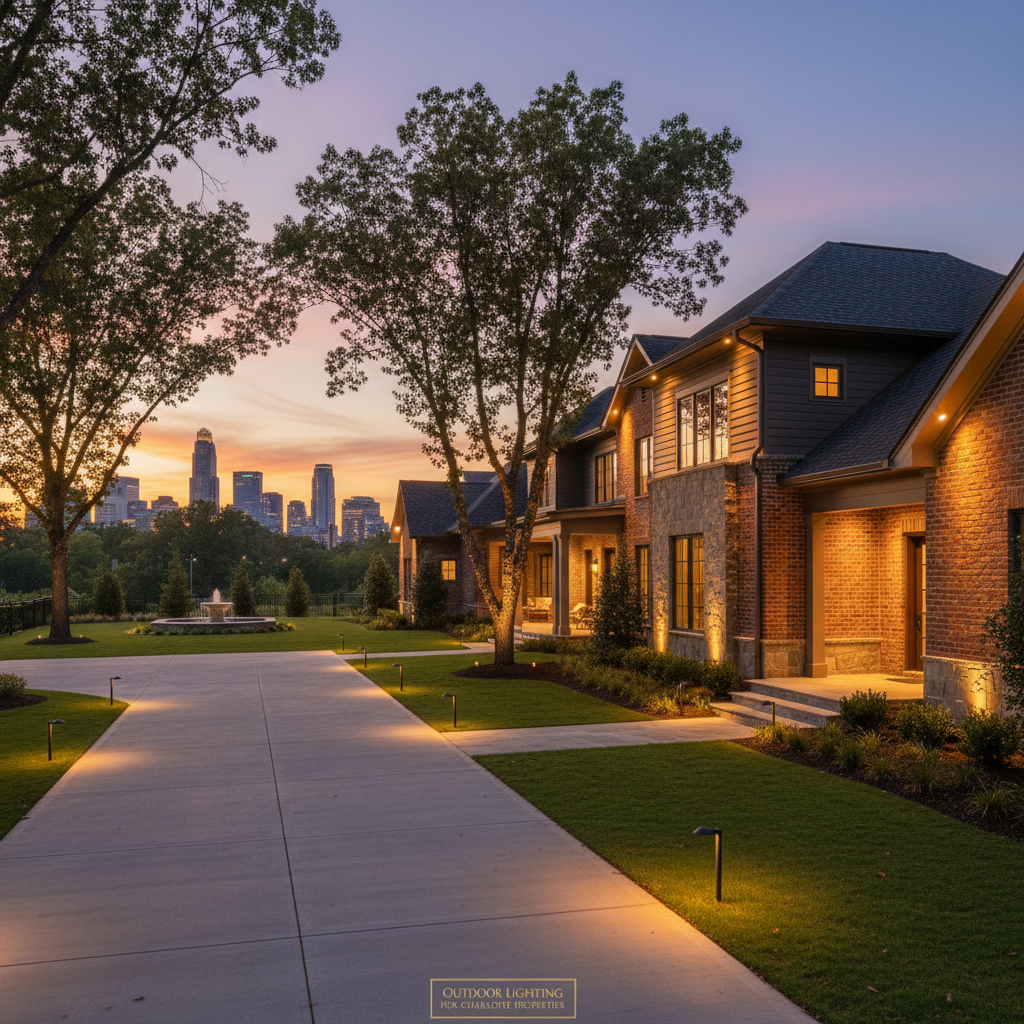
Professional lighting automation transforms the ambiance and security of luxury homes. Peters Audio Video integrates smart lighting with Charlotte homes' existing automation ecosystems for seamless control and stunning effects.
Frequently Asked Questions
How much does outdoor lighting automation for charlotte properties cost in Charlotte?
Costs vary widely depending on scope and complexity. Basic solutions start around $1,000-$3,000, mid-range installations run $5,000-$25,000, and comprehensive luxury systems can exceed $50,000-$100,000+. Get multiple quotes from qualified Charlotte installers for accurate pricing.
Can I add smart technology to my existing Charlotte home?
Yes, modern wireless technologies make retrofitting existing homes increasingly practical. While pre-wired new construction offers advantages, experienced integrators can add comprehensive smart systems to homes of any age with minimal disruption.
What is the best smart home platform for Charlotte homes?
The best platform depends on your priorities. Apple HomeKit excels for Apple users, Google Home offers strong voice control, and Amazon Alexa has the widest device compatibility. For luxury homes, professional platforms like Control4 or Savant provide the most polished integrated experience.
Do smart home features increase property value in Charlotte?
Yes, smart home technology can increase property value by 3-5% according to industry studies. In Charlotte's competitive luxury market, buyers increasingly expect modern technology features, making smart upgrades valuable for both daily living and resale positioning.
How long does professional installation take?
Installation timelines depend on system complexity. Simple single-room solutions take 1-2 days, whole-home automation typically requires 1-3 weeks, and comprehensive luxury installations with custom programming may take 4-8 weeks from design to completion.